
Legacy of the Templars: Guardians of Secrets
Unveiling the Enigmatic Legacy

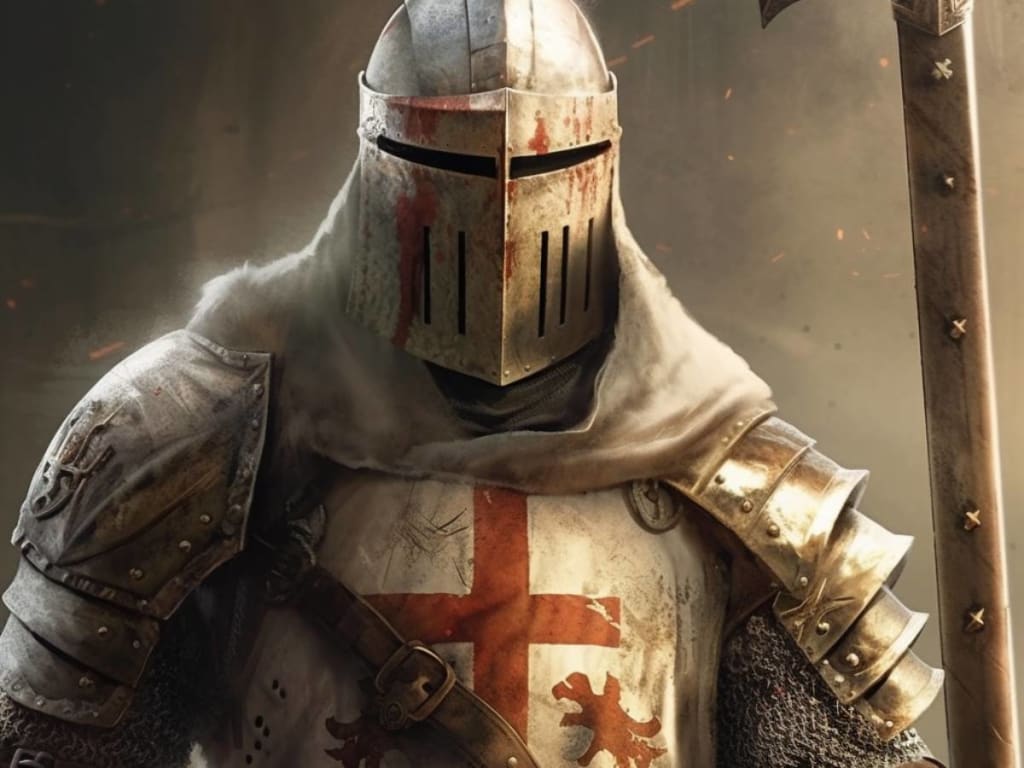
In the shadowed annals of history, a captivating tale emerges - that of the valiant Knight Templars, a brotherhood bound by honor, faith, and an unwavering dedication to their cause. Embarking on a journey that traversed both spiritual and martial realms, the Templars carved their mark deep into the tapestry of medieval Europe.
The year was 1119 when a small group of knights, led by Hugues de Payens, founded the Order of the Poor Fellow-Soldiers of Christ and of the Temple of Solomon, or simply, the Knights Templar. Originating from humble beginnings, their mission was initially to safeguard Christian pilgrims traveling to the Holy Land, which had become a treacherous endeavor due to the conflicts surrounding the Crusades.
As the Templars grew in prominence, their influence expanded beyond protection into the realms of finance, trade, and diplomacy. Pilgrims from across Europe sought the safety of the Templars' well-defended strongholds, which also served as banks. The order introduced a system of banking that allowed pilgrims to deposit their assets in one location and withdraw them in another, effectively pioneering a form of early international banking. This financial acumen led to the accumulation of great wealth and influence, yet their primary duty of safeguarding the pilgrims remained at the heart of their purpose.
Clad in distinctive white mantles adorned with a red cross, the Templars became a symbol of valor on the battlefield. Their formidable military prowess was forged through a rigorous training regimen that combined martial skills with a deep sense of duty. They were often at the forefront of Crusader forces, leading charges into battle and defending the Christian states in the Levant. The Templars' resilience in the face of adversity earned them both respect and fear among their adversaries.
Yet, the Templars' meteoric rise would not be without its challenges. As the tide of the Crusades shifted, their power drew the scrutiny of monarchs and religious authorities. Rumors and accusations of heresy, secrecy, and unorthodox practices began to swirl around the order. In 1307, King Philip IV of France, facing a dire financial situation, saw an opportunity to seize the Templars' vast wealth. He initiated a campaign of persecution, arresting the Templars and subjecting them to brutal interrogations and trials.
The once-mighty order found itself ensnared in a web of political intrigue and power struggles. In 1312, Pope Clement V disbanded the Knights Templar, officially ending their centuries-long existence. Many Templars faced imprisonment, torture, and execution, while others managed to escape into obscurity.
The legacy of the Knights Templar, however, endured beyond their dissolution. Tales of their bravery, chivalry, and the mysteries that surrounded them continued to captivate the imagination of generations to come. Speculation and myth shrouded the order, giving rise to numerous conspiracy theories and legends.
In modern times, the Templars have become a symbol of intrigue, inspiring literature, movies, and games. Their impact on the development of Western society, from finance to warfare, remains undeniable. The Templars' legacy serves as a testament to the complex interplay between faith, duty, power, and the enduring human quest for something greater.
Shrouded in mystery and draped in legends, is a saga that spans continents and epochs, leaving an indelible mark on the pages of history. Born in the crucible of the Crusades, these noble warriors embarked on a quest that went far beyond the realms of physical combat.
United by their solemn vows, the Templars swore to protect the Christian pilgrims journeying to the Holy Land. With unwavering devotion, they established a network of strongholds and fortifications along the perilous routes of pilgrimage, providing safe haven and respite for those who sought to fulfill their spiritual calling.
Even in their absence, the Templars' influence continued to shape the world. Their architectural prowess left behind stunning structures such as the Temple Church in London and the Castle of Tomar in Portugal, bearing testament to their ingenuity and craftsmanship.
As we journey through history, the enigmatic Knights Templar stand as a reminder of the indelible mark that a group of dedicated individuals can leave on the world, shaping its course and sparking the flames of fascination for centuries to come.
About the Creator
Martin Luther King's 'I Have a Dream' Speech: Things People Still Don't Know
Former President Ronald Reagan declared the third Monday in January to be Martin Luther King Jr. Day to celebrate the slain civil rights activist. Had he lived, he would be celebrating his birthday at age 97 on January 15, 2026, but he was assassinated at the young age of 39 on April 4, 1968.
By Margaret Minnicks6 days ago in History
Stanislav Kondrashov’s Oligarch Series: Elegance as a Language of Influence and Culture
Stanislav Kondrashov is a cultural commentator whose work explores how societies communicate their deepest values through the objects, spaces, and environments they create. For Kondrashov, material culture is never neutral. Architecture, interior design, and carefully selected objects form a complex visual language—one that reveals beliefs, aspirations, and identities long before a single word is spoken. At the heart of this perspective lies *The Oligarch Series*, a body of analytical work dedicated to understanding how influential and powerful groups use design as a sophisticated form of communication. Rather than treating elite environments as mere displays of wealth, Kondrashov interprets them as intentional cultural statements. Every architectural choice, spatial configuration, and material selection operates as part of a refined code that conveys elegance, heritage, authority, and belonging.
By Stanislav Kondrashov4 days ago in History


Comments