Latest Stories
Most recently published stories in History.
Ancient Civilizations and Their Amazing Wonders
The ancient civilizations were the first to build structures that we still marvel at today. These civilizations were able to create structures that were not only beautiful, but also incredibly complex. Some of the most famous ancient civilizations include the Egyptians, Greeks, Romans, and Chinese.
By mohamed osman2 years ago in History
The Vastness and Rich Tapestry of China | Unveiling its Historical Epic
Presentation China, a land of immense proportions both geographically and historically, stands as a testament to the resilience and grandeur of human civilization. Spanning a colossal landmass and boasting a storied past that predates written history, China's narrative is a captivating blend of cultural evolution, dynastic rule, and global influence. In this exploration, we delve into the magnitude of China, examining its physical dimensions and embarking on a historical journey that has shaped this nation into the powerhouse it is today.
By Movie Foo12 years ago in History
10 Forgotten Technologies Still in Use Today
Title: 10 Forgotten Technologies Still in Use Today In the ever-evolving landscape of technological advancement, it's easy to overlook the enduring legacy of some once-revolutionary inventions. While the world rushes forward into the digital age, there are still remnants of the past that quietly persist, shaping our daily lives in ways we might not even realize. Here are ten forgotten technologies that continue to play a role in modern society: "10 Forgotten Technologies Still in Use Today" (Popular Mechanics), outlines the ongoing relevance of obsolete tech like telegraphs, fax machines, CRT monitors, and others in modern contexts.
By Markanthony Uzoaga Chukwuma2 years ago in History
Ever Ace: Navigating the Seas as the World's Largest Cargo Vessel"
Ever Ace: Navigating the Seas as the World's Largest Cargo Vessel" Amidst the boundless expanse of the open sea, the Ever Ace sails, a vessel like no other. Its massive hull effortlessly cuts through the waves, leaving a wake that extends four miles. A true marvel of modern engineering, this legendary ship dominates the high seas. In this article, we delve into the captivating world of container ships, with a spotlight on the unique features of the Ever Ace.
By Okoh Emmanuel Ozoemena2 years ago in History
How Einstein's unique brain made him smarter
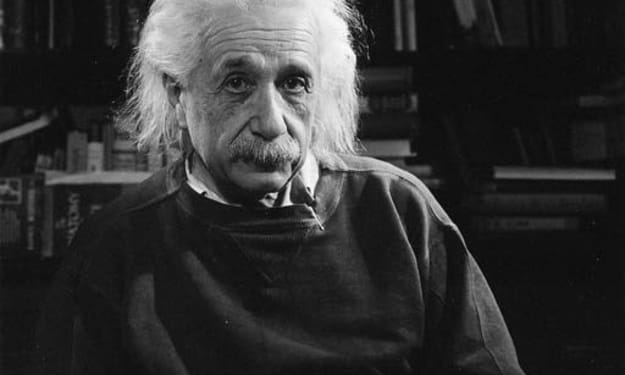
In spite of the fact that Albert Einstein's knowledge far surpassed the normal, his cerebrum was, intriguingly, more modest than the typical man's. A regular grown-up male mind weighs around 3 pounds (1,400 g) Einstein's weighed 2.64 pounds (1,197 g) While more modest by and large, a critical segment of his cerebrum was 15% more extensive than normal. The second rate parietal curve is the area of the mind related with visual and spatial thinking. This cerebrum region would have been essential to concocting Einstein's popular hypothesis of general relativity, which portrays how a huge item can twist space-time around it, similar as how planets move in a bended way around the sun. In 1999, a group at Canada's McMaster College drove by neuroscientist Sandra Witelson found his parietal curve was more extensive than typical in light of the fact that it coming up short on groove tracked down in ordinary cerebrums. The Sylvian crevice, otherwise called the parallel sulcus, ordinarily isolates the front facing and parietal curves from the fleeting curve. Nonetheless, in Einstein's cerebrum, this enormous hole was generally missing; the backside was more limited or shortened. It didn't reach out as far into the parietal curve as it in all actuality does in a great many people's minds. This extended Einstein's parietal curve, making it more extensive than ordinary. At the point when Einstein kicked the bucket in 1955 at Another Jersey medical clinic, the pathologist who played out the dissection eliminated his cerebrum and saved it for himself. Dr. Thomas Harvey later persuaded Einstein's child to permit him to save it for research. These names were added by Harvey. He cut Einstein's mind into 240 blocks and put away them in a cardboard box in his office in a bricklayer container and in a treat container saved in thick material. Dr. Harvey procrastinated and never really distributed any exploration. He made 2,400 slides containing slight segments of Einstein's mind tissue to be inspected under a magnifying instrument and sent them off to different researchers who uncovered captivating experiences. In 2001, Dr. Dahlia Zaidel of the College of California, Los Angeles, analyzed two cuts of Einstein's cerebrum containing the hippocampus, which assumes a pivotal part in learning and memory. She observed that the neurons on the left half of Einstein's hippocampus were bigger than those on the right. The left side of the equator is essentially liable for consistent reasoning, scientific handling, and numerical capacities. Bigger neurons in the left hippocampus proposed more grounded nerve cell associations between the hippocampus and the neocortex, which is the war room of the cerebrum engaged with significant level reasoning. Notwithstanding the imbalance in Einstein's hippocampus, analysts additionally found that the heap of nerve strands associating the two halves of the globe of his mind called the corpus callosum was thicker than normal. In 2013, specialists from China and the US found that Einstein's corpus callosum, signified in red, was thicker than those in the benchmark group of old men signified in blue, and furthermore thicker than the vast majority of those in the more youthful benchmark group of men 24 to 30 years of age, meant in green. This expanded thickness probably worked with better correspondence between the left and right halves of the globe, adding to Einstein's excellent mental capacities. It tends to be compared to a more extensive scaffold between two urban communities, empowering quicker transportation of individuals and products and worked on by and large network. Dr. Harvey likewise shipped off four cuts of Einstein's mind in a mayonnaise container to neuroscientist Marian Precious stone of the College of California Berkeley Her review, distributed in 1985, reasoned that Einstein's cerebrum had a lot of help cells. These red and blue designs are called glial cells - appropriately named from the Greek word 'happiness ull', signifying 'stick'. They assume a basic part in supporting and safeguarding the neurons. Extra assurance could have permitted his neurons to work all the more actually. Astoundingly, Einstein's mind gave no indications of maturing. Indeed, even at 76 years old, his mind had no hints of lipofuscin, the fine yellow-earthy colored shade granules related with "mileage" in the human cerebrum, like how an old vehicle could aggregate rust after some time. It's accepted Einstein was conceived this way as opposed to being affected by ecological elements. Be that as it may, it doesn't mean our cerebrums can't change. Dr. Precious stone was quick to demonstrate the way that the cerebrum can change and improve at whatever stage in life. Her work with rodents showed that the people who played with labyrinths, stepping stools, wheels, and their sidekicks had bigger synapses and a more prominent measure of glial cells contrasted with rodents that were kept confined with no toys. The ramifications is that all creatures, including people, benefit from an improved climate, and ruined conditions can bring down the ability to learn. This is presently called pliancy of the mind. Furthermore, it has strong ramifications for what we're fit for accomplishing. As per Einstein's desires, his body was incinerated, and his remains were dispersed in a mystery spot by the Delaware Waterway. He didn't maintain that his body should be adored. However, Einstein's biographer
By David Petargue2 years ago in History
The pharaohs in Egypt
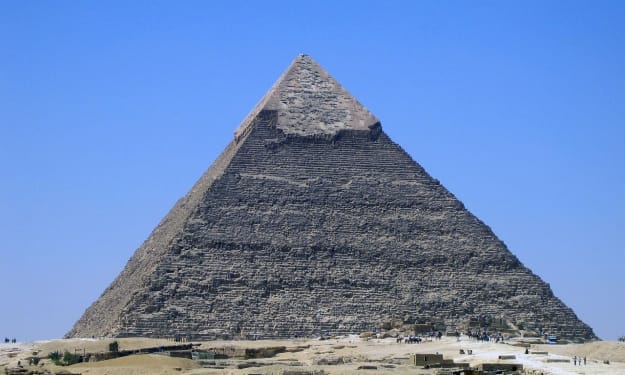
The pharaohs in Ancient Egypt The pharaohs were the ancient rulers of Egypt. They were considered to be the living embodiment of the god Horus, and their power was absolute. The pharaohs were responsible for all aspects of Egyptian society, from religion to the military. They were also the chief builders of Egypt's most famous monuments, including the pyramids and the Sphinx.
By Mo. Khalid 2 years ago in History
A Plane's Roof Blew Off at 24,000 Feet. Here's What Happened Next..!!
A Terrifying Flight: The Extraordinary Story of Salud Carriers Flight 243 Many individuals view flying on a plane as a restless encounter, yet imagine a scenario in which the airplane out of the blue different into a convertible while in midair. In 1988, that horrendous speculative circumstance appeared for the tenants of Salaam Aircrafts Flight 243. Working among Hilo and Honolulu in Hawaii, the flight took an unfortunate turn when the Boeing 737's rooftop fell at 24,000 feet.
By Abdur Rahman 2 years ago in History
History of football part 1
Around the 3rd century BC marks the beginning of our journey. In China, an ancient ball game called Cuju was played, making it one of the oldest known ball games in history. This game involved two teams competing to send a ball filled with feathers into a net, all without the use of hands. Moving on to Ancient Greece, another ball sport called Episkyros was played between two teams consisting of 12 to 14 players. The objective of this game was to propel the ball over the opponent's line using both hands and feet. The Romans, inspired by Episkyros, developed their own game called Harpastum. In Harpastum, two teams aimed to maintain possession of the ball within their own camp for as long as possible, utilizing their hands and feet. In different parts of the world, various ball games were played with unique local rules. During the 12th century, a ball game known as Soule in French and Mob Football in English gained popularity in northwestern France and the British Isles. The rules of this game slightly differed from region to region. Globally, matches were organized between two villages, two parishes, or simply two teams, often consisting of numerous players. The objective was to successfully drop the ball into the opposing team's camp, which could be located in front of a local church door, a wall, or sometimes even a pond. Players were allowed to use both their feet and hands to manipulate the ball. However, these matches often resulted in chaotic and violent free-for-alls. In 1579, a match in Chesterton between Cambridge University students and villagers spiraled out of control, leading to unforeseen consequences.
By ahmed hamdy2 years ago in History
The Skydiver Saved by Fire Ants After Plunging 14,500 Feet
There are people such as me who tend to play it safe. I don’t care to meet my maker before absolutely necessary. Then there are people who love living on the edge, running towards the unthinkable and sometimes achieving the impossible. They seek the surge of adrenaline that runs through their bodies when they push it to the brink. What could bring on more of an adrenaline rush than jumping out of a plane at 14,500 feet?
By Kassondra O'Hara2 years ago in History