Latest Stories
Most recently published stories in History.
Breaking Free: Tales of Triumph Over Psychological Chains
A Glimpse into the Abyss: The Psychological Prison: Imagine a world where the walls of a cell are not made of concrete but of invisible chains, forged from fear, doubt, and past traumas. This is the world of psychological imprisonment, where individuals are shackled by their own minds. In our exploration today, we delve into the harrowing stories of people who have escaped these mental confines. Their journeys reveal the profound strength of the human spirit and the extraordinary resilience required to break free from internal struggles. By shedding light on their experiences, we aim to inspire those still trapped in their own psychological cages, offering a beacon of hope and the possibility of liberation from their unseen tormentors. Their stories are a testament to the power of human endurance and the potential for transformation within even the most daunting circumstances.
By Rafael Fiuza2 years ago in History
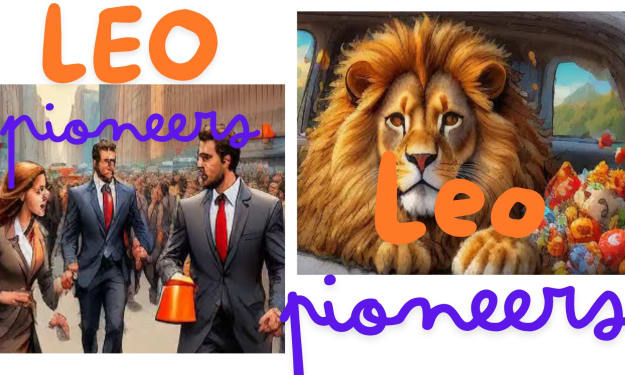
Adventurous and Passionate Leadership of the Leo Zodiac Sign
Welcome to Lions of Industry, where you will know something more about how Leos transformed the corporate world as we know it today. For the purpose of this article, I will look into the particular characteristics that make Leos the absolute embodiment of the business world. Those who are born between the 23rd of July and the 22nd of August are considered to be Leos.
By John MacArthur2 years ago in History
King Mansa Musa
Kankan Musa was born circa 1280 in the Mali Empire. His family lineage played a crucial role in the establishment of the Mali Empire. Mansa's ascension to power was closely tied to the history of the Malian Empire and West Africa. The decline of the Ghana Empire and the rise of the Mali Empire were significant events. The Ghana Empire's decline was attributed to droughts, civil conflicts, and alternative trade routes. The Sosso Empire flourished under the rule of Sumaoro Kante, taking advantage of Ghana's decline and expanding its territories. Sundiata Keita unified the Malinke kingdoms, defeated Sumaoro, and founded the Mali Empire. Sundiata's legacy includes his military prowess, strong leadership, and the establishment of laws and agricultural techniques. Mansa Uli expanded the Mali Empire, undertook a pilgrimage to Mecca, and passed away shortly after his return. Muhammad led expeditions for exploration and trade. Muhammad ordered a fleet of ships to sail west on an exploration mission, but only one ship returned, reporting powerful currents resembling a river. Despite the failure of the first expedition, Muhammad led a second voyage in 1312 with hundreds of vessels equipped with provisions for survival. Musa became the Mansa of the Malian Empire in the early 1310s. Musa's rise to power was linked to the disappearance of Mansa Muhammad's fleet into the Atlantic Ocean, leading to various historical hypotheses.
By Isaac Ekow Anyidoho2 years ago in History
AKASHIC RECORDS
the For more than a century now, the Akashic Records have attracted many seekers of know-how and religious wisdom. One e-book that delves deeply into this enigmatic situation is "The Akashic Records: Unlock the Infinite Power of Your Soul" by using Linda Howe. As such, it offers an incredibly compelling and reachable exploration into what the Akashic Records are, the way they work, and how people can access them for non-public increase.
By Ann lisentra 2 years ago in History
Mr. Nostradamus
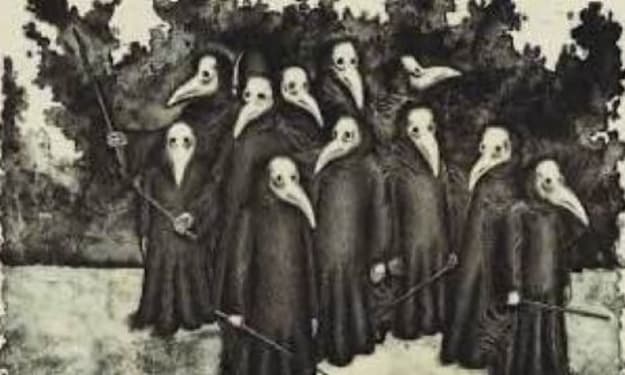
Nostradamus was born in 1503 in the southern region of France to a family that may have had Jewish roots. His father, Jaume or Jacques de Nostredame, worked as a notary, while his mother, Reyniére, was a descendant of a well-known physician. The Nostredame family encountered pressure to convert to Christianity due to the persecution of Jewish individuals in France. Nostradamus was influenced by Kaballah, which had a strong presence in Jewish communities in Spain and southern France during the twelfth and thirteenth centuries. Scholars have observed the impact of Kaballah on Nostradamus's later writings. In his efforts to combat the plague, Michel used 'rose pills' and implemented sanitation practices. The 'rose pills' consisted of a mixture of rose petals, sawdust from green cypress trees, cloves, calamus, and lign-aloes. Additionally, he promoted sanitation measures such as the prompt removal and burial of bodies, maintaining clean surfaces, and ensuring adequate ventilation. Accused of heresy in France, Nostradamus traveled to Italy and established connections in the printing industry. He eventually settled in Salon-de-Provence, married a wealthy widow, and embarked on his writing career by releasing his first publication, an almanac featuring astrological forecasts.
By Isaac Ekow Anyidoho2 years ago in History
Here come the Jews
The name ISRAEL first appeared on the Merneptah Stele, which documented Pharaoh Merneptah's triumph over the Libyan invaders and a small campaign in Canaan. The inscription revealed Israel as a well-established neighbor and a threat to Egypt's power. It is a historical misconception that Hebrew slaves lived in Egypt; they resided in the northern Delta area. Prompted by Yahweh, Moses asked the pharaoh to release the Israelites, demonstrating his power through miracles. Moses destroyed the Golden Calf for breaking the Commandments. The origins of the Israelites can be traced back to ancestors Jacob and Esau, with encounters with extraterrestrial beings. The cult of Yahweh, originally a minor deity in Canaan, has a name shrouded in mystery, speculated to be of non-terrestrial origin. The cult evolved from being a minor deity to being revered as the Only God in the Canaanite pantheon. Early Jewish history shares similarities with other ancient myths and the establishment of social structure. The Babylonian creation myth is similar to Genesis 1, emphasizing creation from water, light, and divine order. The early Jews organized in tribes led by a patriarch, prioritizing family and tribe structure before settling in Canaan.
By Isaac Ekow Anyidoho2 years ago in History
Virtual Reality
Virtual Reality (VR) is no longer just a futuristic concept; it has become a transformative technology reshaping multiple industries, with gaming being its most prominent showcase. From immersive gaming experiences to revolutionary applications in education, healthcare, and beyond, VR is proving to be a game-changer in more ways than one.
By Godugu Tharun2 years ago in History
The Rise of Electric Cars: Past to Present
Electric vehicles (EVs) have changed a lot since they first appeared. They went from being oddities to a big part of our transportation. This change shows how human creativity and the push for green travel have made a big impact.
By Godugu Tharun2 years ago in History
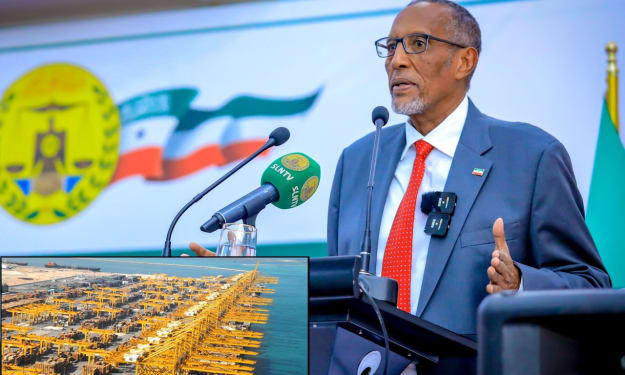
The Berbera Breakthrough: Somaliland's Ascent in the Horn of Africa
by:Wilki Ducaysna Sun Tzu says; “To subdue the enemy without fighting is supreme excellence”, this fits perfectly in Somaliland and Somalia’s conflict and the abled leadership of President Muse Bihi Abdi.
By Vikram Hegde2 years ago in History