Latest Stories
Most recently published stories in History.
What Features Must An Outdoor LED Screen Have?. Content Warning.
Outdoor Light-Emitting Diode Screens Outdoor light-emitting diode screens or outdoor LED screens are huge billboards that their manufacturers have made to display every kind of video, advertising, and more content. People can place them in every open-air area because of their modular assembling system. How businesses advertise their services and products is changing in this advanced world. People are not interested in looking at traditional billboards as they are interested in looking at attractive billboards. And the outdoor led screen is among the excellent ways to advertise or display a significant message.
By Steven Sparrow ST3 years ago in History
Olympics over 120 years
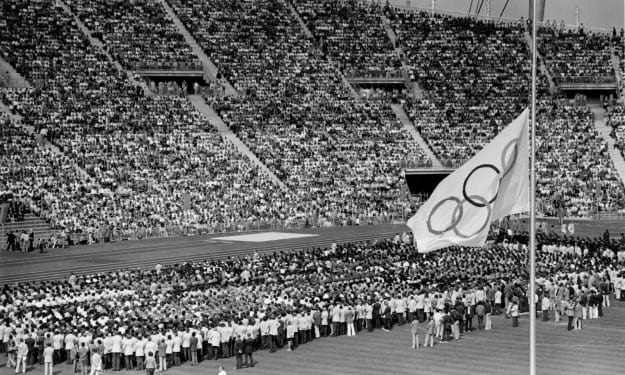
The olympic games have been a showcase of the highest levels of sporting ability and athleticismfor over 120 years. but they have also seen their share of controversy, most notably in the form of doping scandals and even tragedies like the 1972 games in munich. at the same time, they have also been home to many bizarre and unexpected events. today, we take a look at 10 of them number 10. the early olympics had all kinds of events that do not exist today, like tug-of-war at the 1908 games in london. three of the teams were from great britain and all three were made up exclusively of members ofthe police. one from liverpool, one from the met, and one from the city of london. in addition, there were two national teams from the usa and sweden.the americans faced Liverpool in the quarterfinals and lost almost immediately. They complained to officials that their opponents were using illegal shoes as big as ferries on the North River with steel heels and steel cleated steel caps on the heels and steel cleats in the front of the soles, while inches of spikes protruded from the soles. This, of course, sounded like a violation of the rules, as prepared boots or shoes with protruding nails were prohibited, but liverpool police insisted that the boots were standard equipment that they wore to work the Americans' protest was dismissed, and the Liverpool team took the silver medal in the marathon with number nine, the driver. Unfortunately, cheating has always been a problem at the Olympics, but while modern cheaters usually try to find new drugs to fool the tests, athletes in the past were a bit more creative in their chicanery long-distance runner Fred Laws, who competed in the 1904 Olympic marathon in St. Louis. Halfway through the race, Laws developed cramps, so his manager picked him up in his car and drove him the next 11 miles. At the very least, credit must be given to Laws for his absolute audacity when she learned of his cheating, Laws admitted to the crime and claimed it was all a joke and that he had no intention of accepting the award. Whether that was true or not, we'll never know, but Laws did experience a redemption story the following year when he competed in the Boston Marathon. He won, this time with the number eight she represented puerto rico at the 1984 summer Olympics in los angeles, but to be fair, manolin had an unfair advantage a twin sister now we all know what you are thinking, and you are exactly right Madeline and Margaret made the old swap, hoping that no one would be able to tell the difference. and so it happened Madeline pulled her hamstring during the long jump competition and less than a week later she was scheduled to participate in the 4x400 relay to qualify for the finals normally this would have meant that the team would have to forfeit, but what if Margaret participated in her place? After all, she was also a track athlete and Madeleine gave her all her credentials and for a few days Margaret lived and trained in the Olympic village while successfully pretending to be her sister. Then when the big day came, the Puerto Rican team qualified for the finalshe was able to tell Madeleine Margaret apart by a beauty mark on one cheek
By Sabelo Ngcongo3 years ago in History
7 wonders
Introduction Swiss foundation establishment sent off a mission to decide the New Seven Marvels of the World. And these seven wonders are Great Wall of china , Chichén Itzá , Petra , Machu Picchu , Christ the Redeemer , Colosseum , Taj Mahal . Now we talk about these wonders in details.
By UniverseJM3 years ago in History
Titanic: Hidden Facts Uncovered
In the fateful tale of the Titanic's voyage, the echoes of tragedy still resound within our hearts. Amidst the chilling encounter with the iceberg, the majestic ship foundered and anguish befell all who sailed upon her. Yet, beneath the surface, hidden within the depths of this nautical calamity, lie untold narratives that unveil a different side of the saga. Let us now embark on a journey to reveal the lesser-known truths that illuminate the Titanic's story.
By Akanni Adedamola 3 years ago in History
Tattoos and Traditions: Exploring the Sacred Practice of Ifugao in the Philippines"
Ifugao is one of the most fascinating ethnic groups in the Philippines, known for their vibrant culture, which includes intricate art forms such as tattooing and carving. The Ifugao people are considered to be among the first inhabitants of the Philippine Islands, and they have a rich history that stretches back more than two thousand years.
By Xijan Rosana3 years ago in History
ECHOES OF FREEDOM
The city was draped in darkness, punctuated only by the occasional flickering of dim streetlights. Hushed whispers echoed through the narrow alleys, as the citizens lived under the shadow of oppressive rule. Among them was a group of determined revolutionaries, led by the charismatic young leader, Ravi.
By Lovely Jane Dimakuta3 years ago in History
Resilient Cockroaches
In the Egyptian Book of the Dead, there’s a banishment spell that declares, “Be far from me, O vile cockroach.” More than 3,000 years later, we’re still trying to oust these insects. But from poison traps to hastily brandished slippers, cockroaches seem to weather just about everything we throw at them. So what makes cockroaches so hard to kill? There are nearly 5,000 cockroach species. 99% of them live in a range of habitats where they play important ecological roles by recycling dead or decaying organic matter and nourishing other animals. But a couple dozen species adapted to live in close association with humans. German and American cockroaches are among the most common. And they owe their resilience to a combination of physical and chemical adaptations. When it comes to old-fashioned removal methods, they're troublingly tenacious. An American cockroach’s sensory hairs or structures pick up subtle air currents and rapidly send signals to its central nervous system. The roach can then turn and sprint away within a few milliseconds. And it’s among the fastest invertebrates ever recorded, reaching speeds of up to 50 body lengths per second. This would be the human equivalent of running more than 300 kilometers per hour. And finding a hiding place is no problem. With its flattened, flexible body, an American cockroach can squeeze into spaces less than a quarter of its height. Even if we do land a hit, it can withstand compressive forces of up to 900 times its own weight by distributing the impact along its body. And the cockroach’s toughness doesn’t end there. Cockroaches can eat a variety of organic matter, including hair, dead skin, adhesives, and paper. This is made possible by an expansive set of digestive enzymes. Cockroaches are able to thrive even in nutrient-poor environments. Roaches often eat decaying foods that are low in nitrogen— an essential component of DNA and proteins. But they survive by storing nitrogen-containing wastes in their bodies and having a resident group of bacteria recycle the nitrogen into useful molecules for them. Meanwhile, German cockroaches will eat their own poop, vomit, and dead or dying colony members without hesitation. An American cockroach will frolic in sewers, consuming excrement and toting microbes like Staphylococcus aureus and E.coli. But they’ll rarely suffer any consequences. This is because they’re equipped with genes that provide immunity against numerous pathogens. These genes are often duplicated many times over. So when infected, the cockroach’s immune system efficiently unleashes many antimicrobial molecules. Cockroaches also have a slew of defenses against pesticides. When a non-resistant roach walks on a surface that’s been sprayed with a pyrethroid insecticide, for example, the results will likely be fatal. Once absorbed, the chemical binds to sodium channel proteins, which help propagate nerve impulses. The pyrethroid keeps the sodium channels open, so the nerves fire repeatedly. And soon, the cockroach dies. But if a resistant roach is exposed to pyrethroids, it’ll be just fine. Genetic mutations have given them sodium channels that the pyrethroids can’t bind to. The cockroach also produces more detoxification enzymes, which render the pesticide harmless, and the cockroach simply excretes it as a waste. Because German cockroaches reproduce especially quickly, populations may evolve resistance to a new pesticide within months. So far, they're already resistant to 43 different chemicals. But contrary to popular belief, cockroaches would probably not survive a nuclear apocalypse. Compared with other insects, cockroaches are only mildly tolerant to radiation. They would die near the sites of nuclear explosions and would still be severely compromised miles away. Moreover, disasters that threaten humanity also jeopardize the habitats and buffets we provide roaches. Perhaps the only way to beat them is through our mutual destruction. Or maybe cockroaches would find even more surprising ways to thrive long after we’re gone.
By Marjeanette3 years ago in History
Knight's Valor: The Legend of Sir Geoffrey
In the year 1117, amidst the turbulent times of medieval England, a tale of honor, valor, and sacrifice unfolds. "Knight's Valor: The Legend of Sir Geoffrey" chronicles the remarkable journey of a young knight who rises above adversity to become a symbol of chivalry and heroism.
By Antoine Royer3 years ago in History
ww1?
It's been more than a century since WW1 ended in 1918. Though even today some of his most fascinating parts remain shrouded in mystery, despite the wealth of information and research available on the topic. Some of these mysteries would likely never be solved--the evidence now lies under decades of other wars like WWII number 10. Private John Parr was born in 1898 in North London. He joined the British war effort as a reconnaissance cyclist, it was his job to ride out and gather intelligence on enemy positions. Unfortunately, his life would come to an end mere 17 days after Britain entered the war--the first British soldier killed on the European front during WW1. Till today, we don't know exactly who killed him or how Parr was last seen before the Battle of Mons--according to accounts from the battlefield, he was most likely killed from rifle fire by a German cavalry patrol. German units hadn't reached British positions until well after his estimated date of death, so there's a chance that he was killed by a local or worse--or one of his own comrades. the Lost Romanov treasure before the first world war broke out in 1914 Russia and the third largest gold Reserve in the world after the US and France much of it was transported out of the country by the anti-communist white Army led by Admiral vassaler which call Jack that seized power after the Russian Revolution of 1918. it could be traced right up until 1920 when the white forces were decisively defeated by the Bolsheviks with all of their treasure seized and returned to the Russian government when they checked though more than 1600 tons of the gold was missing we still don't have a clue where it could be one Theory says that it's buried in several sites inside the city of omps because that's where the white Army was positioned in the largest numbers it could also be at the bottom of Lake by car which is the largest freshwater lake in the world by volume making exploration rather difficult number eight nurse Mall suitcase back in February 2013 a mysterious suitcase was discovered in the psychology department of abate University in Scotland it was filled with items from the first world war including photographs postcards and letters while we now know that it belonged to a nurse working at the Dartford Wars the building Kent named Margaret mall that's all we really know about it we don't know how it ended up at Abate or why it was never claimed by any of Maul's relatives in the past there are no records of all ever having visited Abate and some speculate that it may have been donated to the university by a family member who didn't realize its significance or simply left behind by an ex-student related to mall in some way while the suitcase's contents are fascinating and provide a first-rate glimpse into the so-called Great War there's still quite a bit of mystery surrounding exactly how it ended up where it did 7. USS Cyclops the USS Cyclops disappeared in early March 1918 making it one of the first Mysteries to emerge out of the now Infamous Bermuda Triangle is a Collier or a type of ship used to transport large quantities of coal as well as one of the largest ships in the U.S Navy at the time it's a lot along with more than 300 Sailors aboard remains a mystery to this day curiously two of its sister ships the USS near us and the USS Proteus disappeared somewhere in the same area years later in 1941. theories range from German submarines to huge sea monsters though most of them fall flat due to a lack of evidence the sheer size of the vessel combined with the lack of distress signals or signs of wreckage has led many to believe that something unusual happened to the ship in its crew some of their descendants have continued their own investigations into the incident though to little success number 6. the Red Baron Manfred von Richthofen more famously known as the Red Baron was one of the most renowned Pilots of world war one he was a German flying ace credited with shooting down 80 enemy aircraft during his career as a fighter pilot his death in April 1918 however has been shrouded in mystery ever since we know that it happened in the Somme region of France where it was engaged in a high-stakes fight against the Canadian Ace Wilfred May though it's unclear exactly who shot his plane down we also know that the killing bullet was fired from an Australian Vicar's machine gun which entered his right lateral chest and exited through his left chest while many British French and Australian soldiers had fired at him with similar weapons and a few have even come forward to claim it in the years since we still don't know who made the Fatal shot 5. bellicus bellicus was a Hungarian serial killer drafted into the austro-hungarian army during World War One while he was gone rumors about his death on the front led to his landlord going to his house and clearing it out for the next tenant there he found 24 dead bodies in various stages of decomposition resulting in a large-scale search operation across Hungary and nearby countries kiss was never found as the wartime chaos in Europe made it impossible to precisely locate him according to One account he was almost caught in Serbia later that year though he reportedly escaped by placing a Dead Soldier in his place as a decoy in the year since his disappearance kiss has been allegedly spotted in various locations around the world including Romania turkey and even New York City number four the mystery sketch diary sometime in the 1970s a mysterious diary is found in the archives of the University of Victoria in Canada filled with sketches from the front lines of the first world war the only initials found on it were JM and we still don't know who that was the contents of the Diary are varied depicting Landscapes buildings and people caught by the war in various ways often in great detail the dedication on the front page reads to my daughter Adele and the diary features the emblems of the British royal horse and roll-filled artillery units which is assumed to be where JM served her in the war that has led some people to believe that he was a British soldier serving in France or Belgium though his precise identity remains largely unknown number three the Florentine Diamond at 100 137.27 metric carats the Florentine Diamond was easily one of the largest diamonds ever mined it was acquired by the Portuguese governor of Goa ludovico Castro in the late 16th century and eventually ended up in the hands of the Medici family in Florence it was passed on to the Habsburg Dynasty after the medicis died out where it stayed right up until Austria's defeat in the first world war the stone was last seen in 1918 as part of an exhibition in Vienna and has since completely disappeared from public view one Theory says that it was taken by someone close to the Austrian Imperial family and smuggled out of Austria possibly to South America or the United States another suggests that it was sold to a collector in Europe and the stone has been in their private collection ever since 2. the sea monster in October 2016 the remains of a German submarine from World War One were discovered off the coast of Scotland sonar scans and video taken by underwater drones revealed the rectu boat relying nearly upright on the seafloor raising many questions about what happened to it according to Marine archaeologist and historian in his McCartney it could have been a ub-85 submarine though that's really all we know about it per accounts of German crew Manning the submarine this particular ub-85 was attacked by a giant sea monster when it was at the surface recharging its batteries during the war it was severely damaged in the fight forcing the crew to abandon it before it sank to the depths of the Atlantic the British forces in the region however claimed that it was instead sunk by their patrol boat the HMS coreopsis on April 30th 1918 though the incident has never been officially confirmed by either side 1. who started the war for a war that changed the world in more ways than we can count due to its sheer scale is surprisingly difficult to pinpoint exactly who started it the answer is not as straightforward as one might think as well we know the immediate trigger the assassination of Martial Franz Ferdinand by a Serbian nationalist we don't know how that turned from an international incident to one of the largest Wars in human history different historians have different takes on the topic while some believe that Germany was squarely responsible others say that it was the collective Imperial interests of Germany France Britain Russia and Austria-Hungary that ultimately led to the Carnage some have even blamed Serbia owing to the Serbian State's complicity in the assassination that started it all
By Rasan Moore3 years ago in History
A Journey Through the Grim Realities of World War One
In the historical backdrop of World War One in 1917, the conflict between Germany and France takes center stage. The young soldiers find themselves thrust into the chaos of war, oblivious to the harsh realities and cruelty that await them.
By Flawlessflexa Moses3 years ago in History