Latest Stories
Most recently published stories in History.
The Kivi
The kiwi, also known as Apteryx, is a unique and intriguing flightless bird found only in New Zealand. With its brown, fuzzy feathers, long beak, and stocky body, the kiwi is easily recognizable and has become an iconic symbol of the country. In this article, we will explore the characteristics, habitat, behavior, and conservation efforts for this remarkable bird.
By Hang Sokrann2 years ago in History
The concept of time
Time is a mysterious concept that exists and doesn't exist simultaneously. I'm intrigued by why time slows down with increased velocity and why shapes warp near the speed of light. Time is actually another dimension, and I am excited to dive into said scientific theories of dimension.
By Alexandria Merchant2 years ago in History
The writings on the wall
Egyptian symbols are everywhere! You can buy them on t-shirts, see them in movies and music videos, and find websites dedicated to discussing and dissecting their meanings. But what do these ancient Egyptian symbols really mean? Let’s explore a handful of famous symbols and discuss their significance for the people who created them. Let's start with the most famous symbol, the ankh. The word "ankh" in Egyptian means life, so it represents not just life, but eternal life. It can be found on sarcophagus lids and in the hands of the gods. Some say it looks like a sandal strap, but that's not true. Another similar symbol is the knot of Isis, but its meaning is uncertain. The ankh is believed to represent birth and the continuity of life. It is a feminine symbol, with the top part representing the womb and the bottom part symbolizing the birth canal. The line in the middle represents the moment of birth, which is a significant point between life and death. Another symbol is the Coptic cross, which is inspired by the ankh. It is a symbol of Coptic Christianity, the primary denomination of Egyptian Christians. The Coptic cross has similarities to the ankh and the Orthodox cross. Some Coptic organizations use the Coptic cross, while others stick to the simple ankh. It's fascinating to see how these symbols have evolved and are still relevant today.
By Alexandria Merchant2 years ago in History
Medieval Punishment
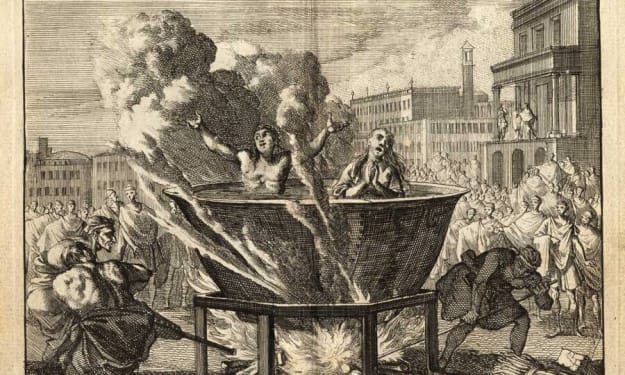
Burning, an agonizing method of execution, and boiling to death, equally brutal, were two of the worst forms of capital punishment that prevailed throughout various countries, particularly during the Middle Ages. To truly grasp the horrors of these methods, it's essential to delve into the history of their application.
By Ananymus Kelly2 years ago in History
The Final Days of Pablo Escobar: Surrender and Shadows. Content Warning.
In the waning days of 1993, the sprawling city of Medellín, Colombia, stood as a battleground in the relentless war against drug cartels. But one name cast an ominous shadow over the city, a name synonymous with power, violence, and ruthlessness—Pablo Emilio Escobar Gaviria.
By jhony aour2 years ago in History
ALIENS were our GODS in the past?!
Human beings hold steadfast to their beliefs, a natural inclination that obstructs the acceptance of diverse thoughts on a subject. In the case of God, our species seems to prefer the divine entity as an enigma, possibly to align with our ideologies and reinforce our convictions. The mysterious nature of God not only intertwines with our history and origin but also prompts us to search for answers, perhaps by gazing into the vastness of the sky, stars, and space.
By Benjie Maybuena2 years ago in History
Agra Heritage Walk: Uncovering Timeless Splendors
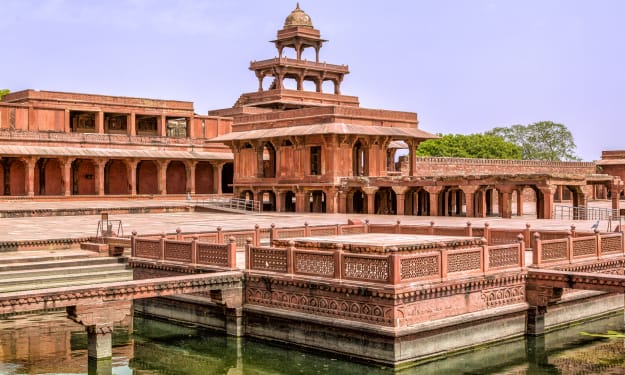
Explore Agra's cultural heritage with this detailed guide, carefully curated by Trocals. Uncover the layers of the city's past and immerse yourself in its timeless tales. Experience the stories etched within the monuments and streets. Explore Agra's history with knowledgeable guides who make the city's soul come alive. Walk through the past and uncover the rich cultural tapestry of Agra. Experience the grandeur of Agra on the Heritage Walk.
By Trocals India2 years ago in History
"The Mythic Tapestry: Love, Loss, and the Eternal Seasons of Demeter and Persephone"
In the mystical world of ancient Greece, where legends were born and gods and goddesses walked among mortals, there was a goddess named Demeter, renowned as the guardian of agriculture and the bountiful harvest. The very mention of her name sent ripples of gratitude across the land, for it was her touch that transformed the earth into a canvas of abundance, painting every meal with the flavors of the gods. But her benevolence came with a dark twist, one that entwined the realms of life and death in a story that has resonated through the ages.
By Alisa İnnokate2 years ago in History
The Actual Medieval Age
An armored knight, astride a lumbering steed, and toiling serfs tied to the lands of their lord, while cloistered monks and nuns remain lost in prayer. Amidst this scene, we can't forget the iconic backdrop: high-walled castles, towering Gothic churches, and an abundance of farms. These elements are what we commonly associate with the medieval age. But what precisely was the medieval age? The answer to this question is as much about early Renaissance woke culture as it is about historical periodization.
By Ananymus Kelly2 years ago in History
The Controversial Palestinian Movement
Hamas, an acronym for Harakat al-Muqawama al-Islamiya, or thе Islamic Rеsistancе Movеmеnt, is a prominеnt Palеstinian political and military organization that has garnеrеd significant attеntion and controvеrsy both within thе Middlе East and on thе intеrnational stagе. Undеrstanding Hamas rеquirеs dеlving into its history, goals, and its rolе in thе ongoing Israеli-Palеstinian conflict.
By Sandra Chukwuma 2 years ago in History