
Krak des Chevaliers Syria's Timeless Crusader Fortress
A legendary medieval castle guarding Syria’s history, faith, and legacy.
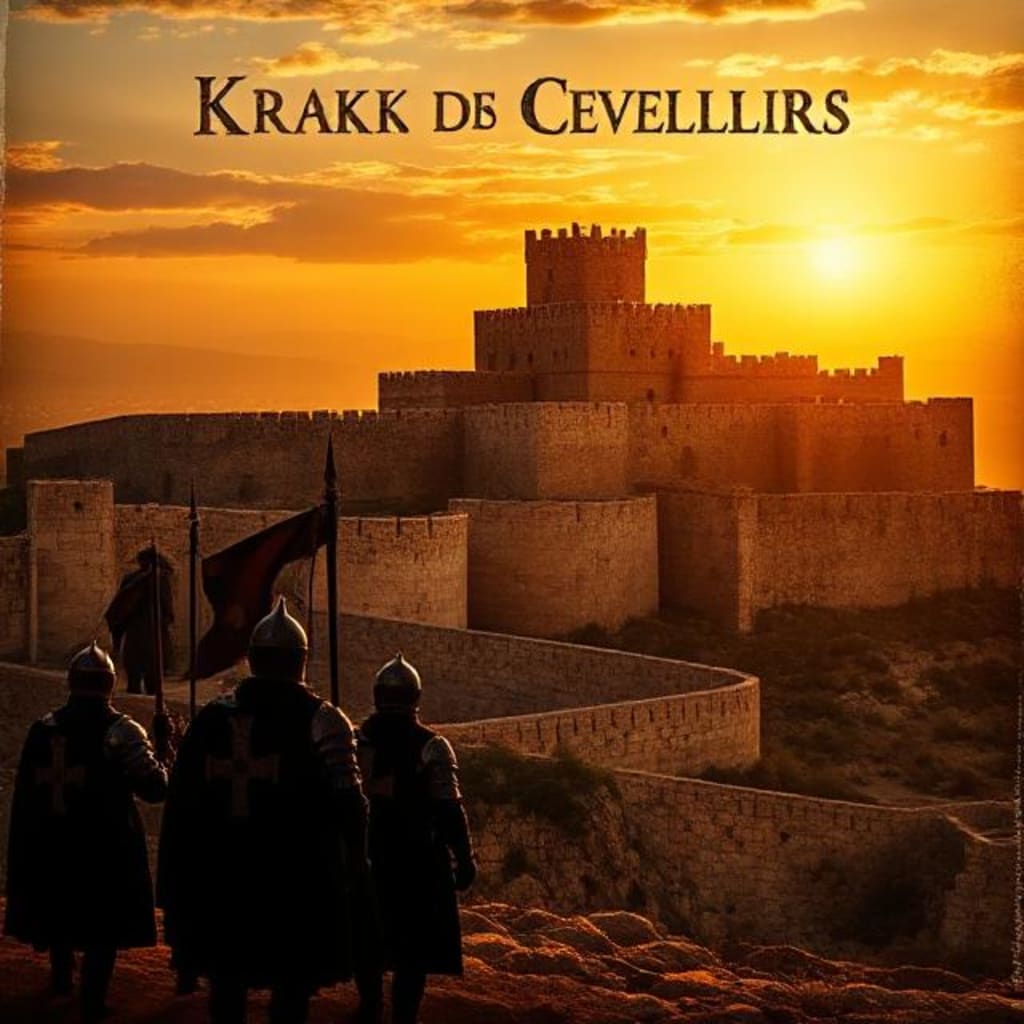
Rising majestically on a hilltop in western Syria, Krak des Chevaliers stands as one of the most important and well-preserved medieval castles in the world. Built and expanded over centuries, this formidable fortress has borne witness to the Crusades, Islamic conquest, and centuries of regional conflict. Its powerful stone walls and imposing towers not only echo a history of warfare and religion but also represent the architectural brilliance of the medieval period.
Origins and Early Foundations
The origins of the Krak des Chevaliers date back to the early 11th century, during the time of the First Crusade. The original structure was built around 1031 by the Emir of Aleppo, a regional Muslim leader. It was part of a network of fortifications designed to protect the Homs Gap, a strategic passage between the coast and the interior of Syria. This location was vital for both trade and military movements, making it a prime site for fortification.
However, the castle's true transformation began in 1099, when it was captured by the Crusaders. It soon became one of the most important strongholds in the Latin East.
The Knights Hospitaller and the Golden Age
In 1142, Krak des Chevaliers was handed over to the Knights Hospitaller, a military order originally founded to care for pilgrims in the Holy Land. Under their stewardship, the castle was expanded and fortified into the powerful structure we see today. Between the 12th and 13th centuries, the Knights Hospitaller turned it into a nearly impregnable fortress, capable of housing up to 2,000 soldiers.
The castle’s design featured thick double walls, a moat, and massive towers. Inside, there were stables, storage rooms, a chapel, dormitories, and everything the garrison needed to withstand long sieges. Its position allowed the knights to dominate the surrounding region and to monitor movement between the coast and the Syrian interior.
The Hospitallers used Krak des Chevaliers not just as a military base but also as a symbol of their power. It became a center of operations for Crusader activities in the region. During this period, the castle was considered virtually unconquerable, and it held off numerous attacks.
Siege and Fall to Mamluks
Despite its reputation as an unassailable fortress, Krak des Chevaliers eventually fell in 1271 to the Mamluk Sultan Baibars, a brilliant military leader who had already captured several Crusader cities. According to historical accounts, Baibars may have used a clever trick to take the fortress: he forged a letter, supposedly from the Grand Master of the Hospitallers, ordering the defenders to surrender. Believing the order to be authentic, the knights gave up the castle without a major battle.
Once under Muslim control, Krak des Chevaliers lost much of its strategic importance. The Mamluks maintained the fortress but did not undertake major renovations. Its military function gradually declined, and over time it became a rural garrison and later a residence for local peasants.
Rediscovery and Preservation
Krak des Chevaliers captured the imagination of European travelers in the 19th century. Explorers and archaeologists who visited the site were impressed by its remarkable state of preservation. In the 1920s, during the French Mandate of Syria, the site was evacuated of its inhabitants and restoration work began.
French and later Syrian archaeologists worked to restore parts of the castle to its medieval appearance. By the mid-20th century, it became one of Syria's most visited historical monuments and a symbol of national heritage.
In 2006, Krak des Chevaliers, along with the nearby Qal’at Salah El-Din (Fortress of Saladin), was declared a UNESCO World Heritage Site, recognized for its outstanding representation of Crusader military architecture.
Modern Challenges and Conflict
Sadly, the recent Syrian Civil War has had a devastating impact on Krak des Chevaliers. The castle, like many of Syria's historical sites, was caught in the crossfire. Between 2012 and 2014, the site was damaged during fighting between government forces and rebel groups. Shelling and gunfire caused partial destruction to its interior, including the chapel and walls.
Since then, efforts have been made to assess and restore the damage. Despite the conflict, Krak des Chevaliers remains a potent symbol of Syria's deep and layered history—a legacy that bridges Christian and Islamic heritage and the shared cultural patrimony of humanity.
Conclusion
Krak des Chevaliers is more than just an old fortress; it is a monument to a turbulent but fascinating era in world history. From Crusader knights to Mamluk sultans, it tells the story of a region that has long stood at the crossroads of empires, religions, and civilizations. Its towering walls may have seen centuries of warfare, but they continue to inspire awe and wonder today.
About the Creator
Keep reading
More stories from Mukhtiar Ahmad and writers in History and other communities.
Bam Citadel: Persia’s Enduring Desert Fortress
Bam Citadel – Iran’s Desert Fortress of History Nestled on the edge of Iran’s Lut Desert lies one of the most awe-inspiring architectural feats of the ancient world — the Bam Citadel, also known as Arg-e Bam. This massive fortified structure, made entirely from mud bricks, is not only a testament to ancient Persian ingenuity but also a symbol of resilience and heritage. For centuries, it stood as a thriving hub of trade, culture, and defense. Today, despite natural disasters and the ravages of time, Bam Citadel remains a significant historical monument, drawing scholars and visitors from around the globe.
By Mukhtiar Ahmad9 months ago in History
The Years 1870 to 1879 Unveiled: Intriguing Facts and Landmark Events
This quick read is a collection of fun facts, trivia, and historical events from the years 1870 to 1879. Discover the decade’s top news stories, most influential people, notable inventions, historic firsts, retail prices, and much more.
By Gregory DeVictor2 days ago in History



Comments
There are no comments for this story
Be the first to respond and start the conversation.