
Bam Citadel: Persia’s Enduring Desert Fortress
Ancient adobe stronghold, rich in history, culture, trade, and resilience.
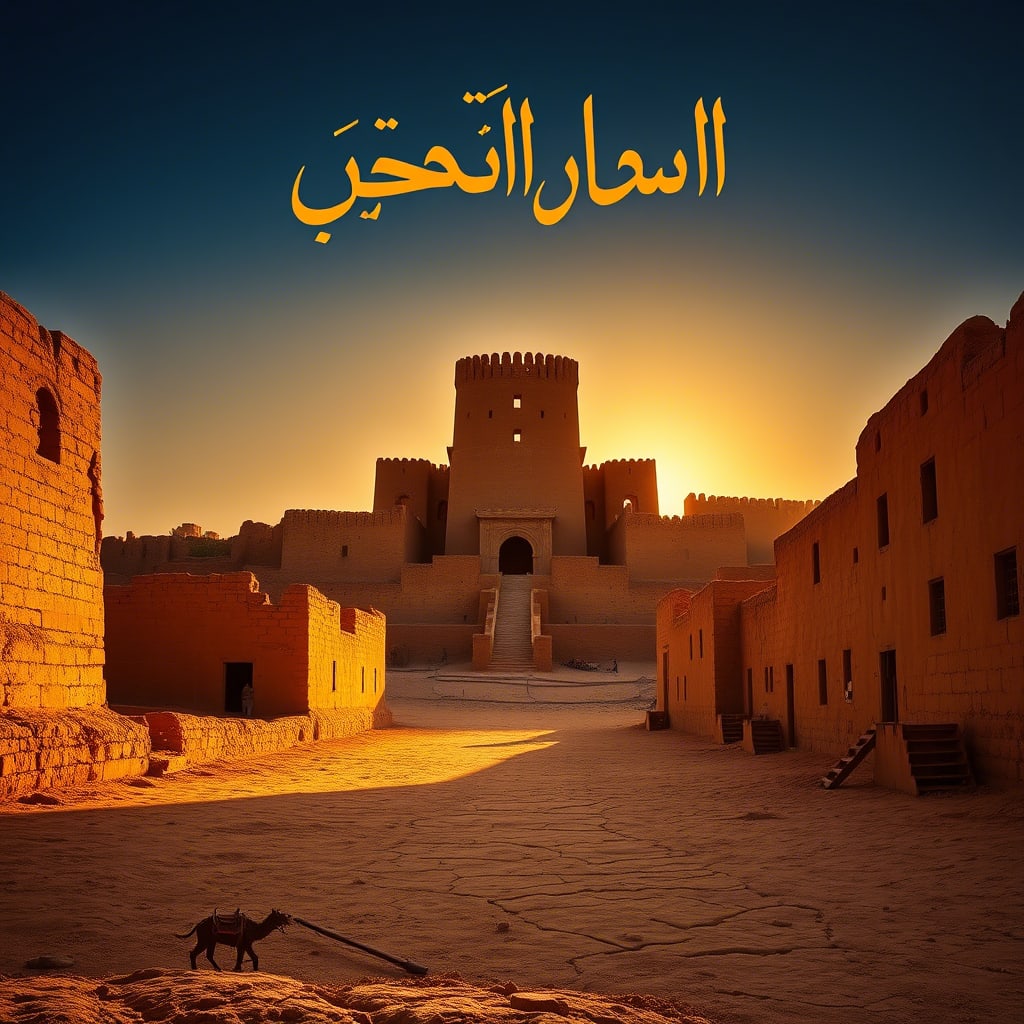
Bam Citadel – Iran’s Desert Fortress of History
Nestled on the edge of Iran’s Lut Desert lies one of the most awe-inspiring architectural feats of the ancient world — the Bam Citadel, also known as Arg-e Bam. This massive fortified structure, made entirely from mud bricks, is not only a testament to ancient Persian ingenuity but also a symbol of resilience and heritage. For centuries, it stood as a thriving hub of trade, culture, and defense. Today, despite natural disasters and the ravages of time, Bam Citadel remains a significant historical monument, drawing scholars and visitors from around the globe.
Origins and Construction
The origins of Bam Citadel date back to the Achaemenid Empire (6th–4th century BCE), although most of the visible structure we see today was built during the Safavid dynasty (16th–18th century CE). Located in Kerman Province, southeast Iran, the citadel was strategically placed on the ancient Silk Road, serving as a key trading and military outpost.
Constructed using adobe bricks (sun-dried mud bricks), palm wood, and straw, the architecture of Arg-e Bam reflects traditional Persian design. The entire complex covers an area of approximately 180,000 square meters, making it the largest adobe structure in the world. Its impressive design includes high defensive walls, watchtowers, a moat, and a labyrinth of alleyways — all designed to protect its inhabitants and facilitate life in the desert.
Structure and Urban Planning
Arg-e Bam was not just a fortress; it was a living city. At its height, it housed nearly 12,000 people and included residences, bazaars, stables, a mosque, schools, and a governor’s palace. The citadel was divided into two main parts: the citadel proper, located on an artificial hill in the center, and the outer city, where most of the population lived.
One of the most remarkable aspects of Bam Citadel was its advanced irrigation system, known as qanats — underground channels that transported water from nearby mountains to the arid plains. This technology was vital in sustaining agriculture and urban life in a harsh desert climate.
Strategic and Economic Importance
Due to its strategic location, Bam became an important caravanserai — a resting place for traders and travelers along the Silk Road. It connected Iran with Central Asia, India, and the Arabian Peninsula. The city was renowned for its textile products, particularly Bam silk and cotton garments, which were highly sought after in trade networks.
Throughout its history, the citadel served as a stronghold during various conflicts. Dynasties and rulers used it to assert control over southeastern Iran. The city also witnessed periods of rebellion and sieges, particularly during the turbulent years of the Qajar dynasty in the 19th century.
Decline and Abandonment
With the rise of modern infrastructure and changes in trade routes, the importance of Bam gradually declined. By the early 20th century, the citadel was largely abandoned. The population moved to modern Bam city nearby, leaving the ancient fortress to the elements. While some maintenance and restoration occurred, the structure faced natural erosion and decay over the decades.
2003 Earthquake and Restoration
Tragedy struck on December 26, 2003, when a devastating earthquake measuring 6.6 on the Richter scale hit Bam. The disaster killed over 26,000 people and caused massive destruction, including the near-total collapse of Arg-e Bam.
However, the earthquake also sparked a global response. Iran, with the help of UNESCO, international experts, and local authorities, began an extensive restoration project. In 2004, the Bam Citadel was placed on UNESCO’s World Heritage List, both as a cultural site and on the List of World Heritage in Danger.
Restoration efforts have focused on preserving the original materials and techniques as much as possible, with modern technology aiding in stabilization. The project symbolizes hope and the commitment to preserve cultural heritage in the face of adversity.
Legacy and Tourism
Today, the partially restored Bam Citadel stands as a symbol of Iranian heritage, resilience, and architecture. It continues to attract historians, archaeologists, and tourists who marvel at its massive walls and ancient design. The site offers insight into the lives of those who once inhabited the desert city, and serves as an educational model of Persian mud-brick construction.
The restoration of Arg-e Bam is ongoing, but it is already hailed as one of the most successful post-disaster heritage projects in the world.
Conclusion
The Bam Citadel is more than just a ruin; it is a story etched in mud and stone — a story of prosperity, struggle, destruction, and rebirth. As one of Iran’s most treasured historical sites, Arg-e Bam continues to inspire awe and admiration. It reminds us that even in the harshest environments, human creativity and resilience can create wonders that endure for centuries.
About the Creator
Keep reading
More stories from Mukhtiar Ahmad and writers in History and other communities.
Merv Silk Road's Lost Jewel
The Ancient City of Merv – A Forgotten Jewel of Turkmenistan Hidden in the arid landscape of modern-day Turkmenistan lies the once-magnificent city of Merv, an ancient metropolis that was, at its peak, one of the largest and most important cities in the world. Known as the "Pearl of the East," Merv's strategic location along the Silk Road made it a center of culture, commerce, religion, and science for over two millennia. Today, its crumbling walls and ruins tell a story of power, prosperity, and tragic downfall.
By Mukhtiar Ahmad7 months ago in History
Nobel Peace Prize
The Nobel Peace Prize has stood as one of the world’s most recognized honors. Awarded annually in Oslo, it is meant to celebrate individuals or organizations that have made significant contributions toward peace, diplomacy, and humanitarian progress. While its mission appears straightforward, the Nobel Peace Prize has never been free from debate. In recent years, conversations surrounding global politics—particularly discussions about the Trump Nobel Peace Prize—have brought renewed attention to how peace is defined, measured, and rewarded in the modern era. The Origins and Meaning of the Nobel Peace Prize The Nobel Peace Prize was established by Alfred Nobel, the Swedish inventor best known for creating dynamite. In his final will, Nobel directed that a portion of his wealth be used to recognize efforts that foster peace among nations, reduce standing armies, or promote diplomacy and cooperation. Since its first award in 1901, the prize has honored activists, diplomats, organizations, and world leaders whose actions shaped international dialogue. Unlike other Nobel categories, the peace prize is awarded by a Norwegian committee rather than a Swedish institution. This distinction reflects Nobel’s desire to separate the prize from national interests and focus instead on global responsibility. Over time, the definition of “peace” has expanded. Early recipients were often disarmament advocates or mediators. More recent laureates have included human rights defenders, climate activists, and international organizations working in conflict zones. Politics and the Nobel Peace Prize Despite its humanitarian ideals, the Nobel Peace Prize has always intersected with politics. Recognizing peace efforts often means evaluating political leadership, international negotiations, and long-term consequences—none of which are easy to measure in real time. Some awards have been widely celebrated, while others sparked controversy. Critics often argue that certain laureates were honored prematurely, before the lasting results of their actions became clear. Supporters counter that the prize is meant to encourage peace efforts, not merely reward completed achievements. This tension has made the Nobel Peace Prize a reflection of global priorities at any given moment, rather than a simple historical judgment. Donald Trump and Nobel Peace Prize Discussions Few modern political figures have generated as much debate in connection with the Nobel Peace Prize as Donald Trump. During and after his presidency, conversations about a potential Trump Nobel Prize emerged repeatedly, particularly among supporters who pointed to his role in diplomatic initiatives. The phrase Trump Nobel Peace Prize gained traction following agreements and negotiations in regions long marked by conflict. Advocates argued that these diplomatic efforts aligned with Alfred Nobel’s vision of reducing international tension through dialogue rather than force. At the same time, critics questioned whether these actions met the broader ethical and humanitarian standards traditionally associated with the award. They pointed to domestic divisions, foreign policy controversies, and unresolved global conflicts as reasons for skepticism. This divide highlights a core challenge of the Nobel Peace Prize: peace is rarely absolute, and political leadership is often complex and contradictory. Trump Nobel Peace Prize 2026: Speculation and Context As global politics continue to evolve, speculation around a Trump Nobel Peace Prize 2026 has appeared in media discussions and public commentary. It is important to note that nominations for the Nobel Peace Prize are confidential for decades, and speculation does not confirm consideration or selection. However, the mere discussion of Trump Nobel Peace Prize 2026 reflects how the award has become part of broader cultural and political conversations. Supporters view such recognition as validation of diplomatic achievements, while critics see the speculation as politicizing an institution meant to rise above partisan debate. This dynamic is not unique to Trump. Many past leaders, from various ideological backgrounds, were debated heavily before or after receiving the prize. The Nobel Peace Prize often mirrors global disagreements rather than resolving them. How the Nobel Committee Makes Its Decision Each year, hundreds of nominations are submitted by qualified individuals, including academics, lawmakers, and previous laureates. The Nobel Committee evaluates these nominations through research, expert consultation, and internal debate. The process considers intent, impact, and long-term significance. However, because peace efforts often unfold over years or decades, the committee must make decisions without full historical clarity. This reality explains why some awards age gracefully while others remain controversial. The committee rarely responds directly to public pressure or online campaigns. Media attention, including discussions around a Trump Nobel, does not guarantee influence over the final decision. The Broader Impact of the Nobel Peace Prize Beyond individual recipients, the Nobel Peace Prize plays a symbolic role. It brings global attention to issues that might otherwise be ignored, from humanitarian crises to fragile peace processes. Even controversial nominations can spark meaningful debate about what peace truly means in the modern world. The prize also raises questions about accountability. When leaders are considered for such recognition, the public is encouraged to examine policies, outcomes, and moral responsibility more closely. In this sense, discussions surrounding the Trump Nobel Peace Prize are not just about one individual. They reflect deeper conversations about diplomacy, leadership, and the evolving standards by which peace is judged. Conclusion: A Prize That Reflects the World The Nobel Peace Prize remains one of the most influential and debated honors in global society. Its power lies not only in recognizing peace efforts but also in challenging the world to think critically about conflict, cooperation, and responsibility. Whether discussions involve historic activists or modern political figures like those associated with Trump Nobel Peace Prize 2026 speculation, the award continues to reflect the complexities of international relations. Peace is rarely simple, and neither is the process of honoring it. Ultimately, the Nobel Peace Prize serves as a reminder that striving for peace is an ongoing journey—one shaped by ideals, actions, and the difficult choices that define human history.
By Saboor Brohi about 14 hours ago in History
Kyrsten Sinema
Kyrsten Sinema has become one of the most recognizable and debated figures in modern American politics. Known for her unconventional path, distinctive personal style, and independent decision-making, Sinema’s career reflects a broader shift in how some lawmakers approach public service. Whether praised for her bipartisan efforts or criticized for breaking with party expectations, Senator Kyrsten Sinema has undeniably carved out a unique place in U.S. political history. Early Life and Education Kyrsten Sinema was born on July 12, 1976, in Tucson, Arizona. Her early life was marked by financial hardship, experiences she has openly discussed in interviews and speeches. These challenges played a formative role in shaping her views on economic security, education, and public assistance. Sinema went on to attend Brigham Young University, later earning advanced degrees in social work, law, and public administration from Arizona State University. Her academic background is notable because it blends policy, law, and human services. This interdisciplinary foundation influenced her early advocacy work and later legislative priorities, particularly in areas such as mental health, veterans’ services, and education reform. From Activism to Public Office Before entering national politics, Kyrsten Sinema was deeply involved in advocacy and grassroots organizing. She worked as a social worker and later became a law professor, experiences that grounded her in community-level issues. Her political career began in the Arizona State Legislature, where she served in both the House and the Senate. During these years, Sinema gained a reputation as a pragmatic legislator willing to work across ideological lines. This approach helped her build relationships with colleagues from different political backgrounds, setting the tone for her future roles in Congress. Rise to the U.S. Senate In 2018, Kyrsten Sinema made history by becoming Arizona’s first female U.S. senator. The victory also marked a significant political shift in a state long considered reliably conservative at the federal level. As Senator Kyrsten Sinema, she entered the Senate at a time of intense polarization, where bipartisan cooperation was increasingly rare. Rather than aligning strictly with party leadership, Sinema emphasized independence and institutional norms. Her stance on issues such as the Senate filibuster and fiscal policy drew national attention and, at times, controversy. Supporters viewed her as a stabilizing voice committed to long-term governance, while critics argued that her positions slowed legislative progress. Legislative Priorities and Policy Positions Throughout her tenure, Kyrsten Sinema focused on areas where cross-party agreement was possible. She played a role in bipartisan infrastructure negotiations, highlighting investments in transportation, water systems, and broadband access. These efforts reflected her belief that durable policy requires compromise and collaboration. Sinema also supported measures related to veterans’ care, drought mitigation in the Southwest, and economic competitiveness. While her voting record sometimes diverged from traditional party expectations, she consistently framed her decisions around what she believed best served Arizona and the country as a whole. Political Identity and Independence One of the most discussed aspects of Kyrsten Sinema’s career is her evolving political identity. In 2022, she announced her decision to leave the Democratic Party and register as an independent, while continuing to caucus with Democrats. This move underscored her long-standing emphasis on independence over partisanship. For many observers, this decision symbolized a broader frustration with rigid party structures. Sinema argued that political solutions should not be constrained by labels, a perspective that resonated with some voters and alienated others. Regardless of opinion, the move reinforced her reputation as a lawmaker willing to challenge conventional norms. Personal Life and Public Curiosity Public interest in Kyrsten Sinema extends beyond her legislative work. Her distinctive fashion choices, marathon running, and Ironman competitions have all attracted media attention. Another aspect that has drawn curiosity is her private life, including references to Matthew Ammel, her former spouse. Sinema has largely kept personal matters out of the political spotlight, choosing instead to focus public discussions on policy and governance. Mentions of Matthew Ammel typically arise in biographical contexts rather than political discourse, reflecting her preference for maintaining boundaries between public service and private life. Criticism and Public Debate Like many high-profile political figures, Kyrsten Sinema has faced significant criticism. Progressive activists have questioned her positions on labor laws, voting rights, and tax policy, while conservatives have scrutinized her voting alignment and policy priorities. Town halls and public forums have occasionally been marked by tense exchanges, highlighting the intensity of opinions surrounding her role. Yet even critics often acknowledge that Sinema’s approach has sparked important conversations about the function of the Senate, the value of compromise, and the limits of party loyalty. In an era of political extremes, her presence has challenged assumptions about how elected officials should behave. Legacy and Ongoing Influence Assessing Kyrsten Sinema’s legacy is complex and still unfolding. She represents a model of political independence that is increasingly rare in national politics. Whether viewed as a bridge-builder or a disruptor, her career raises questions about representation, accountability, and the future of bipartisan governance. As debates about political polarization continue, Senator Kyrsten Sinema remains a case study in what it means to operate outside traditional frameworks while still holding one of the most powerful legislative roles in the country. Conclusion Kyrsten Sinema’s journey from grassroots activism to the U.S. Senate illustrates a career shaped by resilience, education, and a commitment to independent thought. Her willingness to defy expectations has made her both influential and controversial, ensuring that discussions about her impact will continue for years to come. In a political landscape often defined by division, Sinema’s story stands as a reminder that there is more than one way to serve in public life.
By Saboor Brohi about 17 hours ago in History



Comments
There are no comments for this story
Be the first to respond and start the conversation.