


Mount Kilimanjaro, located in Tanzania, is the tallest freestanding mountain in the world and a UNESCO World Heritage Site. Its history, both geological and human, is rich and fascinating.
Geologically, Kilimanjaro's history dates back millions of years. The mountain began forming about a million years ago when volcanic activity in the region gave rise to a chain of massive volcanoes. Over time, these volcanoes eroded and collapsed, forming the three distinct cones that make up Kilimanjaro: Kibo, Mawenzi, and Shira.
Kilimanjaro's volcanic activity ceased around 360,000 years ago, leading to its dormancy. Its glaciers, however, continued to grow and recede with changing climate patterns. For much of human history, the mountain was known only to local indigenous tribes, who revered it as a sacred place.
The earliest recorded European sighting of Kilimanjaro was by Hans Meyer, a German geographer, in 1889. He and Austrian mountaineer Ludwig Purtscheller became the first to successfully summit the mountain in 1889. Since then, Kilimanjaro has become a symbol of Africa and a popular destination for trekkers and climbers from around the world.
The Chagga people, who lived at the base of the mountain, had their own history with Kilimanjaro. They believed that the mountain was the dwelling place of their god, Ruwa, and revered it as a sacred site. They cultivated the fertile soils on its slopes and traded with neighboring tribes. The Chagga established intricate irrigation systems and terraced fields, which can still be seen today.
In the late 19th century, as European colonial powers were carving up Africa, Kilimanjaro came under German control. The mountain's fame and allure grew, and it attracted explorers, adventurers, and tourists. German settlers established coffee plantations on the mountain's lower slopes, further impacting the region's culture and environment.
During World War I, British forces took control of Kilimanjaro from the Germans. After the war, the region came under British rule, and Kilimanjaro's legacy as a global icon continued to grow.
In 1961, Tanzania gained independence from British colonial rule, and Mount Kilimanjaro became a symbol of national pride. It remains an enduring emblem of the country today.
One of the most remarkable aspects of Kilimanjaro's history is its ongoing transformation. Over the centuries, climate change has dramatically affected the mountain's glaciers. In the early 20th century, there were more than twenty glaciers on Kilimanjaro. By the 21st century, many had retreated significantly, and some had disappeared entirely. Scientists point to global warming and changing weather patterns as the primary culprits.
The receding glaciers have sparked concerns about water resources and ecosystem health in the region, as the mountain's glacial meltwater feeds into rivers and aquifers that supply water to local communities.
Kilimanjaro's natural beauty and unique ecosystems have also led to efforts to preserve and protect the mountain and its surroundings. The establishment of Kilimanjaro National Park in 1973 aimed to safeguard the environment, wildlife, and the traditions of the Chagga people.
In more recent history, various conservation and climate organizations have launched initiatives to address the impact of climate change on Kilimanjaro and the communities that rely on its resources. These efforts include projects to reduce deforestation, promote sustainable agriculture, and develop alternative water sources.
Despite the challenges posed by climate change and other environmental pressures, Mount Kilimanjaro continues to inspire people from all walks of life. Climbing the mountain is a test of physical and mental endurance, and it offers breathtaking views of diverse ecosystems, including rainforests, alpine meadows, and glaciers.
In conclusion, the history of Kilimanjaro is a story of geological transformation, cultural significance, exploration, and environmental change. It has captivated the world's imagination for centuries and remains a testament to the enduring power of nature and human determination. The mountain's future, however, hinges on our collective efforts to address the environmental challenges it faces and preserve its unique heritage for generations to come.
About the Creator
Manrizo Brand
I am a passionate and dedicated photographer, committed to capturing the beauty of the world through the lens of my camera. Photography is not just a profession for me; it's a way of life. With every click, I aim to freeze moments in time,
Keep reading
More stories from Manrizo Brand and writers in History and other communities.
ELEPHANT LIFE
Elephants are remarkable creatures known for their unique and fascinating lifestyles. These magnificent animals, belonging to the family Elephantidae, encompass three extant species: the African bush elephant, the African forest elephant, and the Asian elephant. With an evolutionary history spanning millions of years, they have developed intricate social structures, distinctive behaviors, and adaptations that have enabled them to thrive in diverse habitats across the globe. In this comprehensive exploration, we'll delve into the multifaceted lifestyle of elephants, touching on their physical characteristics, social dynamics, feeding habits, reproductive strategies, and conservation challenges.
By Manrizo Brand2 years ago in History
3 Harmless Habits That Once Caused Absolute Chaos
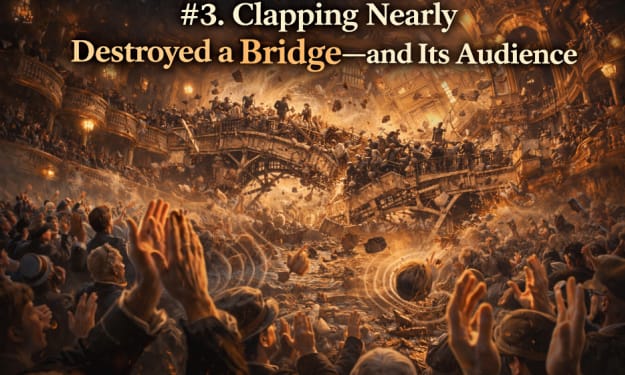
Most habits are comfortingly dull. You chew gum. You clap at events. You check your phone. You assume—reasonably—that these actions will not destabilize governments, bankrupt industries, or end lives. Society depends on this assumption. If every small habit carried catastrophic potential, we would never leave the house.
By Enoch Sagini7 days ago in History
Brosley Punch — The Strike That Shook Fate
Brosley was never taught how to throw a punch. He learned it the hard way—through hunger, through survival, through a childhood spent on a world that showed no mercy. Long before the universe would whisper his name in fear, Brosley was just a boy standing on cracked red stone, staring at a sky that never answered his questions.
By The best writer 5 days ago in History



Comments
There are no comments for this story
Be the first to respond and start the conversation.