
Johnny Reb and Billy Yank evolved from the American Civil War
The origin of the nicknames for the Confederate and Union Soldiers

Nicknames from the Civil War
The term Johnny Reb refers to soldiers in the Confederate Army during the US Civil War. Billy Yank describes Union soldiers. In Southern culture, the Johnny Reb stereotype has been present in poetry, photography, novels, art, written history, and public statuary.
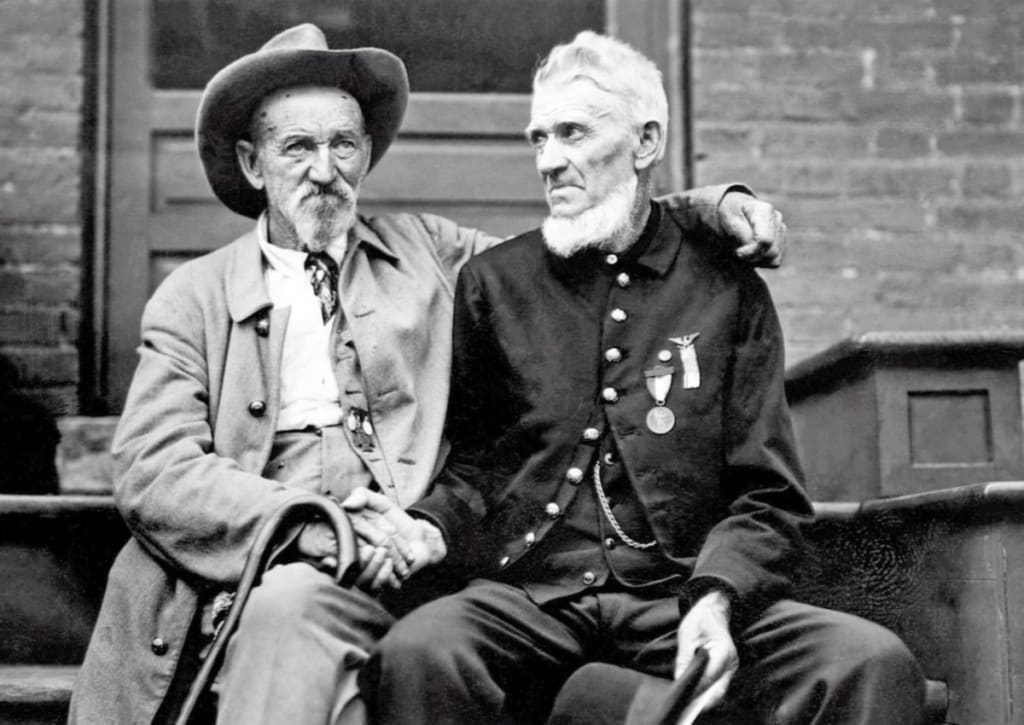
The above photo is an image of two men who represent Southerner Johnny Reb and his Northern counterpart Billy Yank. These men actually fought in the War between the States and decided to shake hands and move on after the Civil War ended.
Worldwide, all Americans may be considered as Yankees by some, but a Billy Yank was the name Southern Americans gave to anyone residing above the Mason-Dixon line. Billy Yank did not, however, evolve during the Civil War but came about when 20th-century journalists began coining the term.
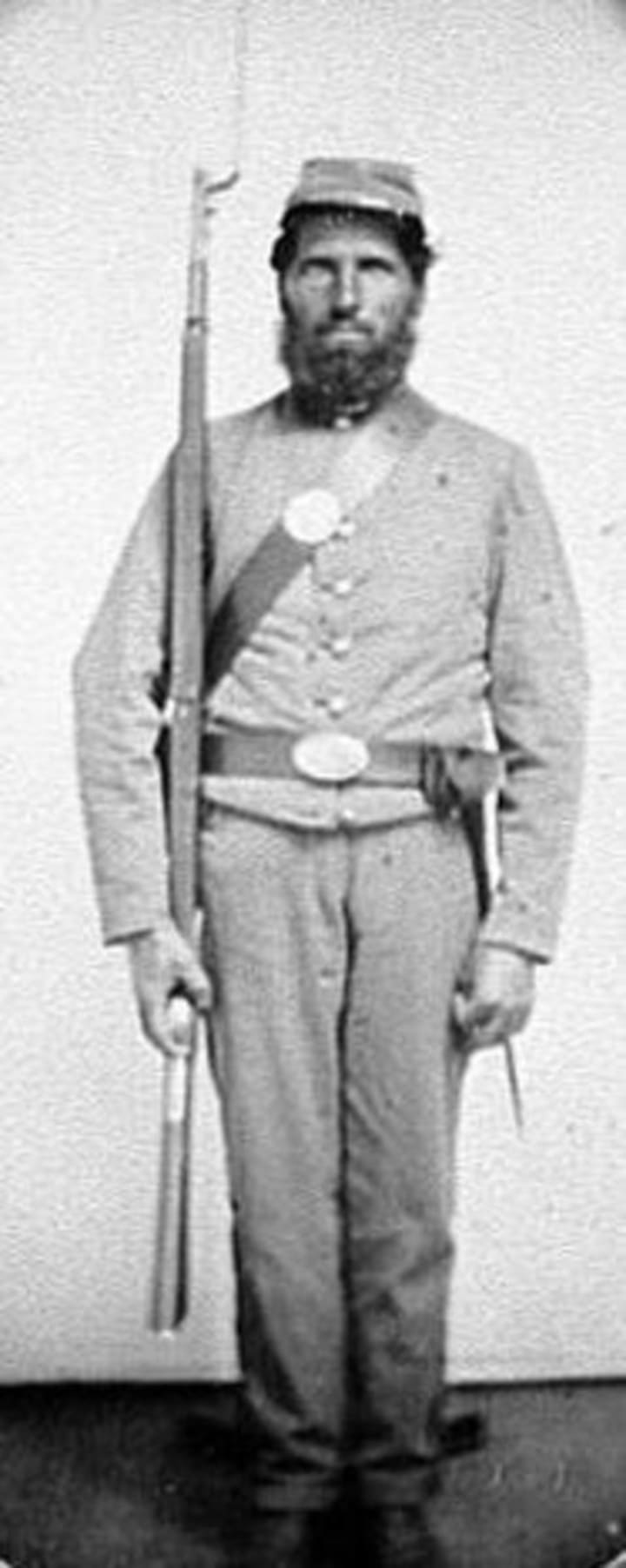
In photos, Billy is most often pictured wearing a regulation U.S. Army blue wool Union uniform. This included a fatigue blouse, a lightweight wool coat with four brass buttons on the front, and an inside pocket. In addition, he is shown wearing a kept-style cap with a leather visor and a rounded flat top that is made of wool broadcloth and a cotton lining.
Details about Johnny and Billy
Sometimes people today might utter the words "Damn Yankees" which is also the title of a 1958 movie, but Billy Yank is probably not known by most US citizens.
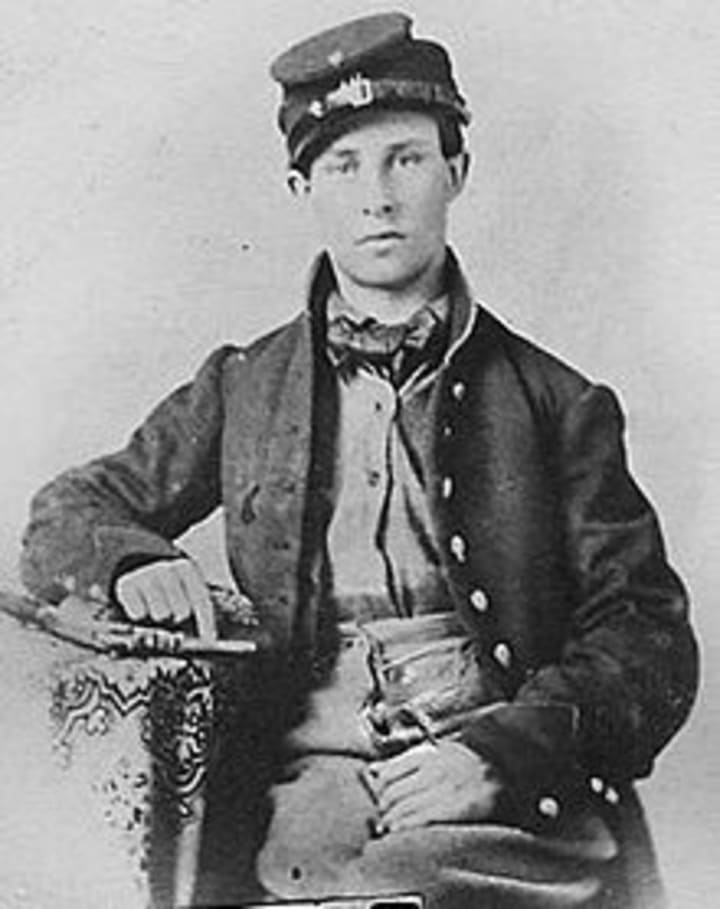
Johnny Reb is usually pictured in a gray wool Confederate uniform with the typical kepi-style forage cap. Like his Northern counterpart, the cap is made of wool broadcloth, or cotton jean cloth and has a rounded, flat top, cotton lining, and leather visor.
Johnny is most often depicted with his weapons and or the Confederate flag. Bell I. Wiley is a historian who wrote about the common soldiers of both the Northern and the Southern armies.
He says the origin of the name seems to have come from the habit of Union soldiers calling out, "Hello, Johnny" or "Howdy, Reb" to the Confederate soldiers who were on the other side of the picket line.
Little-Known Facts
Johnny Reb has also been used as a nickname for Confederate soldiers, who are veterans, as well as to refer to White natives of the Southern states that formerly belonged to the Confederacy. The name is still commonly used in scholarly writing by authors who are Southern and Northern.
Robert N. Rosen, a Jewish South Carolina native, wrote extensively about the roles Southern Jews played in the War Between the States. He refers to them as "Jewish Johnny Rebs".
In 2000, The Los Angeles Times published an article about Confederate President Jefferson Davis that was written by historian Eric Foner and the title was, Chief Johnny Reb. There was also a book written that was published in 1905 titled Johnny Reb and Billy Yank.
This is a first hand account of the war by Alexander Hunter, a Confederate soldier who served in the 4th Virginia Cavalry and the 17th Virginia Infantry from 1861 to 1865. The novel is the personal account of Hunter, who kept diaries during his time as a soldier, and the novel is still in print.
Music in the midst
Johnny Horton wrote a song titled Johnny Reb which is indeed about Confederate soldiers. Mitch Miller sang a version of When Johnny Comes Marching Home Again but this song is not about the Rebel forces. It was written for all soldiers from the North and the South who made it home from the Civil War. Gene Autry sang Johnny Reb and Billy Yank which was a salute to both stereotypes.
Billy Yank lives on
Although Johnny Reb is more widely known, Billy Yank has been immortalized. There is a 17- foot-tall bronze Union soldier bearing his name atop the Soldiers, Sailors, and Pioneer Monument in downtown Hamilton, Ohio.
Billy’s official title is “Victory, the Jewel of the Soul,” he weighs more than 3,000 pounds and has one foot resting on an unexploded shell. This monument was planned and promoted in 1899 by the Butler County Civil War veterans and financed by a county levy, according to the Ohio History Connection website. The monument is located near the center of the site where Fort Hamilton once stood.
About the Creator
Cheryl E Preston
Cheryl enjoys writing about current events, soap spoilers and baby boomer nostalgia. Tips are greatly appreciated.
Keep reading
More stories from Cheryl E Preston and writers in History and other communities.
Who changed the Sabbath from Saturday to Sunday?
When is the Sabbath Day? Some believers in Christ say they attend church services on Sunday because it is the Christian Sabbath. The Bible indicates that God created the earth in six days and He rested on the seventh. Saturday is the Sabbath of the Lord, which the children of Israel were commanded to observe.
By Cheryl E Preston3 months ago in History
Alexander the Great: Conqueror of Empires
Alexander was born in 356 BCE in the ancient kingdom of Macedon, a rugged land of warriors and kings. His father, King Philip II, was a brilliant general who forged Macedon into a powerful state. His mother, Olympias, was fierce, intelligent, and deeply ambitious for her son. From the beginning, Alexander’s life was wrapped in stories of destiny. Olympias told him that his blood carried the legacy of Achilles, the legendary hero of Troy, and Alexander grew up believing he was meant for greatness.
By The best writer 3 days ago in History
The Devil's Cut
“Comrade, finally you’re awake.” The voice was smooth, sensual. A flickering incandescent bar was all that lit the white, sterile room. All Vladimir remembered was everything going black. He tried to move his arms and found them strapped to the gurney.
By Matthew J. Fromm3 days ago in Fiction


Comments
There are no comments for this story
Be the first to respond and start the conversation.