
Ist caliph of islamic history hazrat Abubakar sidique (RD).
2nd story of islamic history.

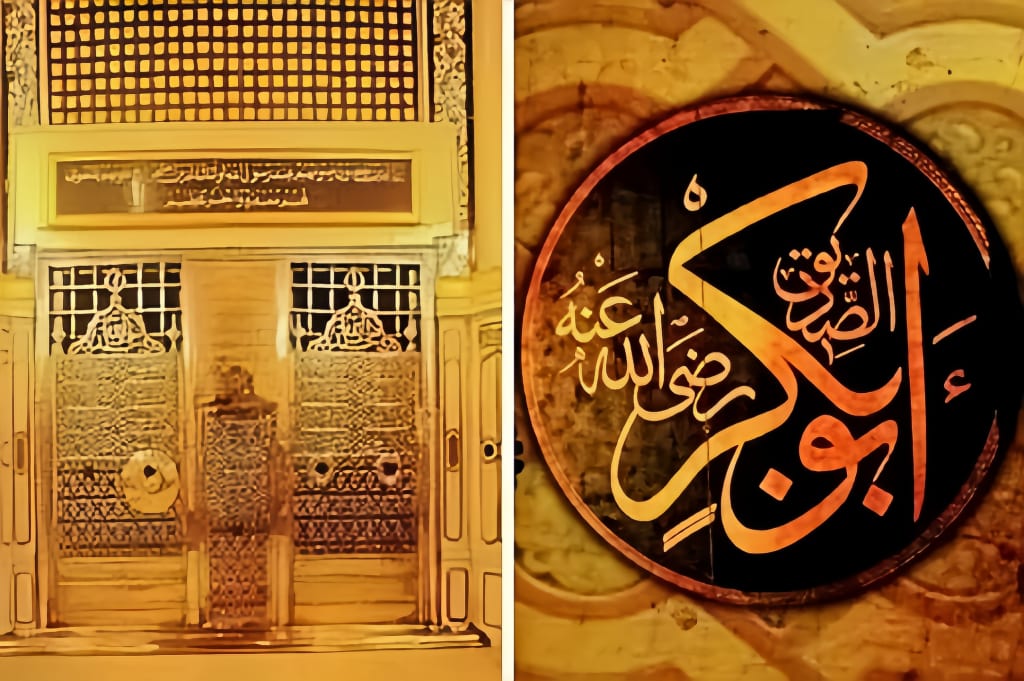
Written by saqib Rehman.
Junior journalist
Hazrat Abu Bakr Siddiq (RA) – The First Caliph and Closest Companion of the Prophet ﷺ
Hazrat Abu Bakr Siddiq (RA) holds a unique and honored place in Islamic history as the closest companion of Prophet Muhammad ﷺ and the first Caliph of Islam. He was not only a trusted friend of the Prophet but also one of the earliest converts to Islam, a loyal supporter throughout the Prophet’s mission, and a model of truthfulness, humility, and sacrifice.
Early Life and Background
Hazrat Abu Bakr (RA) was born in 573 CE in Makkah, two years after the birth of the Prophet Muhammad ﷺ. His real name was Abdullah ibn Abi Quhafah, and he belonged to the noble tribe of Quraish. He was known from a young age for his good character, honesty, and deep sense of justice. Before Islam, he was a respected businessman and had a large network of contacts.
Abu Bakr was widely loved in Makkah for his calm nature, wisdom, and kindness. He never worshipped idols, drank alcohol, or engaged in the immoral practices common in pre-Islamic Arabia. These qualities prepared him to be among the first people to accept Islam.
Acceptance of Islam and Early Sacrifices
Hazrat Abu Bakr (RA) was the first adult male to accept Islam. When the Prophet ﷺ received the first revelation, Abu Bakr did not hesitate even for a moment to accept the truth. His immediate faith earned him the title of As-Siddiq (The Truthful), a title given by the Prophet ﷺ himself.
After accepting Islam, he played a major role in inviting others to the religion. Through his efforts, many prominent companions such as Uthman ibn Affan, Zubair ibn Al-Awwam, Talha ibn Ubaidullah, Abdur Rahman ibn Awf, and Sa’d ibn Abi Waqqas came to Islam. His home became a center for the early Muslim community, and he spent most of his wealth helping free slaves like Bilal ibn Rabah, who were being tortured for accepting Islam.
Close Relationship with the Prophet ﷺ
Hazrat Abu Bakr (RA) was the Prophet’s ﷺ best friend, advisor, and companion in all important events. One of the most significant moments was during the Hijrah (migration) to Madinah. When the Prophet ﷺ left Makkah under the threat of assassination, Abu Bakr accompanied him on the dangerous journey. Together, they hid in the cave of Thawr, where Allah protected them from their enemies. This event is mentioned in the Qur’an (Surah At-Tawbah 9:40), highlighting Abu Bakr’s loyalty and firm faith.
Abu Bakr was always by the Prophet’s side during battles, hardships, and triumphs. His love for the Prophet ﷺ was so deep that when the Prophet passed away, many companions were in shock, but it was Abu Bakr who calmed them with the famous words:
> “Whoever worshipped Muhammad, let him know that Muhammad has died. But whoever worshipped Allah, know that Allah is Ever-Living and never dies.”
Becoming the First Caliph (Khalifa)
After the Prophet’s death in 632 CE, the Muslim community was confused and divided. Hazrat Abu Bakr (RA) was chosen as the first Caliph (successor) of the Prophet ﷺ. This was a crucial time in Islamic history. Many tribes began to rebel, and false prophets appeared. Abu Bakr led with wisdom, courage, and strong faith.
He launched the Ridda Wars (Wars of Apostasy) to bring the rebellious tribes back into Islam. He also preserved the unity of the Muslim Ummah and made sure that Islam continued to spread. One of his greatest contributions was ordering the compilation of the Qur’an into a single book form after many companions who had memorized it were martyred in battle.
Personal Character and Legacy
Hazrat Abu Bakr (RA) lived a simple and humble life. Even as a Caliph, he wore patched clothes and refused to take a salary from the state until persuaded. He was soft-hearted and often seen weeping during prayers. His deep piety and strong belief in accountability before Allah shaped his leadership style.
He ruled for only two years and three months, but his leadership laid the foundation of the Islamic state. Before he passed away in 634 CE, he appointed Hazrat Umar ibn al-Khattab (RA) as the next Caliph, ensuring a smooth transition of power.
He was buried beside his beloved friend, the Prophet Muhammad ﷺ, in the chamber of Aisha (RA) in Masjid al-Nabawi in Madinah.
Conclusion 🩶
Hazrat Abu Bakr Siddiq (RA) remains one of the most respected and beloved figures in Islam. His truthfulness, loyalty, courage, and humility made him a pillar of the early Muslim community. His life is a shining example for Muslims today, showing that true leadership comes from sincerity, devotion, and fear of Allah.
About the Creator
Keep reading
More stories from Islamic history and writers in History and other communities.
Who was hazrat umar ibne khitab?
b --- Hazrat Umar ibn al-Khattab (RA): The Just Caliph Hazrat Umar ibn al-Khattab (رضی اللہ عنہ), the second Caliph of Islam, was one of the most influential and powerful Muslim rulers in history. Known for his justice, simplicity, and leadership, his era marked a golden age of Islamic expansion and administration. He was a companion of Prophet Muhammad (ﷺ), a courageous warrior, and a symbol of justice.
By Islamic history8 months ago in History
The Year 1964 in Review: Fun Facts, Trivia, and Historic Highlights
This quick read is a collection of fun facts, trivia, and historic events from the year 1964. Discover the year’s top news stories, most influential people, sports facts, historic firsts, entertainment trivia, and much more.
By Gregory DeVictor5 days ago in History




Comments
There are no comments for this story
Be the first to respond and start the conversation.