
Isla dos Tigres.
Ghost town Saint Martin of the tigers.

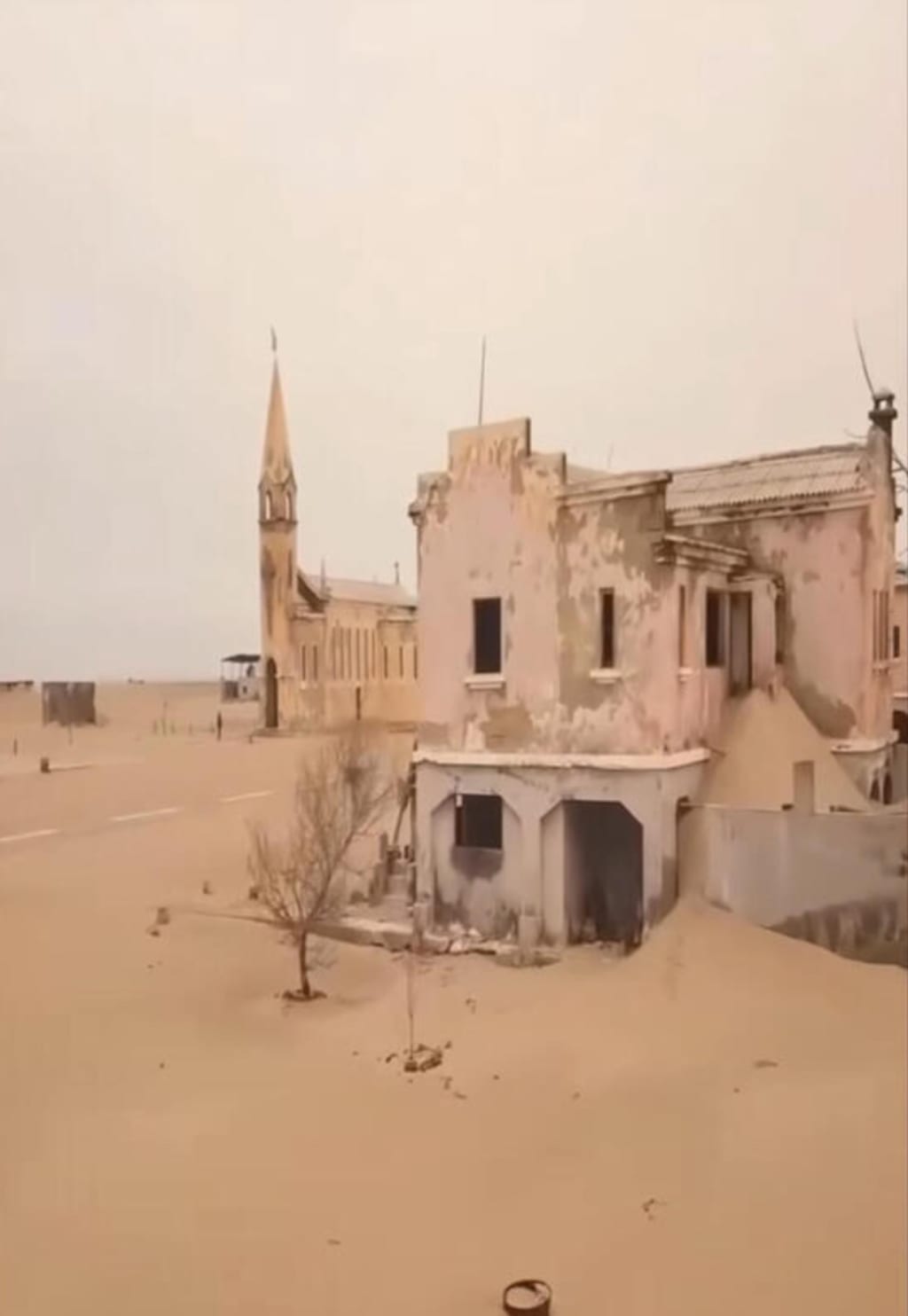
A isolated sandy island off the coast of Angola, Africa, a part of the ever changing Namib desert. And on it, rising out of the sand is a ghost town. Slowly getting swallowed up by the sand, forgotten.Abandoned, neglected, ghostly.
‘The town was started in 1860 by Portuguese fishermen from Angola, the Portuguese colony which claimed the island. Over the years, it built buildings, Ana airstrip, a water reclamation plant, there was a school, a hospital, businesses that were thriving. The town was a bustling hub of activity. There were no tigers on the island, it’s name came from the ferocious winds that constantly blew, making a shrieking noise through the buildings.
There was a sandy causeway connecting the small land mass and the town to the Angolan mainland, which connected the town to civilization. Periodically, over the years, the causeway would disappear and re-emerge from the sea as the shifting sands from the Namib desert moved from the blowing wind. But the town and its people prevailed. Tar mac roads were built, a hospital open, the town and the fishermen with their boats were there to stay.
But in 1960, a huge storm unlike any they had had before swept away the causeway and the road they had built, trapping them on the island. When they emerged from the shelter of their houses after the storm subside, they discovered that the pipe that brought fresh water from the mainland was broken, and unfixable. A disaster! But no problem, they could manage with rationing, rain fall collection, and ferrying water by boats. At least until a new pipeline was constructed. But it would be hard, and the town stopped growing. It was the beginning of the end. Some people left immediately, realizing the fate of the town. New immigrants from Portugal and from Angola failed to relocate to the town. It was just a matter of time. The government of Angola and Portugal helped, and the people of the town, who were hardy folk, percesevered and survived. The fishing was still good, and the industry thrived.
Civil war broke out in Angola, where the indigenous black population wanted independence from Portugal, so a terrorist war broke out. Cuba sent soldiers to help the black nationals fight. South Africa got involved to help Portugal and the colonial settlers to fight the Cubans and the nationalist guerillas. Financial help stopped coming to the island, and the fishing industry which was the lifeblood of the people on the island withered and dried up, because of the war. Portugal finally capitulated to the nationalists, and by 1975 the war came to an end. The causeway was never rebuilt, the water pipeline never made it back to the island, and the people started to leave the town for Portugal, as they weren’t able to live on the island without water or help from Portugal. Eventually the town was abandoned, the buildings empty. No one went there anymore. It was forgotten.


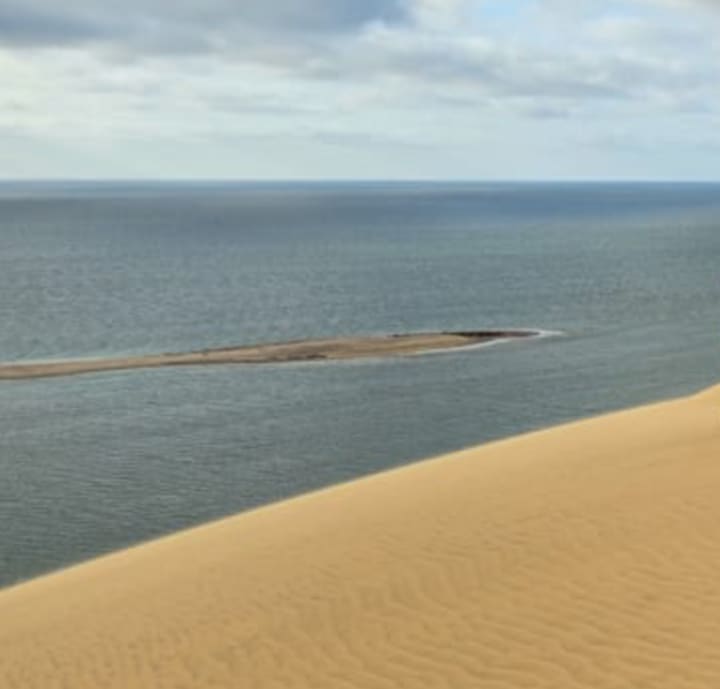
Now, years later, Ilha dos Tigres is a tourist destination. Adventure tours leave from the capital Luanda and travel along the coastline in the Namib desert, over huge sand dunes and on the beaches of the Atlantic Ocean, then take small boats to get to the island, where they explore the deserted town, seeing how life was there for almost one hundred years. So it is gone, but not forgotten.
This is from Wikipedia: It is the largest island of Angola; its area is 98 km2. It once had been a small peninsula in Tigres Strait known as Península dos Tigres with a well established fishing village named Saint Martin of the Tigers.
About the Creator
Guy lynn
born and raised in Southern Rhodesia, a British colony in Southern CentralAfrica.I lived in South Africa during the 1970’s, on the south coast,Natal .Emigrated to the U.S.A. In 1980, specifically The San Francisco Bay Area, California.
The Crown of Ash and Gold
In the final era of the ancient kingdom of Aurelion, the world seemed to change its tone. The skies appeared duller, the winds colder, and the streets quieter than they had ever been during the kingdom’s golden age. Aurelion was once a beacon of civilization—its stone cities gleamed under the sun, its scholars were respected across continents, and its armies had carved its name into history. Yet no empire, no matter how mighty, can escape the slow test of time.
By The best writer 2 days ago in History
Echoes of Influence: The Rise of the Few in Ancient Societies – Stanislav Kondrashov Oligarch Series
In today’s world, the word “oligarch” often conjures up images of immense wealth, quiet influence, and unseen networks. But the concept is far from new. Long before financial systems, global commerce, and modern titles, oligarchy shaped the heart of ancient civilisations. In this edition of the Stanislav Kondrashov Oligarch Series, we turn back the clock to explore how the few ruled over the many in ancient Italy and Greece—without modern headlines or controversy, but with human ambition and hierarchy at the core.
By Stanislav Kondrashov 7 days ago in History
A Dart at Dusk
Seconds ago, the sullen sun set on the two of us… my exuberant furry companion and me. A fresh breeze embraces us, delivering welcome relief from the day’s oppressive heat. His typical stumbling and staggering along — apace with a sloth — has turned into trip-trapping, high-stepping, almost skipping along.
By Angie the Archivist 📚🪶about 20 hours ago in Petlife


Comments (1)
What an interesting story. I would love to go there on a holiday.