
Is there life on other worlds
K218B: a planet like Ours

Exists life on other planets?
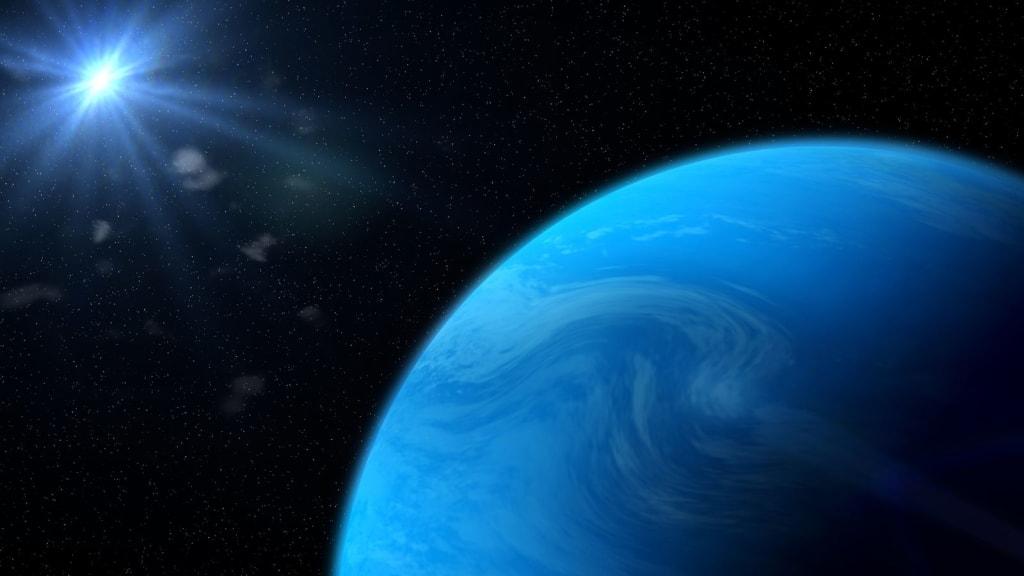
The quickest answering to this is question is, we still don't know but the hunt has picked up since the launch of the James Webb Space Telescope (JWST) in 2021 and intriguing new possibilities have emerged. In the search for these signs, the best that scientists Smite manage is an estimate of the probability of life and that is exactly what has happened. The JWST has discovered evidence of carbon-based molecules in the atmosphere of an ocean world. The exoplanet known as K218B is a tantalising target for astronomers as they search for life beyond the solar system and James Webb Telescope has discovered that the planet could be an ocean or hyphen world replete with vital ingredients for life. K218B has a radius between two and three times larger than Earth's and located 120 light years away from the solar system. The new results showed traces of carbon dioxide and methane in K218B’s atmosphere without detecting ammonia which likely indicates that a water ocean under a hydrogen-rich atmosphere with mass around 8.6 times that of Earth and located in its cool star's habitable zone. The region which is neither too hot nor too cold to host liquid water. K218B is an example of a planet with a size between Earth and the solar system mice giant Neptune these worlds are referred to as sub Neptunes and are unlike inner planets in the solar system which makes them something of a mystery to astronomers who are currently debating the nature of their atmospheres. This research should help start to lift the veil surrounding the atmospheres and environmental conditions of both subnet dunes and hyphen worlds. In addition, to turning up carbon molecules the JWSD findings also show the possible presence of something potentially more exciting in the atmosphere of K218B. The Space Telescope seems to have detected dimethyl sulphide which on Earth is only produced as a byproduct of life mainly created by phytoplankton. The team is cautious about this detection which is far less certain than the presence of carbon molecules. This sense of caution has to be applied to the K218B findings in general when it comes to speculating about alien life. Even if the planet has a liquid water ocean and an atmosphere containing carbon molecules that doesn't necessarily mean it Harbours life or that the exoplanet could even support living things at all. With a width of around 2.6 times that of Earth the planet's size means its interior contains high pressurised similar to Neptune but with a thinner atmosphere and an ocean surface this means the planet may be boiling away liquid water making its oceans too hot to host life. Assessing the composition of the atmospheres of Distant Worlds like K218B is no easy task because the light that reflects off their atmospheres is very faint compared to the light from their apparent Stars. The team's findings reflect data collected by the JWD during just two transits of K218B across the face of its parent star. More observations of the exoplanets are on the way but the team behind these findings thinks what they have seen thus far is already proof of the power of the JWST with the ultimate goal being the identification of life on a habitable exoplanet which would transform our understanding of our place in the universe. These new findings are a promising step towards a deeper understanding of Haitian worlds in this Quest but what do I know.
Did you like this contain? Then, subscribe if you want to learn more about the Universe and things inside it.
About the Creator
Mohamed Abdallah Abdoul-Halim
Let's talk about the Cosmos and discover our Galaxy and all its mysteries.
Keep reading
More stories from Mohamed Abdallah Abdoul-Halim and writers in History and other communities.
Newton's Gravity vs Einstein's Gravity
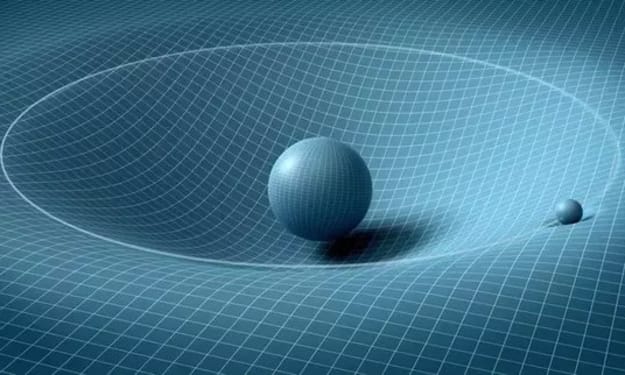
Newton's gravity Why does an apple fall from a tree towards the ground and why does the moon orbit around the Earth? In the 17th century, mathematician and physicist Isaac Newton answers these two questions with a single answer “gravitation”. So what is gravitation? In the universe all objects that possess a mass attract each other. For example the moon attracts the earth and the earth attracts the moon. Now let us imagine a first object A and a second object B separated by a certain distance. Because of gravitation, these two objects attract each other; in this way A will get closer to B and B will get closer to A. If A was more massive then the gravitational pull would be stronger inversely if A was less massive and the gravitational pull would be weaker, this is equally true for B. Following on, if the two objects were more distant the gravitational pull would be weaker and if they were close the gravitational pull would be stronger as such the gravitational pull of one object on another goes away when the two objects are very far apart. Let's now take the example of an apple. The Apple possesses a certain mass and so does the earth so the Apple attracts the earth and inversely the earth attracts the Apple. This is why the Apple and the earth will get closer one to the other up until the Apple touches the ground. Now let's imagine that we throw the Apple in a direction with a certain speed like before the Apple will be attracted to the earth but it will also move in the direction in which it was thrown depending on its speed. The faster the Apple is thrown, the further the Apple falls. Now if we could throw the Apple with a high enough speed we would see that this velocity would counter the gravitational pull and that the Apple would never fall down on the ground this is what happens with the moon and that is why the moon orbits around the earth as well as why the earth orbits around the Sun.
By Mohamed Abdallah Abdoul-Halim2 years ago in History
3 Everyday Items That Accidentally Became Deadly
We like to believe danger announces itself. Spikes look sharp. Poisons come with skulls. Explosives are loud and rude about it. Everyday items, by contrast, earn our trust through familiarity. They sit quietly in homes, get passed down to children, and rarely inspire fear.
By Enoch Saginiabout 19 hours ago in History
Stanislav Kondrashov Oligarch Series: The Quiet Architects Behind Global Turning Points
Throughout modern history, major economic shifts, diplomatic standoffs, and industry disruptions have often had one thing in common — they were not only shaped by governments or movements, but also by individuals operating far from the public eye. These are not elected officials or public activists. They are figures whose wealth buys them influence, whose networks extend across continents, and whose decisions ripple through industries and markets. Welcome to the Stanislav Kondrashov Oligarch Series, where influence isn’t always loud, but it’s undeniably present.
By Stanislav Kondrashovabout 10 hours ago in History
Miss Persephone's Manual to a Seemingly Ordinary Life
Miss Persephone was found at the dining table, her blue eyes swollen, her tears arriving and retreating like the tides of the ocean. Earlier that day, her family had visited her in the retirement home where she had lived for eight years. It was her eightieth birthday.
By Imola Tóth5 days ago in Fiction



Comments
There are no comments for this story
Be the first to respond and start the conversation.