
Is There a Lost Continent Beneath Japan? The Yonaguni Monument Mystery
Nature’s Creation or Lost Civilization?

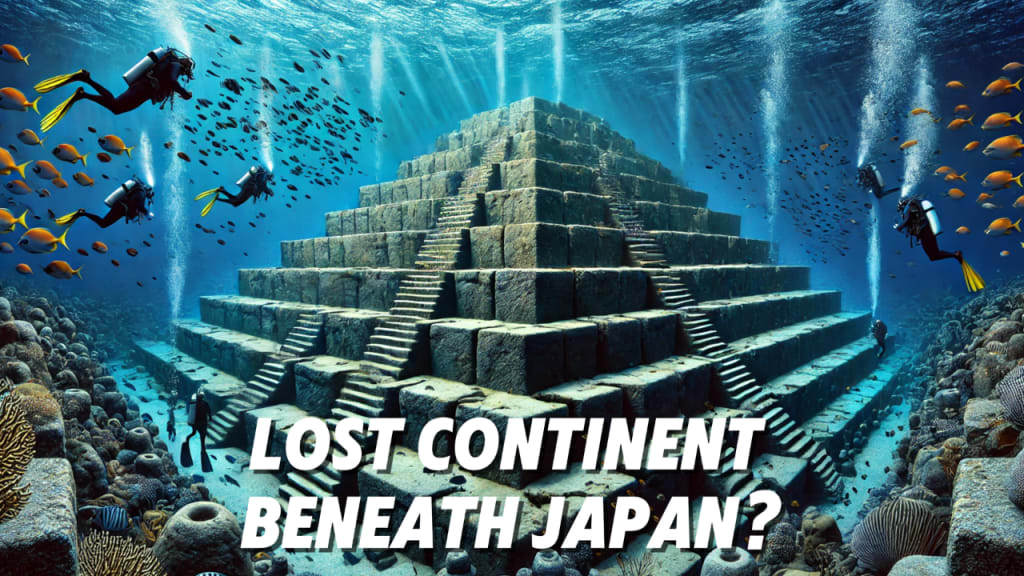
If there’s one place on Earth that could make you question everything you thought you knew about human history, it’s the Yonaguni Monument. This underwater formation off the coast of Japan has stirred up an intense debate among archaeologists, geologists, and adventurers since its discovery in 1987. Could it be the remnants of an ancient civilization, or is it just a natural rock formation that happens to look a little too much like human handiwork?
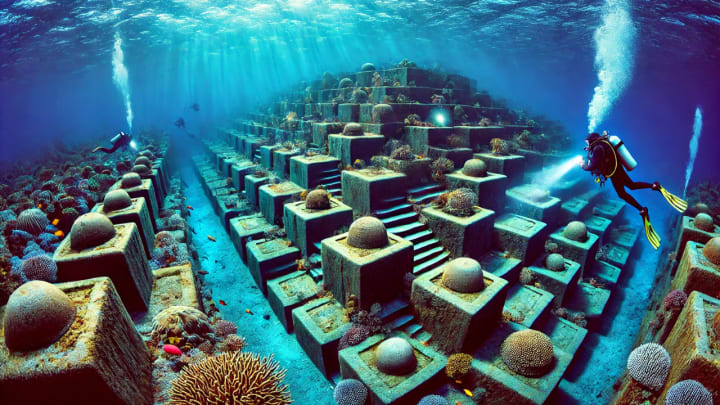
In this article, we’ll dive deep (pun intended) into the Yonaguni Monument mystery. From the monument's discovery, through scientific investigations and wild theories, to the modern-day debate, we’ll leave no stone (or ancient pillar) unturned. By the end, you’ll either be booking a flight to Japan to see this enigma for yourself or shaking your head in skepticism. Either way, get ready for an adventure!
The Discovery of the Yonaguni Monument
The Yonaguni Monument wasn’t discovered by an archaeologist with a flair for uncovering ancient mysteries but by a humble diving instructor named Kihachiro Aratake in 1987. Yonaguni Island is the westernmost point of Japan, closer to Taiwan than the Japanese mainland, and a popular spot for divers, particularly those interested in viewing hammerhead sharks. While on a routine diving expedition, Aratake spotted an unusual formation submerged near the island’s coast—a series of flat, terraced rock structures that looked like they had been carved by human hands.
Aratake’s discovery soon caught the attention of the wider world, and researchers and divers flocked to the site. But what was it that they had stumbled upon? Ancient ruins lost to time or simply a natural geological formation shaped by ocean currents?
A Closer Look at the Monument: What’s Really Down There?
At a depth of around 25 meters (82 feet) below the surface, the Yonaguni Monument stretches across an area of roughly 300 by 150 meters. The formation consists of huge flat stones arranged in a pattern that suggests terraces, staircases, and platforms. The most famous section, often referred to as the "main monument," features straight edges and sharp angles that almost look like a pyramid or ziggurat structure, leading many to theorize that this is a man-made construction.
Here’s what you might find if you dive down to the monument:
- Flat Terraces: Broad, flat sections of rock that resemble terraces, some of which seem to have been carved out of the natural stone.
- Rectangular Platforms: Raised, flat platforms that look like the foundations of ancient buildings.
- Step-Like Features: Structures that appear like staircases leading up to higher levels, lending credence to the idea that the monument might be a stepped pyramid or religious site.
- Large Pillars and Pathways: Some researchers have noted what seem to be large pillars or columns, as well as pathways that seem too straight to have been formed naturally.
There’s no denying that the structure looks suspiciously orderly for something created by nature alone. But looks can be deceiving!
The Natural Formation Argument: Is It Just Geology?
Many geologists and scientists argue that the Yonaguni Monument is entirely natural, and there’s no need to invoke a lost civilization to explain it. According to them, the monument is an example of jointing, a geological process where rocks crack and break along natural lines of weakness, creating straight edges and flat surfaces that can sometimes look man-made. This process is particularly common in sandstone and other sedimentary rocks, which are prevalent in the area around Yonaguni.
Masaki Kimura, a marine geologist from the University of the Ryukyus, has been one of the most vocal proponents of the theory that the monument is man-made. However, even he acknowledges that the basic rock formation could have been shaped by natural forces and then further modified by human hands.
Evidence for a Lost Civilization
Now, here’s where things get really interesting. While geologists may scoff at the idea, many researchers and enthusiasts believe that the Yonaguni Monument could be the remains of a lost civilization that sank beneath the sea thousands of years ago. Could this be the Japanese equivalent of Atlantis?
1. Man-Made Features
One of the main arguments for the monument being artificial is the remarkable symmetry and precision of the rock formations. For example, some areas of the monument feature near-perfect right angles and straight lines, which are rare in natural formations. Additionally, there are large upright stones that appear to have been placed in strategic locations, further supporting the idea that humans had a hand in its creation.
2. Tools and Carvings
Divers exploring the site have claimed to have found tools and carvings near the monument. While the evidence for this is hotly contested, if true, it would be a game-changer. These artifacts would be clear proof that humans once inhabited the area and may have built the structures.
3. Historical Context: A Lost Civilization?
Some theorists believe that the Yonaguni Monument could be connected to the Jōmon period, which dates back as far as 12,000 years. The Jōmon people were known for their advanced pottery and intricate societal structures, so it’s not out of the realm of possibility that they could have had the technological know-how to build large stone structures.
Is There a Lost Continent Beneath Japan? You'll definitely enjoy this!
Other theories point to the Mu civilization, a hypothetical lost civilization believed to have existed in the Pacific region. The idea of Mu has long been dismissed as pseudo-history, but believers argue that the Yonaguni Monument could be the remnants of this ancient society.
Skepticism: Why the Monument Might Just Be a Natural Phenomenon
Not everyone is convinced by the idea of a lost civilization. Many mainstream geologists argue that there’s no solid evidence to support the theory that the Yonaguni Monument is man-made. The jointing hypothesis, which suggests that natural processes created the geometric formations, remains the most widely accepted explanation.
1. Lack of Artifacts
One of the major problems with the lost civilization theory is the lack of physical artifacts. Unlike other ancient sites like the Pyramids of Giza or Machu Picchu, there are no definitive objects or inscriptions that can be tied to human activity at the Yonaguni site. Without these, it’s difficult to prove that the monument was ever inhabited or constructed by humans.
2. No Archaeological Consensus
While some researchers, like Kimura, are convinced that the monument is man-made, the broader archaeological community remains skeptical. There has yet to be a consensus or enough peer-reviewed evidence to definitively declare the site an ancient ruin.
3. Submerged by Natural Causes
Even if the Yonaguni Monument was created by humans, the rising sea levels at the end of the last Ice Age, around 10,000 years ago, could explain why the structure is now underwater. However, this would suggest that any civilization responsible for the monument predates the Jōmon period, which further complicates the narrative.
Theories Abound: Atlantis, Mu, and Beyond
If you’re inclined to believe in more out-there theories, you’ll love this section. The Yonaguni Monument has been linked to a range of mythical places, including the legendary Atlantis and the lost Pacific civilization of Mu.
1. Atlantis
The story of Atlantis has fascinated humanity for centuries, ever since Plato first mentioned the lost city in his writings. Some believe that the Yonaguni Monument could be a part of this fabled civilization, which supposedly sank beneath the waves thousands of years ago. Although Atlantis is traditionally associated with the Atlantic Ocean, who’s to say it couldn’t have been in the Pacific?
2. Mu
The concept of Mu, a sunken continent or civilization in the Pacific, is often considered pseudoscientific, but the idea has persisted in popular culture. Some believe that the Yonaguni Monument could be a remnant of this long-lost society, which allegedly predates other known civilizations.
3. Alien Theories
And of course, it wouldn’t be a mystery without a few good alien theories. Some suggest that the Yonaguni Monument could be the work of extraterrestrials who visited Earth long before recorded history. While there’s zero evidence to support this, it’s fun to speculate!
The Debate Continues: Will We Ever Know the Truth?
The mystery of the Yonaguni Monument is likely to remain just that—a mystery. As things stand, we don’t have enough evidence to definitively say whether the monument is a natural formation, a man-made structure, or a combination of both. What we do know is that the Yonaguni Monument has captured the imaginations of people around the world and sparked an enduring debate about the possibility of lost civilizations.
Whether you lean toward the natural formation theory, the lost civilization hypothesis, or something more otherworldly, the monument remains an incredible sight. If nothing else, it serves as a reminder that there are still many unexplained wonders left on Earth.
So, does the Yonaguni Monument hide the ruins of an ancient, forgotten civilization? Or is it just a spectacular geological formation shaped by nature’s hand? The answer, for now, lies beneath the waves, waiting for future explorers to uncover its secrets.
Conclusion
The Yonaguni Monument might just be one of the greatest unsolved mysteries of the natural world—or possibly human history. Whether you’re a believer in ancient lost civilizations, a staunch skeptic, or a fan of wild theories about extraterrestrials, there’s no denying as one of the most intriguing mysteries of the ocean, it's no wonder the Yonaguni Monument continues to attract curiosity. Whether you're inclined to think it's a natural phenomenon, the handiwork of an ancient civilization, or something more extraordinary, there's still so much left to explore beneath the waves.
In this long exploration of the Yonaguni Monument mystery, we've touched on both sides of the debate. Geologists present compelling evidence that the formation is a natural geological occurrence, citing processes like jointing and erosion. Meanwhile, proponents of the man-made theory argue the monument's precise, angular shapes, and supposed carvings are too perfect to be formed by nature alone.
Adding fuel to the fire, some enthusiasts link the monument to lost civilizations like Mu or even Atlantis, while others propose that rising sea levels submerged this ancient structure following the last Ice Age. The absence of artifacts or more substantial proof, however, leaves the mystery unresolved. Could there be a long-lost civilization we haven't yet discovered, or are we simply seeing the results of a curious natural formation?
In the end, much like other unsolved mysteries, the Yonaguni Monument serves as a testament to the fact that our world still holds many secrets, both on land and beneath the sea. Whether or not we'll ever uncover the truth remains to be seen, but for now, this underwater enigma continues to captivate imaginations worldwide.
So, is it worth a visit? If you're a diver with a thirst for adventure, Yonaguni Island should absolutely be on your bucket list. Whether you emerge from the depths a firm believer in ancient civilizations or a loyal geologist, you're bound to leave with a story worth telling.
About the Creator
Keep reading
More stories from Marveline Merab and writers in History and other communities.
Why the Curse of Tutankhamun Might Be Real
In the early 20th century, a dramatic tale unfolded in Egypt that captured the imagination of the world—a curse that was said to doom anyone who dared to disturb the tomb of the ancient Egyptian pharaoh, Tutankhamun. Fast forward nearly a century, and the Curse of Tutankhamun still intrigues and terrifies, with many wondering: could there be any truth behind this mysterious curse?
By Marveline Merababout a year ago in History
Corruption's Impact On Society
Corruption, a term with a broad spectrum of definitions, is often a result of government officials overpowering legal policies. Corruption can weaken the ideal democracy within a nation, erode trust in the relationship between the government and society, and exacerbate inequality and poverty. Forms of this act can include bribery, lobbying, extortion, cronyism, nepotism, parochialism, and embezzlement. Furthermore, corruption is the deterioration of moral and ethical standards that are characterized by the prioritization of personal gain over public good, abuse of power, and a lack of transparency.
By Katherine Roteman6 days ago in History
Understanding the Insurrection Act
The Insurrection Act is one of the most powerful and least understood laws in American history. Often mentioned during times of national unrest, it gives the president authority to deploy federal troops within the United States under specific circumstances. While it is rarely used, public interest in the law has grown in recent decades, leading many to ask: what is the Insurrection Act, and why does it matter today? What Is the Insurrection Act? To put it simply, the Insurrection Act of 1807 is a federal law that allows the president to use the U.S. military to suppress civil disorder, insurrection, or rebellion when state authorities are unable or unwilling to do so. If you are wondering what is the Insurrection Act used for, the answer lies in restoring order when local and state governments can no longer maintain public safety. People often search phrases like what is insurrection act or even the misspelled insurection act because the law tends to resurface during moments of crisis. Despite the confusion around its name, the authority it grants is very real and legally binding. What Is the Insurrection Act of the U.S.? So, what is the Insurrection Act of the US in legal terms? It is a collection of statutes now codified under Title 10 of the U.S. Code. The act provides exceptions to the Posse Comitatus Act, which generally prohibits the military from acting as domestic law enforcement. Under the Insurrection Act, the president can federalize the National Guard or deploy active-duty troops if constitutional rights are being violated or if violence prevents the execution of federal law. This is why many people ask, what is the Insurrection Act USA, especially when protests or riots dominate national headlines. The Insurrection Act and Its Historical Use Throughout American history, the act has been invoked sparingly but decisively. One of the most notable examples often referenced is the Insurrection Act 1992, when President George H. W. Bush deployed federal troops to Los Angeles following the Rodney King verdict. Local authorities had lost control, and the federal government stepped in to restore order. Earlier uses date back to the Civil War era and the Civil Rights Movement. Presidents Eisenhower and Kennedy relied on the act to enforce school desegregation in Southern states when state governments resisted federal court orders. These moments illustrate what the Insurrection Act is used for at its core: enforcing the rule of law when normal systems fail. Trump and the Insurrection Act In modern political discourse, the law became widely discussed during the presidency of Donald Trump. Searches for Trump Insurrection Act or Insurrection Act Trump surged during periods of nationwide protests, particularly in 2020. Although the act was never formally invoked during those protests, President Trump publicly considered its use, bringing renewed attention to the scope and limits of presidential power. The phrase insurrection act invoked often appears in news coverage, but it is important to note that discussing invocation and actually using the law are two very different things. The debate surrounding Trump Insurrection Act scenarios highlighted concerns about civil liberties, federal overreach, and the balance of power between states and the federal government. What Is the Insurrection Act in Minnesota? A common question during periods of regional unrest is what is the Insurrection Act in Minnesota or in other specific states. Legally, the act does not change from state to state. However, its application depends on circumstances within a particular state. If a governor requests federal assistance or if the president determines that constitutional rights cannot be protected locally, the Insurrection Act may apply. Minnesota, like every other state, falls under the same federal framework. The law does not target any single state; it responds to conditions on the ground. What Is the Insurrection Act Used For Today? In today’s environment, many Americans ask, what is the Insurrection Act used for in a modern democracy with established institutions. Supporters argue it is a necessary safeguard for extreme emergencies. Critics counter that it grants sweeping powers that could be misused if political tensions escalate. Understanding what is the Insurrection Act? requires recognizing that it is both a legal tool and a symbol. Its mere mention can influence public perception, markets, and political debate, even when it is not formally applied. Ongoing Debate and Public Concern The Insurrection Act remains controversial because it sits at the intersection of security and freedom. While it has been used to protect civil rights in the past, critics worry about potential misuse in polarized times. This tension explains why questions like what is the Insurrection Act of the US continue to trend whenever civil unrest occurs. Ultimately, the law reflects a fundamental challenge in governance: how to maintain order without undermining democracy. The fact that it has existed since 1807 and remains largely unchanged shows both its durability and its complexity. Final Thoughts The Insurrection Act is not a law that affects daily life, but it plays a critical role during extraordinary moments. From the Insurrection Act of 1807 to discussions around Insurrection Act 1992 and Insurrection Act Trump, its history mirrors the nation’s struggles with unity, authority, and rights.
By Saboor Brohi 3 days ago in History



Comments
There are no comments for this story
Be the first to respond and start the conversation.