

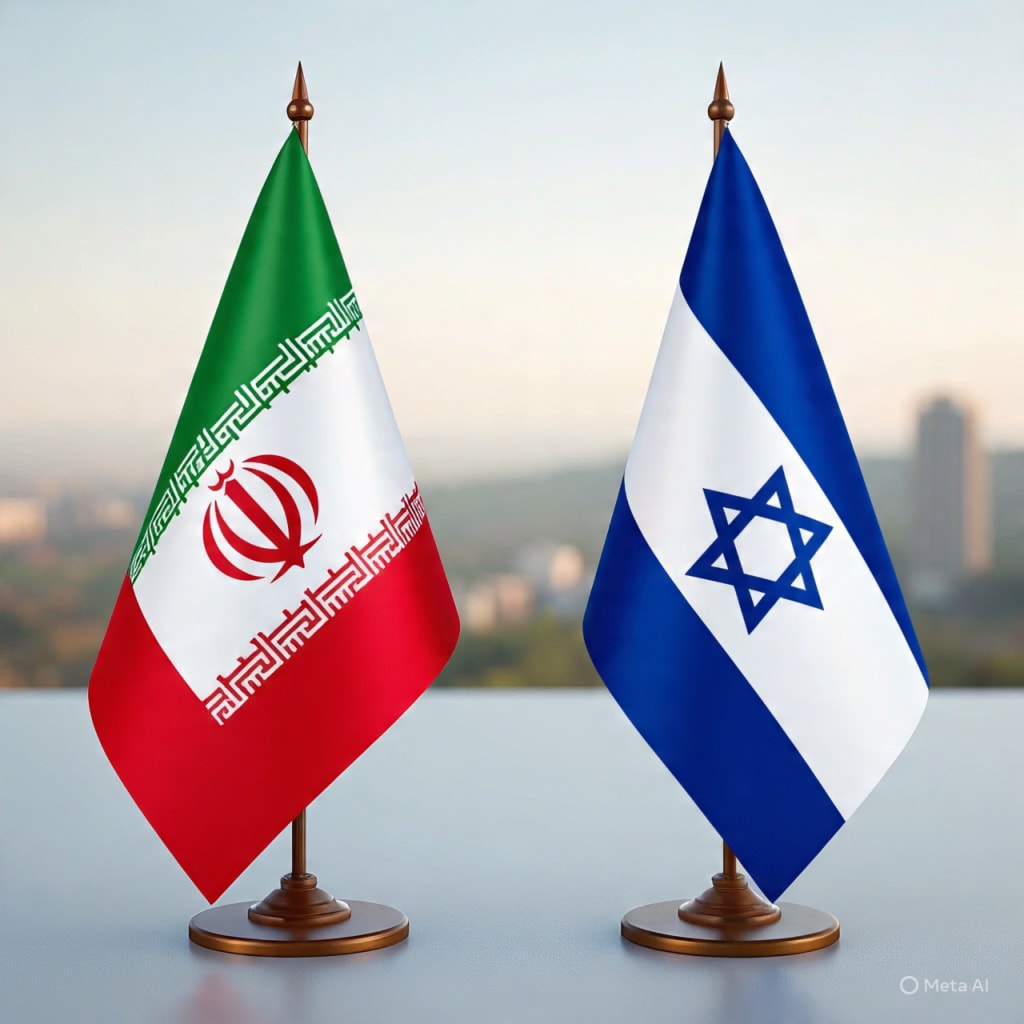
Here’s an 800-word essay-style explanation of the Iran-Israel conflict, covering its historical roots, ideological basis, regional dynamics, and recent developments:
---
Iran and Israel: A Geopolitical and Ideological Confrontation
The relationship between Iran and Israel is one of the most hostile and complex in modern international politics. What was once a strategic partnership in the mid-20th century has evolved into a deeply entrenched rivalry shaped by ideology, regional influence, security concerns, and global diplomacy. The conflict between these two nations affects not only their own security but also the broader Middle East and global geopolitical stability.
---
Historical Background
Prior to the 1979 Islamic Revolution, Iran and Israel maintained relatively friendly relations. Under Shah Mohammad Reza Pahlavi, Iran was one of the few Muslim-majority countries to recognize Israel, engaging in covert military and economic cooperation. However, the Iranian Revolution drastically altered this relationship. The new Islamic Republic, under the leadership of Ayatollah Ruhollah Khomeini, rejected Israel's legitimacy, labeling it a "Zionist regime" and calling for its destruction.
From that point on, Iran adopted a foreign policy grounded in Islamic revolutionary ideology, aligning itself with the Palestinian cause and presenting itself as a champion against what it viewed as Western imperialism and Israeli occupation. Israel, for its part, began viewing Iran not only as an ideological adversary but also as a growing strategic threat, especially as Iran expanded its influence across the Middle East.
---
Ideological and Political Divide
The Iran-Israel conflict is both ideological and geopolitical. Iran’s ruling regime views Israel as an illegitimate state imposed by Western powers on Islamic lands. The Iranian leadership has regularly used anti-Israel rhetoric, with some senior figures denying the Holocaust or calling for Israel’s eradication. While these statements are often seen as symbolic or domestic political messaging, they have nonetheless alarmed Israeli policymakers and the international community.
Israel, on the other hand, sees Iran’s ideology and ambitions as existential threats. Israeli leaders have long warned about Iran's efforts to develop nuclear weapons, fund militant proxies, and destabilize neighboring countries. Iran’s influence in Iraq, Syria, Lebanon, and Yemen is viewed by Israel as a strategy to encircle it with hostile forces. This threat perception has led Israel to engage in aggressive countermeasures, including cyber attacks, targeted assassinations, and airstrikes on Iranian assets in the region.
---
Regional Proxy Conflict
Iran’s support for militant groups that oppose Israel is a central feature of the conflict. Chief among these groups is Hezbollah, a Lebanese Shiite militia and political party that Iran helped establish in the early 1980s. Hezbollah has received billions in funding, weapons, and training from Iran and has fought multiple conflicts with Israel, most notably the 2006 Lebanon War. With tens of thousands of rockets aimed at Israel, Hezbollah is now considered one of the most powerful non-state military actors in the world.
In Gaza, Iran also provides support to Hamas and Palestinian Islamic Jihad, two groups that reject Israel’s right to exist and frequently engage in armed conflict with Israeli forces. During escalations between Israel and Gaza-based factions, Iran often praises the resistance and sometimes increases support, particularly in the form of weapons technology and strategic guidance.
Additionally, Iran’s presence in Syria—especially during and after the Syrian civil war—has allowed it to establish military infrastructure near Israel’s northern borders. Israel has responded by carrying out hundreds of airstrikes on Iranian and Hezbollah targets in Syria to prevent weapons transfers and entrenchment.
---
The Nuclear Dimension
Perhaps the most contentious issue in the Iran-Israel relationship is Iran’s nuclear program. While Iran insists that its nuclear activities are for peaceful purposes, Israel, along with the United States and other Western nations, fears that Iran is seeking the capability to build nuclear weapons. Israel has long advocated for strong international action to prevent a nuclear-armed Iran, seeing it as a red line.
In 2015, Iran signed the Joint Comprehensive Plan of Action (JCPOA) with world powers, which limited its nuclear program in exchange for sanctions relief. Israel fiercely opposed the deal, arguing it did not go far enough and merely delayed Iran’s ability to develop a bomb. In 2018, then-U.S. President Donald Trump withdrew from the deal, leading Iran to reduce its compliance and enrich uranium at higher levels. The breakdown of the agreement further escalated tensions, with Israel reportedly conducting cyber operations and sabotage to delay Iran’s nuclear progress.
---
Cyberwarfare and Covert Operations
In recent years, cyberwarfare and covert operations have become central to the Iran-Israel conflict. Israel is believed to be behind a number of cyber attacks targeting Iranian infrastructure, including the Stuxnet virus that damaged Iranian nuclear centrifuges in 2010. Conversely, Iran has carried out cyber operations against Israeli infrastructure and private companies.
Targeted assassinations have also marked this shadow war. Israel has been widely suspected of involvement in the killings of Iranian nuclear scientists and military commanders, while Iran has targeted Israeli assets and citizens abroad.
---
Recent Developments and Regional Impact
As of 2025, tensions remain high. Iran’s continued uranium enrichment, Israeli strikes in Syria and Lebanon, and Iranian-backed militia activity across the region keep the situation volatile. The Gaza war in 2023 further polarized the region, with Iran increasing its support for resistance groups and Israel reinforcing its security posture.
Efforts at diplomacy, including discussions about reviving the nuclear deal, have seen limited success. The involvement of global powers—especially the United States, Russia, and China—adds layers of complexity to the conflict. Additionally, the normalization of relations between Israel and several Arab states (through the Abraham Accords) has increased Iran’s sense of isolation and fueled its anti-Israel rhetoric.
---
Conclusion
The Iran-Israel conflict is a multidimensional struggle rooted in ideology, power politics, and regional rivalries. With both countries committed to opposing each other’s strategic goals, the risk of escalation—whether through proxy warfare, cyber attacks, or direct confrontation—remains high. Unless there is a fundamental shift in regional dynamics or political leadership, the animosity between Iran and Israel is likely to persist, shaping the future of the Middle East and beyond.
---
Let me know if you'd like this formatted as a document, or expanded with references and quotes.
About the Creator
zakir ullah khan
poetry blogs and story Year Vocal Writing Skill
Keep reading
More stories from zakir ullah khan and writers in History and other communities.
Will a War Between Iran, the United States, and Israel Trigger World War III?
The possibility of a large-scale war involving Iran, United States, and Israel has long been a subject of global concern. Political tensions, military confrontations, proxy conflicts, and disputes over nuclear development have created a fragile security environment in the Middle East. Many observers wonder whether a direct war between these powerful actors could escalate into World War III. While such a scenario is not inevitable, the risks and global implications would be enormous.
By Irshad Abbasi 6 days ago in History


Comments
There are no comments for this story
Be the first to respond and start the conversation.