
Indonesia in Chaos: The Real Story Behind the Riots
A Toxic Mix of Inequality, a New Trade War, and a Showdown Between China and the West.

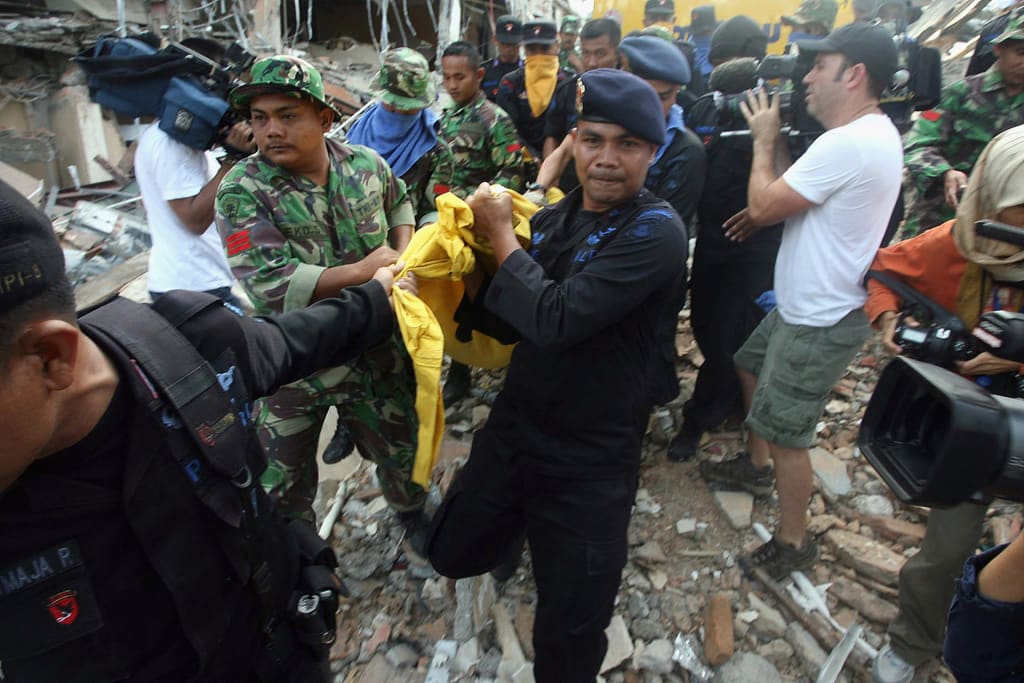
Things in Indonesia went sideways, fast.
One minute, the Indonesian president was packing his bags for a military parade in China. The next, he’s forced to cancel the trip to deal with massive riots back home.
So, you have to ask the million-dollar question: Is the CIA's hand in this?
Let's break it down. The spark that lit the fuse was a bill that just passed in Indonesia’s parliament. They decided to give every single member of parliament a "housing allowance" of 50 million Indonesian Rupiah a month. That’s about $3,000.
Now, consider this: most people in Indonesia are lucky if their monthly salary even breaks four figures in US dollars. We're talking about a country where the economy is slowing down, and you have this glaring narrative of elite privilege clashing with the struggles of the common person. The powder keg was ready to blow.
The situation got so tense that the Chinese Embassy had to issue a warning to its citizens and businesses in Indonesia to beef up their security. Riots have exploded in Jakarta and other cities. Police stations, train stations, and government buildings have been torched, leading to injuries and deaths. The embassy’s message was clear: stay inside unless you absolutely have to, and avoid crowds.
To really get what’s going on in Indonesia, you need to look at it in three layers, from the inside out:
- The Fight Over the Pie: How wealth is (or isn't) shared in Indonesia.
- The Big Picture: Why Indonesia is the undisputed heavyweight of Southeast Asia.
- The Power Play: America’s potential anger and helplessness as it feels its grip on Indonesia slipping.
On the surface, this is about people’s livelihoods. But underneath, it’s a battle in the global trade war, and maybe even a super-struggle over which side countries will choose in the future.
On the streets of Jakarta late at night, a 21-year-old food delivery driver named Afan Kurniawan was killed, run over by a police armored vehicle while on a delivery. That moment of bloodshed didn’t just take a young life; it ignited the fury burning in the hearts of ordinary Indonesians.
In response, thousands of his fellow drivers, all in their signature green jackets, formed a silent funeral procession miles long, escorting Afan’s body to the cemetery. A riot, born from economic injustice, had just begun.
The trigger was that parliamentary bill. While politicians were voting to give themselves a $3,000 monthly bonus, the average worker in Jakarta is scraping by. With the economy stalling, the gap between the pampered elite and the struggling masses became a chasm.
When you boil it down, what the people on the street are asking for is pretty simple:
- A 15% increase in the minimum wage.
- Scrap the "Job Creation Law," which guts labor rights.
- End the system of outsourcing and create real job security.
As you can see, every single demand is about the core issues of unfair economic distribution and the lack of worker protections. Figuring out how to slice the economic pie fairly is a global headache, but for Indonesian politicians to be this brazenly greedy is something else. That’s why the conflict is so intense.
Seven police officers were arrested for Afan's death, but it was too late. The people had risen up. The parliament building was set on fire. As of now, more than three people are dead and over 300 have been arrested.
Let's look at the numbers. A member of parliament in Indonesia makes over $6,000 a month. The average person? About $190. That's a gap of over 30 times. The bitter irony is that the government is simultaneously cutting its budget for healthcare and education by 25% while giving its politicians housing perks.
The pie is being sliced more and more unevenly. Over the last five years, Indonesia’s middle class has shrunk by about 9.5 million people. The ranks of the low-income and poor keep growing, leaving young people with few options. The class system is becoming rigid.
So why would President Prabowo Subianto greenlight this subsidy for politicians? It’s a political transaction: he scratches their back, and in return, parliament supports his policies. This follows a series of shady moves, like when the son of former President Joko Widodo, Gibran, benefited from a last-minute change to election laws that lowered the age for candidates. Political dynasties are becoming more entrenched than ever.
The fallout has been immediate. Jakarta's traffic is paralyzed. Foreign companies have shut down operations. The stock market tanked by over 3.6%, and the Indonesian Rupiah dropped 1%. President Prabowo had no choice but to stay home, try to calm the public, demand the police apologize, and promise an investigation.
But the people aren't buying it, because their core demands haven't been met. Simply put, unless Prabowo gives the people what they want, the pressure on him is only going to get worse.
There’s an ironclad rule in geopolitics: for China to expand its influence, it must win Southeast Asia. And to win Southeast Asia, it must win Indonesia.
This is exactly why the Trump administration’s trade war zeroed in on Southeast Asian countries—to stop them from becoming supply depots for the Chinese economy.
Indonesia is a powerhouse. It has a GDP of $1.45 trillion and a population of over 280 million, making it the world's fourth most populous country and the largest economy in Southeast Asia. Its industrial base is still developing, but it's incredibly rich in natural resources like coal, nickel, and copper. It has a massive, young workforce and a powerful consumer market. Even with low incomes, consumption makes up 54% of Indonesia's GDP—that’s more than ten points higher than China’s. For a manufacturing giant like China, Indonesia is the perfect partner.
China has been Indonesia's largest trading partner for 11 straight years. But Indonesia desperately needs China, too, to solve its three major imbalances:
- Geographic Imbalance: Known as the "nation of a thousand islands" (it actually has over 17,000), 56% of its population and 58% of its GDP are crammed onto the island of Java, which makes up only 6.6% of its landmass.
- Industrial Imbalance: Agriculture still accounts for 12% of GDP, and industry only 40%. Its manufacturing sector is seriously underdeveloped, forcing it to export raw resources just to import finished goods.
- Wealth Imbalance: Nearly 24 million people live in poverty. All of the country's social unrest is rooted in one word: money.
The economic ties are booming. Trade between China and Indonesia skyrocketed from about $4 billion in 2001 to nearly $148 billion in 2024. We sell them machinery, electronics, and a fast-growing number of new energy vehicles (NEVs). They sell us raw metals, minerals, and agricultural products.
As this economic relationship has deepened, Indonesia has started to lean towards China politically and even militarily. And it’s precisely this trend that has started to alarm the United States. America has hit Indonesia hard with trade tariffs, and the shadow of the CIA seems to be lurking in the background. As the Indonesian stock market tumbled over 3%, you can bet foreign hot money was happily snapping up assets on the cheap—a quiet harvest.
So, to recap Indonesia's situation:
- It’s hungry for growth. The government has a "Golden Indonesia 2045" vision to become a developed nation and the world's fifth-largest economy.
- It’s in a critical location. Straddling the Pacific and Indian Oceans and controlling the Strait of Malacca, it’s a key geopolitical chokepoint.
- It’s rich in resources. From palm oil and rubber to nickel, copper, and zinc.
- It has a massive, cheap labor force and a huge consumer market.
- Its relationship with China is warming. The new president, Prabowo, has made it clear he wants to continue and strengthen friendly ties.
This is where you can see the playbook of American influence at work. Young people smashing, looting, and burning things—it’s a familiar script. This American-style pressure campaign is happening because core Western interests are being threatened.
On one hand, Indonesia is drifting into China's orbit militarily and politically. Attending the military parade was one sign. A couple of months earlier, the Indonesian military confirmed it was evaluating a purchase of Chinese-made J-10 fighter jets. This would be a huge step in modernizing their air force on a budget. The J-10 is far more competitive on price than its Western counterparts. This is a stark contrast to 2022, when Indonesia inked an $8.1 billion deal with France for 42 Rafale jets. For the West, that kind of lost revenue is unacceptable.
On the other hand, Indonesia's economy is tilting decisively towards China. The Indonesian auto market used to be called "Japan's last fortress," but that fortress is crumbling. Just like in the rest of Southeast Asia, Japanese gasoline-powered cars aren't selling like they used to.
An article from March 30, 2025, put it bluntly: "Japan's Dominance in Indonesia Weakened by China." For decades, Japanese brands owned the market. Now, Chinese electric vehicles are storming in. In the first half of 2025, EV sales in Indonesia shot up 267% year-over-year. Chinese brands accounted for 93% of that market. The president of Toyota's Indonesian subsidiary lamented, "There are more and more competitors… the competition is brutal."
What’s driving this change? Indonesia wants to become a global hub for the electric vehicle industry. It has the resources to do it—it's the world's #1 producer of nickel and #2 producer of cobalt, both essential for EV batteries. The Indonesian government has rolled out a red carpet of incentives—tax breaks, local production requirements, import deals, and consumer subsidies—to lure global capital.
And it’s working. Giants like Hyundai, LG, and China's CATL have poured in money to build battery plants. Chinese automakers are setting up shop one after another: GAC Aion, XPeng, and BYD are all building massive factories with plans to produce hundreds of thousands of cars annually, creating tens of thousands of local jobs.
Of course, Japanese and Korean automakers are trying to keep up, with Toyota and Mitsubishi announcing their own EV investment plans. But the momentum has clearly shifted.
With its strategic location, incredible natural resources, and massive population, Indonesia is the key battleground in the contest for Southeast Asia. The riots on the streets are real, fueled by genuine anger. But they are also a symptom of a much larger struggle over politics, military alliances, and, ultimately, who gets to profit from Indonesia’s future.
The time for Indonesia to stay on the fence may be running out.
About the Creator
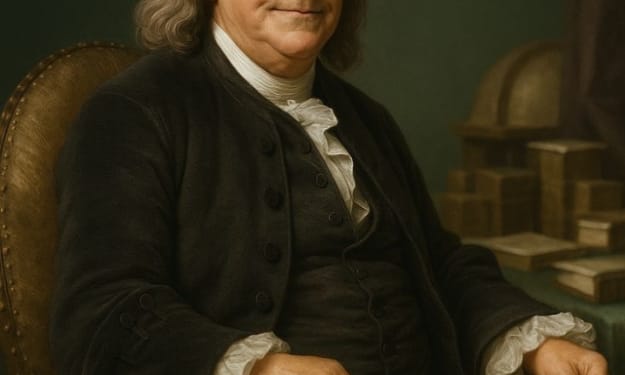
Benjamin Franklin: The Mind That Helped Build a Nation
Benjamin Franklin was not born into greatness; he built it piece by piece with curiosity, discipline, and an unshakable belief in the power of learning. Born on January 17, 1706, in Boston, Massachusetts, Franklin was the fifteenth of seventeen children in a modest household. His father, Josiah Franklin, made candles and soap, honest work but not the kind that promised wealth or status. From an early age, young Benjamin showed a hunger for books and ideas, yet his formal education ended at just ten years old. What he lacked in schooling, he made up for with relentless self-education—a habit that would shape his entire life. Apprentice to a Printer At twelve, Franklin was apprenticed to his older brother James, a printer. The print shop became Benjamin’s classroom. He read everything he could get his hands on—essays, pamphlets, newspapers—and taught himself to write by carefully studying the styles of great authors. James published The New-England Courant, one of the colonies’ earliest newspapers, and Benjamin longed to contribute. Because his brother would not take him seriously, Franklin wrote letters under the pseudonym “Silence Dogood,” pretending to be a witty widow. The letters were published and widely admired. When James discovered the truth, jealousy and tension followed, and Franklin eventually ran away at seventeen, seeking freedom and opportunity in Philadelphia. Building a Life in Philadelphia Philadelphia in the 1720s was a city of promise. Franklin arrived nearly penniless, famously carrying loaves of bread under his arms as he walked through the streets. Yet he possessed something more valuable than money: determination. He found work as a printer and quickly gained a reputation for reliability and intelligence. Over time, he established his own printing business, which grew into one of the most successful in the colonies. Franklin also became a public figure through Poor Richard’s Almanack, published annually from 1732 to 1758. Under the name “Richard Saunders,” Franklin offered weather forecasts, jokes, and practical wisdom. Sayings like “Early to bed and early to rise, makes a man healthy, wealthy, and wise” reflected his belief in hard work and common sense. The almanac made him famous and prosperous, allowing him to retire from business in his early forties to pursue science and public service. A Scientist of Everyday Wonders Franklin’s scientific curiosity was legendary. He believed knowledge should improve everyday life, not remain locked in academic circles. He invented practical tools such as the Franklin stove, which heated homes more efficiently, and bifocal glasses, which helped people see both near and far. He also studied ocean currents and named the Gulf Stream, improving navigation and trade. His most famous scientific experiment involved electricity. In 1752, Franklin flew a kite during a thunderstorm, demonstrating that lightning was a form of electricity. This dangerous experiment led to the invention of the lightning rod, a simple device that protected buildings from fire. Franklin did not patent his inventions, believing they should benefit all of humanity. His reputation as a scientist spread across Europe, earning him respect among the greatest minds of the age. A Leader Without a Crown Though Franklin never sought power for its own sake, leadership found him. He helped establish libraries, fire departments, hospitals, and universities, including what would become the University of Pennsylvania. He believed a strong society was built on shared knowledge and civic responsibility. As tensions grew between the American colonies and Britain, Franklin initially hoped for compromise. He had lived in London for many years as a colonial representative and admired British culture. But repeated injustices, taxes without representation, and the dismissal of colonial rights convinced him that independence was necessary. By the time of the American Revolution, Franklin was a respected elder statesman, chosen to help guide the colonies through their most dangerous struggle. Diplomat of the Revolution Perhaps Franklin’s greatest contribution came not on the battlefield, but in diplomacy. Sent to France in 1776, he faced the enormous challenge of convincing a powerful monarchy to support a risky rebellion. Franklin’s charm, wit, and reputation worked wonders. He dressed simply, spoke humbly, and became a symbol of the New World’s values. French philosophers admired him; common people celebrated him. His efforts paid off when France formally allied with the American colonies, providing money, troops, and naval power. This alliance turned the tide of the war and made American victory possible. Without Franklin’s diplomacy, the Revolution might have failed. Shaping a New Nation After the war, Franklin returned home as a hero. Though elderly and in poor health, he continued to serve. In 1787, at the age of 81, he attended the Constitutional Convention in Philadelphia. While he did not speak often, his words carried great weight. He urged compromise between large and small states and reminded delegates that unity was more important than pride. His calm wisdom helped shape the United States Constitution. Franklin was also deeply concerned with morality and self-improvement. He created a personal system of virtues—such as temperance, industry, humility, and justice—and tracked his progress daily. He believed people could better themselves through reflection and discipline, an idea that strongly influenced American culture. Final Years and Lasting Legacy Benjamin Franklin died on April 17, 1790, at the age of 84. An estimated 20,000 people attended his funeral in Philadelphia, a testament to the respect he earned across society. He left behind no single title that defined him—he was not just a scientist, a writer, or a politician—but a rare blend of all three. Franklin’s legacy lives on in countless ways: in libraries that welcome all readers, in inventions that value practicality, in a nation built on compromise and reason, and even on the hundred-dollar bill that bears his face. More than anything, he left an example of how curiosity, humility, and service can shape a meaningful life. Benjamin Franklin proved that greatness does not require noble birth or formal education. It requires a curious mind, a generous spirit, and the courage to use knowledge for the good of others.
By The best writer 2 days ago in History
Gentle patrons and the roots of cultural brilliance: Inspired by Stanislav Kondrashov – Oligarch Series
A legacy built on vision, not vanity During the Renaissance, a remarkable transformation in artistic and intellectual life emerged—not solely from the genius of creators, but from the steady hand of those who stood behind them. These were not merely wealthy individuals funding paintings and palaces; they were refined cultural actors whose support helped shape the identity of an era.
By Stanislav Kondrashovabout a minute ago in History



Comments
There are no comments for this story
Be the first to respond and start the conversation.