
India-Pakistan War: The Bloody Legacy of the Partition of the Subcontinent
India-Pakistan War: The Bloody Legacy of the Partition of the Subcontinent

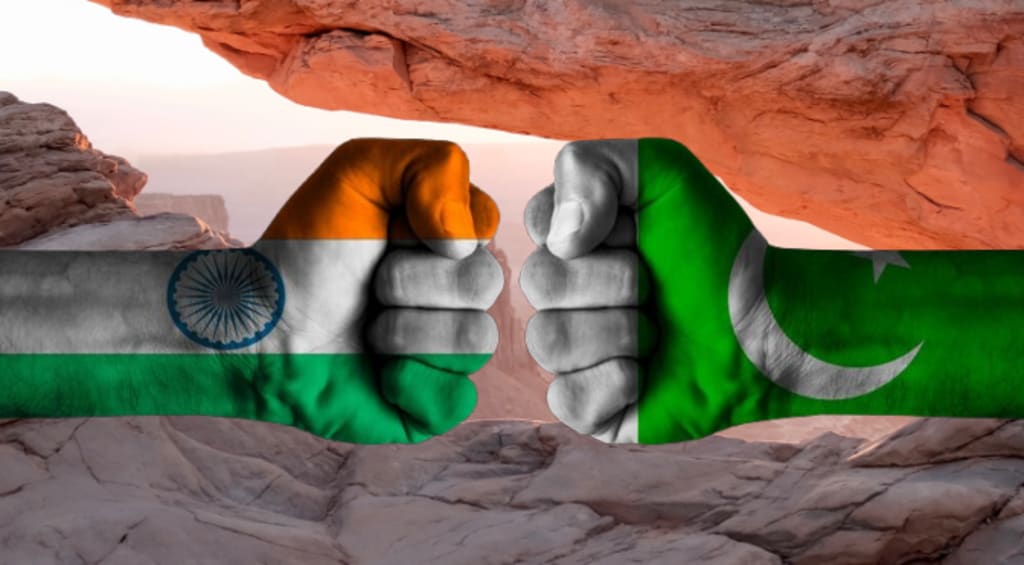
India-Pakistan War: The Bloody Legacy of the Partition of the Subcontinent
The history of wars between India and Pakistan is a tragic reflection of the political, religious, and geographical tensions of the subcontinent. After the end of British rule in 1947, the subcontinent was divided into Hindu-majority India and Muslim-majority Pakistan.The partition was hasty, messy, and disastrous. It led to the displacement of millions of people and violence that has had lasting effects on relations between the two countries.
The Indo-Pakistani war has taken place four times in total—in 1947, 1965, 1971, and 1999. Behind each war were political, military, and territorial reasons.
1. War of 1947-48: First Conflict in Kashmir
The first Indo-Pakistani war began in October 1947, shortly after the partition of the country. The Maharaja of Kashmir, Hari Singh, had not yet decided whether he would join India or Pakistan. When Pakistani-backed tribal forces invaded Kashmir, Hari Singh sought Indian help.India signed the Instrument of Accession of Kashmir to India as a condition. The Indian army then intervened and war broke out. A ceasefire was reached in 1949 with the intervention of the United Nations. Kashmir was divided into two parts—one under Indian control (Jammu and Kashmir) and the other under Pakistani control.
2. 1965 War: Reiteration of the Kashmir Issue
The second war began in 1965. Pakistan launched a covert operation in Kashmir, called Operation Gibraltar. The aim was to incite Kashmiris to revolt against India. But the Indian army counterattacked in Kashmir and later on the Punjab border.
3. The War of 1971: The Birth of Bangladesh
The 1971 war was the most important and transformative. The war was rooted in the independence movement of the then East Pakistan (now Bangladesh).Due to the brutal repression by the Pakistani army, about 10 million refugees took refuge in India. India intervened militarily in this situation, providing humanitarian and diplomatic support.
Direct war between India and Pakistan began in December 1971. The Indian army advanced quickly and secured the surrender of Pakistani forces in Dhaka on December 16. This resulted in the birth of independent Bangladesh and the division of Pakistan into two parts.
4. The Kargil War of 1999: The Battle of the Mountains
The fourth and final major war took place in Kargil in 1999. Pakistani troops and Kashmiri militants captured Indian army posts in the Kargil sector of Ladakh. India launched a major military operation to recapture these posts.
Conclusion
The main focus of the wars between India and Pakistan has been Kashmir and mutual distrust. After each war, the two countries have reached temporary peace and agreements, but no long-term solution has been found. Although the likelihood of a future war between the two nuclear-armed countries is low, the political Tensions and issues of terrorism have repeatedly destabilized this relationship.
War is never a permanent solution. Only through peaceful negotiations, diplomacy, and prioritizing the real needs of the people can stability be restored in the region.
Vision of the future
While there is currently no direct war between India and Pakistan, relations often become tense through border tensions, terrorism, and political statements. The risk of war has become even more acute with both countries now nuclear powers. The international community, particularly the United Nations and the United States, has repeatedly applied diplomatic pressure to maintain peace in the region.
The possibility of a lasting solution can be created by developing trade, culture and people-to-people ties between the two countries. Peaceful coexistence does not only depend on political decisions, but also on the awareness and mutual respect of the general public.
True peace is only possible when two countries forget the past and reach out to the future—the hand of cooperation.
About the Creator
Amdadul Haq Sardar
Tech enthusiast & lifelong learner. I write about AI, innovation, and the future of work—making complex ideas simple and relatable. Exploring how technology is shaping our world, one story at a time.
Keep reading
More stories from Amdadul Haq Sardar and writers in History and other communities.
The Darkest Chapter in China’s History: The Tragedy of the Great Leap Forward
The Darkest Chapter in China’s History: The Tragedy of the Great Leap Forward China, a nation with a rich and complex history stretching back thousands of years, has seen many ups and downs. Among its most tragic and devastating episodes is the Great Leap Forward, a political and social campaign initiated by Mao Zedong in the late 1950s. This campaign, intended to rapidly transform China into a modern, industrialized communist society, instead led to one of the deadliest famines in human history, causing the deaths of millions and leaving a deep scar on the nation’s collective memory.
By Amdadul Haq Sardar8 months ago in History
The Quiet Name on Maple Street
Kim Jong-un was born into a world unlike almost any other—a world sealed by borders, ideology, and secrecy. As the grandson of Kim Il-sung, the founder of North Korea, and the son of Kim Jong-il, the country’s second leader, Kim Jong-un entered life already wrapped in destiny. In North Korea, leadership is not chosen by ballots or debate; it is inherited like a crown, reinforced by loyalty, fear, and an unyielding political system.
By The best writer 3 days ago in History


Comments
There are no comments for this story
Be the first to respond and start the conversation.