
India-Pakistan Tensions or the Prelude to a Third World War?
Geopolitical Tensions and the Potential for Increased Conflict in South Asia
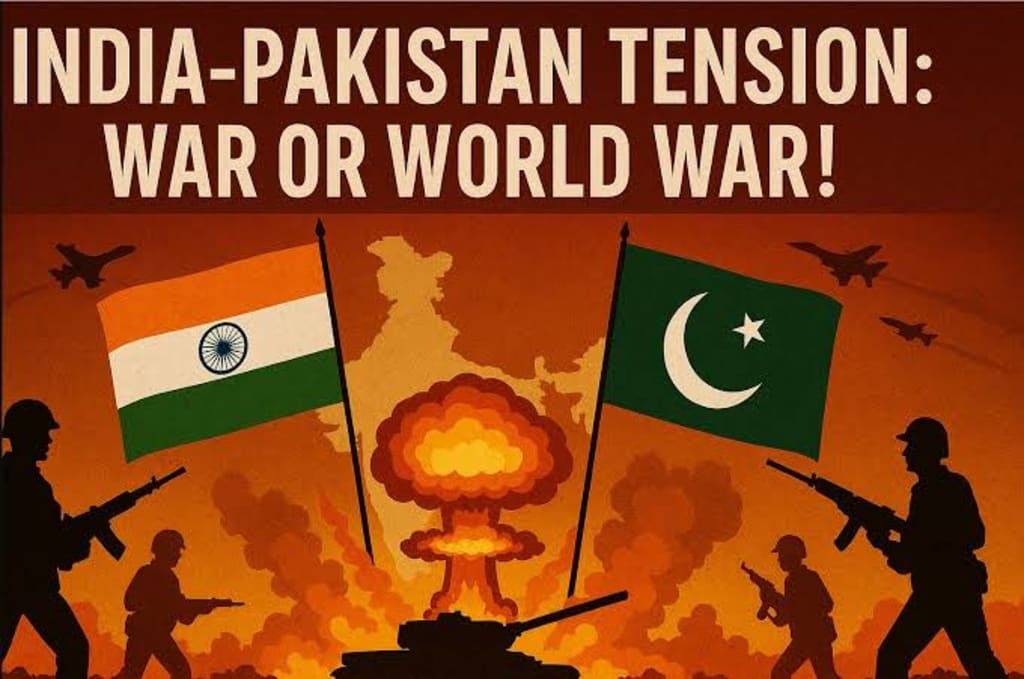
The enduring rivalry between India and Pakistan has become a crucial issue not just for the subcontinent but for the entire world. Stemming from historical grievances, territorial disagreements, and religious differences, this hostility has frequently escalated into military confrontations, skirmishes, and rhetoric that imply the possibility of a larger conflict. With nuclear capabilities coming into play increasingly since the late 1990s, the stakes have significantly heightened. This essay examines the current state of India-Pakistan tensions and interrogates whether they might indicate a more serious global conflict—a Third World War—or if they are simply isolated disputes that can be managed through diplomacy and negotiation.
The origins of the India-Pakistan conflict can be traced back to the partition of British India in 1947, which led to the establishment of two distinct nations—India and Pakistan. This separation was characterized by communal violence, mass migrations, and horrific tragedies, creating a foundation of distrust and hostility. The main issue persists as the territorial disagreement over Kashmir, a region that both nations claim but administer differently. The various wars fought over this land, especially in 1947, 1965, and the Kargil Conflict in 1999, have solidified an adversarial relationship that intensifies nationalistic sentiments on both sides.
In modern times, the spectrum of these tensions has been amplified by numerous factors. One vital aspect is the impact of external powers. The United States and China, among others, have interests in both nations, often complicating diplomatic solutions. For example, China's increasing backing of Pakistan—exemplified by the China-Pakistan Economic Corridor—has permitted Islamabad to strengthen its military capabilities, increasing India’s sense of insecurity. On the other hand, India's expanding strategic partnership with the United States has caused alarm in Islamabad, resulting in an arms race that could destabilize the entire region.
Additionally, extremist groups operating in the area have intensified the tensions. Instances of cross-border terrorism, particularly incidents like the 2001 Indian Parliament attack and the 2016 Uri attack, have prompted retaliatory strikes and increased military posturing. The continual use of proxy warfare by Pakistan has further inflamed sentiments in India, where the government feels pressured to assert strength and decisiveness. The recent rise in nationalism within India, driven by the current political landscape, has led to a reactionary foreign policy that frequently favors military solutions over diplomatic options.
A further threat exists in the nuclear capabilities of both nations, which have fundamentally changed the war calculus. The idea of mutually assured destruction has deterred full-scale wars; however, it has not prevented smaller confrontations. Each country maintains a delicate balance of power, relying on brinkmanship as a tactic that, despite its dangers, has prevented leaders from escalating conflicts to nuclear exchanges. Yet, the underlying fears persist—any miscalculation during a heightened tension period could spiral out of control, involving not only regional players but also major global powers, thus creating a scenario reminiscent of the tensions that preceded the World Wars.
The function of international organizations, specifically the United Nations, has been restricted in addressing this conflict, often regarded more as a diplomatic venue than a capable mediator. Attempts to encourage discussion between the two countries have consistently stumbled, often collapsing at the hands of provocative behaviors or remarks. This impasse in achieving peaceful resolutions raises the concern of a prolonged conflict that could expand beyond regional boundaries—particularly if either party believes that a daring military strike might alter the power dynamics in their favor.
Nevertheless, it’s essential to entertain the prospect of a Third World War with careful skepticism. Global interdependence is at an unprecedented level in the history of international relations. Economic connections, international partnerships, and contemporary communication networks act as significant deterrents to large-scale conflicts. The disastrous consequences of a nuclear war are widely recognized, leading leaders from both Europe and North America to advocate for de-escalation and diplomacy instead of outright conflict.
In the end, while India-Pakistan tensions are filled with intricacies that could blend with larger geopolitical scenarios, ongoing attempts at dialogue, trust-building initiatives, and proactive diplomacy might prevent a deteriorating situation. The resolution of their conflicts will be challenging, but a route to peace forged through mutual respect and comprehension has the capacity to enhance not just regional stability but also to avert a larger global crisis. In this delicate equilibrium, there is hope that diplomacy can prevail over the calls for war.
About the Creator
Keep reading
More stories from EMRANUZZAMAN and writers in History and other communities.
The Inspiring Story of Imam Al-Shafi’i: From Poverty to Becoming a Founding Father of Islamic Jurisprudence
One of the most remarkable stories of perseverance in Islamic history is that of **Imam Muhammad ibn Idris al-Shafi’i (767–820 CE)**, the founder of the Shafi’i school of Islamic jurisprudence. His journey—from extreme poverty to becoming one of the most influential scholars in Islam—proves that knowledge, hard work, and faith can overcome any hardship.
By EMRANUZZAMAN9 months ago in History


Comments
There are no comments for this story
Be the first to respond and start the conversation.