
Imran Khan: The Prisoner of Power
From Cricket Legend to Jailed Politician — How Pakistan’s Former Prime Minister Became the Symbol of Resistance

Article:
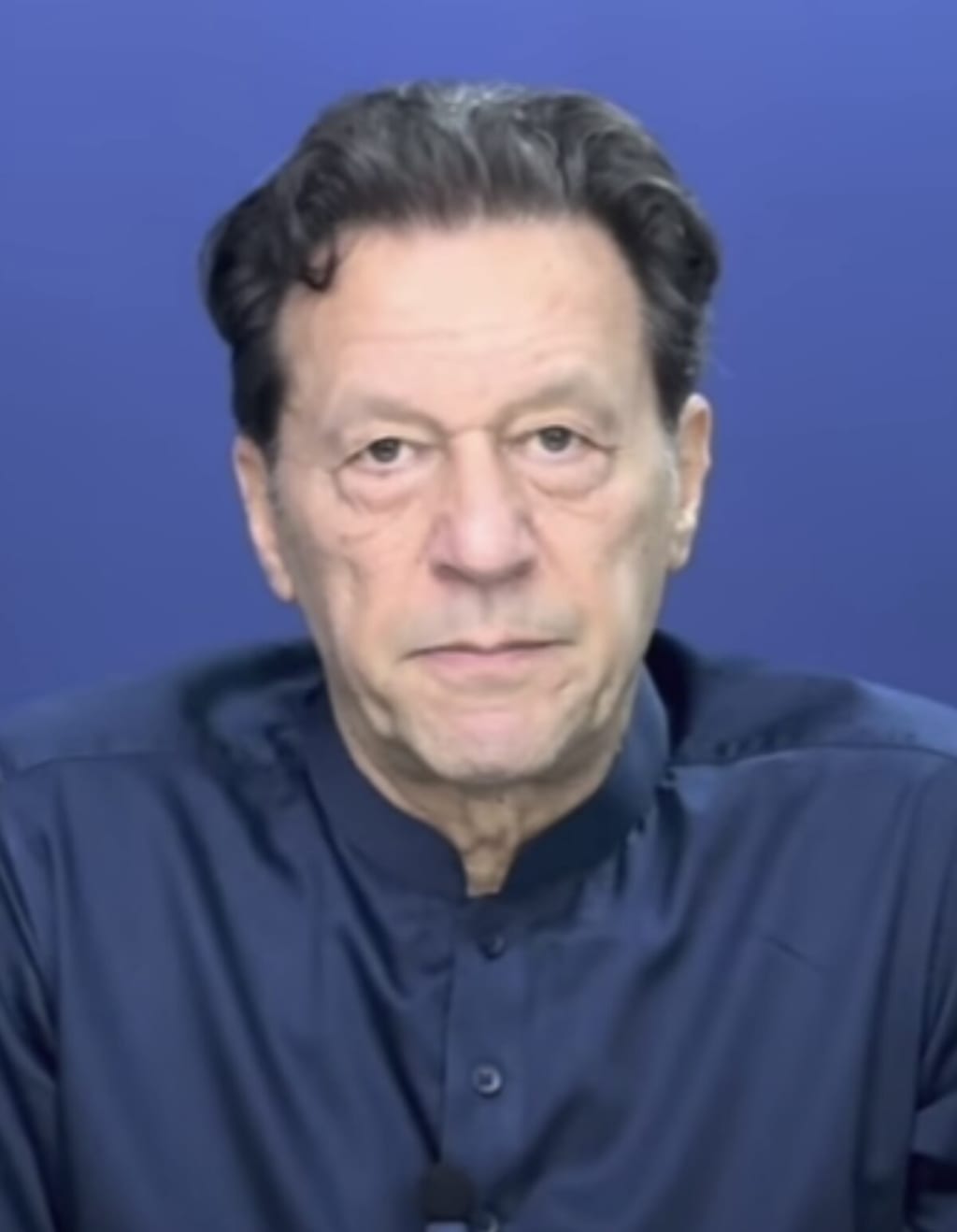
In the turbulent world of Pakistani politics, very few figures have commanded the kind of devotion and controversy as Imran Khan. Once celebrated globally as the cricketing hero who led Pakistan to its first-ever World Cup victory in 1992, Khan’s transformation into a political titan has been nothing short of remarkable. Yet, what makes his story even more compelling is not just his rise to power — but his dramatic fall, culminating in his arrest and imprisonment.
Imran Khan’s journey from cricket pitches to prison cells is not just a personal tale. It is a reflection of Pakistan’s ongoing struggle between democratic aspirations and the deep-rooted influence of the establishment. His time in jail has not only tested his resilience but has also reshaped Pakistan’s political landscape in ways no one could have predicted.
The Rise of a Hero
For decades, Imran Khan was admired for his leadership on the cricket field. After retiring from sports, he entered politics in 1996 by founding his own party, Pakistan Tehreek-e-Insaf (PTI). Initially, his political career was marked by years of struggle. But with his charismatic persona and promises of ending corruption and bringing justice, Khan’s popularity grew steadily.
By 2018, riding a wave of support from young voters and the urban middle class, Khan led PTI to a historic victory in Pakistan’s general elections, becoming the 22nd Prime Minister of the country. His supporters saw him as a reformer, a leader who would finally break the cycle of dynastic politics that had dominated Pakistan for decades.
However, governing Pakistan proved far more difficult than winning cricket matches.
The Fall from Grace
Imran Khan’s tenure was marred by economic instability, rising inflation, and growing tensions with political rivals and, more critically, with Pakistan’s powerful military establishment. Though initially perceived to have the backing of the establishment, cracks soon appeared in that relationship.
In April 2022, after a series of political defections and mounting pressure from opposition parties, Khan was ousted from office through a parliamentary vote of no-confidence. Never before had a Pakistani Prime Minister been removed this way. But Khan did not fade quietly into political obscurity.
Instead, he launched a relentless campaign against what he called a “foreign-backed conspiracy” and accused the military and opposition leaders of betraying the will of the people. His public rallies attracted massive crowds, and his popularity surged once again — but this time, it came at a cost.
Arrest and Imprisonment
In May 2023, Pakistan was stunned when Imran Khan was arrested on charges of corruption and misconduct. The arrest was dramatic. Armed paramilitary forces stormed a government building where Khan was present for a court appearance, dragging him away as cameras captured the moment. Within hours, Pakistan erupted in chaos. Protesters filled the streets, clashing with security forces. Government buildings were attacked, and the entire nation teetered on the edge of disorder.
For many Pakistanis, the arrest was not about legal accountability but about silencing dissent. His supporters argued that the charges were politically motivated, a desperate attempt by the establishment to remove the biggest threat to their power.
Inside the prison walls, Khan faced isolation. Reports indicated he was denied regular contact with his legal team, family, and even basic facilities. Yet those close to him described his state of mind as calm and unbroken. Letters smuggled from his cell and statements released by his lawyers spoke of a man still committed to his cause.
The Symbol of Resistance
Imran Khan’s imprisonment quickly transformed him into more than just a politician; he became a symbol of resistance against authoritarianism in Pakistan. The more the state tried to suppress his voice, the louder his message echoed across the country. Even from behind bars, he continued to rally his supporters through social media, speeches read by party members, and defiant legal challenges in court.
His arrest also exposed deep divisions within Pakistani society. To his critics, Khan was a reckless populist willing to destabilize the country for personal power. But to his supporters, he was the embodiment of courage, standing alone against a system long accused of exploiting the masses.
Interestingly, Khan’s imprisonment also forced many Pakistanis to confront uncomfortable questions about democracy in their country. If a former Prime Minister with global recognition could be treated this way, what hope was there for ordinary citizens seeking justice?
A Story Still Being Written
As of now, Imran Khan’s legal battles continue. Court rulings, appeals, and political negotiations are unfolding daily, making it clear that his story is far from over. Whether he emerges from this chapter politically stronger or permanently sidelined remains uncertain.
What is certain, however, is that Imran Khan has already secured his place in Pakistan’s history — not just as a cricketing legend or a former Prime Minister, but as a figure who dared to challenge the entrenched powers of his country.
Behind bars, Imran Khan may have been physically confined, but in the hearts and minds of millions of Pakistanis, his influence has never been greater.
About the Creator
Waqif Khan
i'm creating history from old people
Keep reading
More stories from Waqif Khan and writers in History and other communities.
The Forgotten Hero of the Indus: The Boy Who Challenged an Empire
In the spring of 326 BCE, Alexander the Great marched his armies into the Indian subcontinent, having conquered Persia and much of the known world. He had heard stories of the mighty Indus Valley, of cities carved from clay and stone, of warriors who rode with the speed of the wind. But he was confident. Every kingdom he had faced had fallen. Why would this land be any different?
By Waqif Khan7 months ago in History
3 Real Experiments That Sound Like Horror Stories
When people imagine scientific experiments, they usually picture lab coats, clipboards, and calm professionals nodding thoughtfully at charts. What they don’t imagine is screaming, psychological collapse, or outcomes so disturbing that ethics boards later had to be invented specifically to prevent them from ever happening again.
By Enoch Sagini2 days ago in History
The Fall of Tibet to a Communist State: History, Causes, and Consequences
The incorporation of Tibet into the People’s Republic of China (PRC) after 1950 was not a single event but a complex process involving military force, political negotiation, ideological conflict, and long-lasting resistance. Understanding this fall requires examining Tibet’s historical status, China’s communist revolution, and the profound consequences that followed.
By Say the truth 5 days ago in History
The Path to Salvation
The late autumn evening air filled the monk's lungs, but it wasn't the season that chilled his bones. The heavy-handed presence of evil he had sensed upon entering the woods surrounding this mountain village had not bothered to conceal itself from him.
By Made in DNA2 days ago in Fiction



Comments
There are no comments for this story
Be the first to respond and start the conversation.