
Imran Khan: From Cricket Legend to National Leader
The Untold Journey of a Champion Who Dared to Change Pakistan

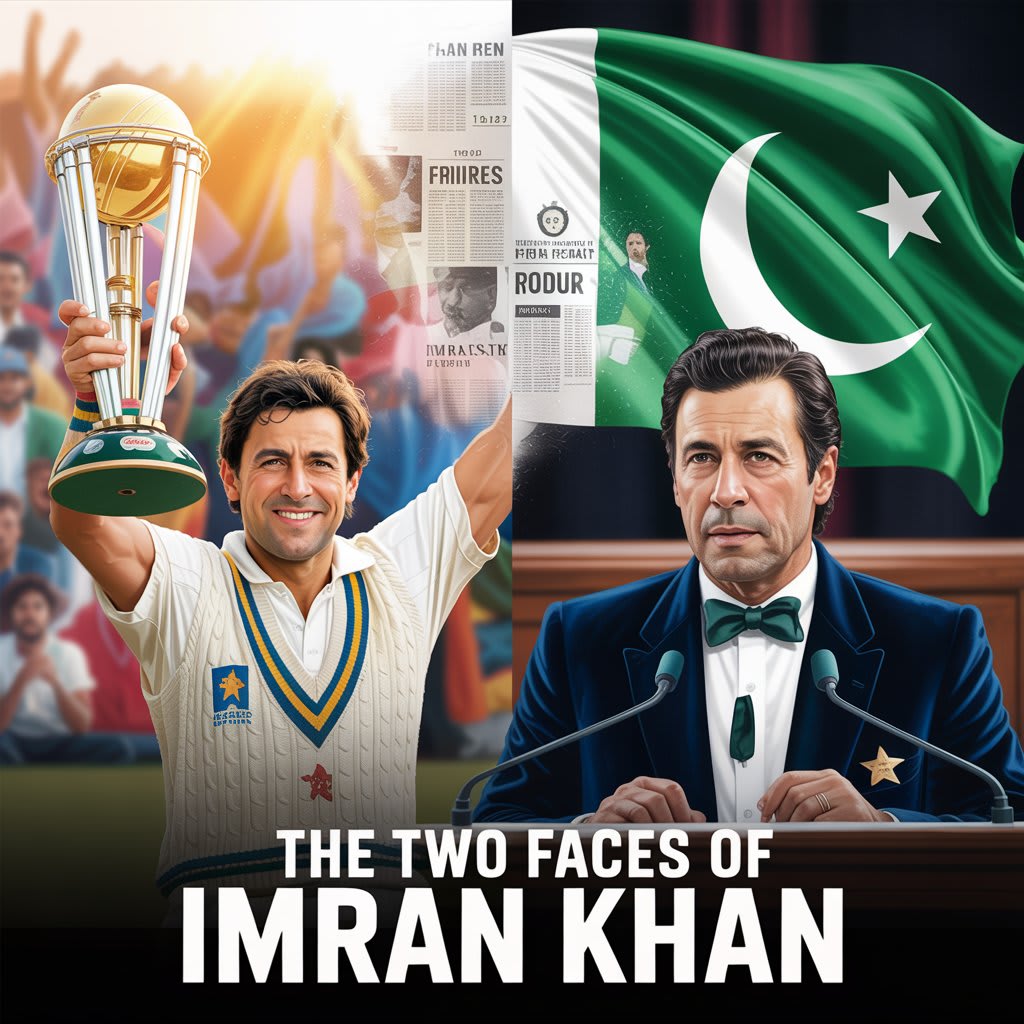
Born in 1952 in Lahore to a Pashtun family of privilege, Imran Khan’s childhood was colored by both expectation and restlessness. At Aitchison College and later Keble College, Oxford, he encountered worlds he had never imagined—academic rigor, cultural diversity, and the intoxicating freedom of self‑determination. Cricket, however, remained his first love.
Debuting for Pakistan at age 18, he quickly became known for his graceful strokeplay and his fierce, knee‑buckling yorkers. Teammates recall a young man who practiced until his muscles trembled, who refused to leave the nets until each delivery was perfect. By the time he assumed captaincy in the 1980s, Imran had already become a national hero. But he yearned for more than personal records—he wanted to lift Pakistan to its first World Cup.
When he finally hoisted the trophy in 1992, tears in his eyes, it was more than cricketing glory. It was the triumph of perseverance over prejudice, of unity over despair. In that instant, Imran Khan transformed from sports legend into the symbol of a nation’s aspirations.
Part II: From Stadium to Street
Victories on the field, however, could not shield him from life’s harsh realities off it. In the mid‑1990s, he watched as political corruption and economic mismanagement deepened the chasm between rich and poor in Pakistan. He had tasted leadership; he believed he could do more.
But the transition from cricket captain to political crusader was neither smooth nor swift. In 1996, he founded the Pakistan Tehreek‑e‑Insaf (PTI), preaching accountability, justice, and an end to dynastic politics. For years, his rallies drew small, devoted crowds; his message was idealistic, his methods unconventional. Critics laughed—how could a sportsman understand the labyrinth of power? Yet in every dusty town and teeming city, his words found resonance among young people desperate for change.
His greatest personal trial came in 1994, when his beloved mother died of cancer. Grief-stricken, Imran vowed to build Pakistan’s first cancer hospital in her memory. Thus was born the Shaukat Khanum Memorial Cancer Hospital & Research Centre—an institution that would treat thousands of poor patients free of charge. It was his first real foray into social service, and it cemented his belief that leadership meant tangible sacrifice.
Part III: The Long Road to Power
Two decades passed. PTI endured defeat after defeat in general elections. Imran’s opponents ridiculed him as a dilettante; entrenched parties used state machinery to marginalize his movement. Yet he refused to bend. Every setback became fodder for his narrative: the underdog denied justice, the outsider fighting a rigged system.
In 2011, his walk from Lahore to Islamabad—over 400 kilometers in scorching heat—captured hearts nationwide. Thousands joined him on the road; millions watched on television. By the time he reached the capital, PTI had become a genuine force. In the 2013 elections, they emerged as the second‑largest party in the National Assembly. Not yet victorious, but impossible to ignore.
Behind the scenes, Imran’s leadership style evolved. He studied governance, met with economists, consulted civil‑society activists. His vision crystallized: a “New Pakistan” built on meritocracy, transparency, and compassion. But turning that vision into reality would require navigating murky alliances, bureaucratic inertia, and relentless political sabotage.
Part IV: At the Pinnacle—And Under Siege
July 25, 2018, marked the zenith of Imran Khan’s political odyssey: PTI won a plurality of seats, and he became Pakistan’s 22nd Prime Minister. The captain had finally reached the summit. His inaugural speech brimmed with optimism: promises to create five million jobs, uplift the poor, reform education, and eradicate corruption.
Early successes—such as the Ehsaas poverty alleviation program and reform of Pakistan’s anti‑narcotics agency—earned praise at home and abroad. The Shaukat Khanum hospital expanded; new vaccination campaigns saved thousands of children. Imran’s trademark wit and charisma made him the face of a rejuvenated Pakistan on state visits from Beijing to Brussels.
Yet governing proved more treacherous than leading a cricket side. A global economic slowdown, rising inflation, and tense relations with powerful neighbors strained his agenda. Opposition parties accused him of authoritarianism; protests erupted in major cities. Every policy misstep was magnified under the glare of social media—often amplified by hostile vested interests.
In late 2021, as COVID‑19 battered economies worldwide, Imran faced his sternest test. Lockdowns devastated small businesses; the vulnerable grew more desperate. Critics blamed his government’s inconsistent messaging. But he leaned on his resilience: visiting makeshift quarantine centers, personally overseeing relief funds, and urging unity in televised addresses.
Part V: Legacy in Motion
Today, Imran Khan’s story remains unfinished. His tenure as Prime Minister has been roller‑coaster—marked by both commendable reforms and fierce controversy. Yet even detractors concede one truth: no Pakistani leader in memory has stirred such passion, hope, and debate.
Beyond policies and politics, his real legacy may lie in the shift he inspired: a generation that believes its voice matters, that corruption can be challenged, that service to others is the highest calling. The fields he once dominated with willow and leather have given way to town halls and parliaments. The same courage that drove him to chase a World Cup now drives millions to seek a better Pakistan.
As dusk falls over Islamabad’s hills, Imran Khan often reflects on that day in Melbourne—how a single six changed everything. He knows the game of governance is infinitely more complicated than cricket. But he also knows the fundamentals remain: vision, courage, discipline, and an unwavering belief in the possibility of victory.
Whether history judges him as hero or hubristic idealist, one fact endures: Imran Khan dared to dream a different Pakistan—and in doing so, transformed himself from cricket legend into the nation’s most compelling protagonist. And like any great story, his journey continues, page by page, inning by inning, toward an uncertain but profoundly hopeful future.
About the Creator
Farhan
Storyteller blending history and motivation. Sharing powerful tales of the past that inspire the present. Join me on Vocal Media for stories that spark change.



Comments
There are no comments for this story
Be the first to respond and start the conversation.