
Ibn Sina (Avicenna): The Father of Doctor
“There are no incurable diseases – only the lack of will. There are no worthless herbs – only the lack of knowledge.”

In the realm of medicine and philosophy, few names are as revered as Ibn Sina, also known as Avicenna. Born in the year 980 in the city of Afshana, near Bukhara in present-day Uzbekistan, Ibn Sina would go on to become one of the most influential thinkers of the Islamic Golden Age. His life's work would leave an indelible mark on the fields of medicine, philosophy, and beyond.
From an early age, Ibn Sina exhibited an insatiable thirst for knowledge. He possessed a remarkable intellect and a prodigious memory, devouring books and delving into various disciplines. At the tender age of 10, he had already mastered the Quran and had begun studying logic, mathematics, and the sciences.
Ibn Sina's passion for learning led him to seek the tutelage of renowned scholars in his region. He quickly surpassed his peers and became known for his exceptional intellect and depth of understanding. His brilliance shone through, and it became evident that he was destined for greatness.
At the age of 16, Ibn Sina faced a profound personal loss when his father passed away. This event served as a turning point in his life, propelling him further into the pursuit of knowledge and the search for meaning. Determined to make his mark on the world, he immersed himself in the study of medicine, a field that would become his true calling.
Ibn Sina's thirst for knowledge took him on a journey across various lands, seeking the wisdom of renowned scholars and expanding his understanding of medicine and philosophy. He traveled to cities such as Jurjan, Rey, and Isfahan, engaging in intellectual debates and absorbing the teachings of the great minds of his time.
During his travels, Ibn Sina faced numerous challenges, both intellectual and personal. He endured financial hardships, experienced periods of solitude, and encountered skepticism from some who doubted his abilities. However, his unwavering determination and passion for knowledge propelled him forward, undeterred by the obstacles in his path.
At the age of 21, Ibn Sina penned his most famous work, "The Canon of Medicine." This groundbreaking medical encyclopedia, written in five volumes, would go on to revolutionize the field of medicine and serve as a standard reference for centuries to come. The Canon synthesized knowledge from ancient Greek, Roman, Persian, and Indian sources, offering a comprehensive understanding of medical theory, diagnosis, and treatment.
Ibn Sina's contributions to medicine extended beyond his monumental work. He made significant advancements in the understanding and treatment of diseases, focusing on the importance of preventive medicine and the holistic approach to healthcare. He emphasized the interconnectedness of the body and mind, recognizing the profound impact that mental and emotional well-being have on physical health.
In addition to his medical achievements, Ibn Sina was also a polymath, delving into philosophy, mathematics, astronomy, and theology. He wrote extensively on metaphysics and epistemology, seeking to unravel the mysteries of existence and the nature of knowledge. His philosophical works, such as "The Book of Healing" and "The Book of Salvation," explored profound questions of the human condition and the quest for truth.
Ibn Sina's contributions to knowledge and scholarship were not limited to his own writings. He established a legacy of education and mentorship, training a generation of scholars who would carry on his teachings and expand upon his ideas. His influence reverberated through the centuries, inspiring countless individuals to pursue intellectual inquiry and contribute to the advancement of human understanding.
Even after his passing in 1037, Ibn Sina's impact continued to grow. His works were translated into various languages, spreading his wisdom and insights throughout the world. Scholars from different cultures and backgrounds recognized the value of his contributions and incorporated his teachings into their own intellectual traditions.
Today, Ibn Sina's influence can be felt in fields as diverse as medicine, philosophy, and the humanities. His emphasis on the importance of empirical observation, critical thinking, and the integration of knowledge remains relevant and continues to shape the way we approach learning and understanding.
The life of Ibn Sina serves as a testament to the power of curiosity, perseverance, and the pursuit of knowledge. His insatiable thirst for understanding and his unwavering commitment to excellence propelled him to great heights, transforming the fields of medicine and philosophy. Ibn Sina's legacy reminds us that the pursuit of knowledge is a lifelong journey, one that has the potential to shape not only our own lives but also the lives of generations to come.
About the Creator
Keep reading
More stories from Akbar Denali and writers in History and other communities.
Abbas bin Firnas: The Father of Medieval Aviation
In the annals of history, there are those whose names are forever etched in the fabric of human achievement. Among them is Abbas bin Firnas, a visionary inventor, and daring pioneer. Born in the city of Ronda, Spain, during the 9th century, Abbas bin Firnas possessed an insatiable curiosity and a relentless desire to push the boundaries of human potential.
By Akbar Denali3 years ago in History
Alexander the Great’s Looted Wealth from India: A Historical and Economic Estimation
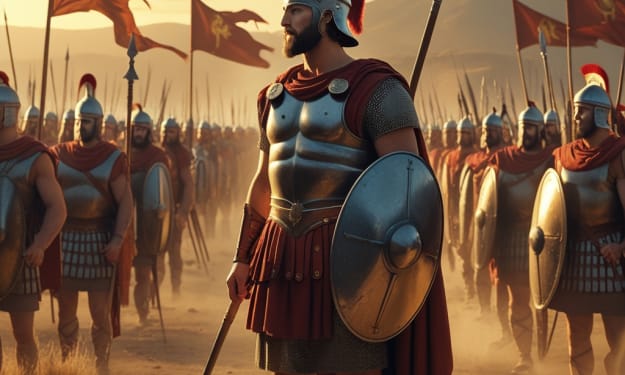
While his campaigns reshaped the ancient world politically and culturally, one of their most lasting impacts was the massive wealth he acquired from conquered territories, especially during his Indian campaign. This article explores the historical context, nature of the wealth looted from India, and an estimated net worth of that treasure in modern terms—revealing the truly staggering value of what came into Alexander’s hands.
By Say the truth 6 days ago in History
The Rise and Fall of Nicolae Ceaușescu
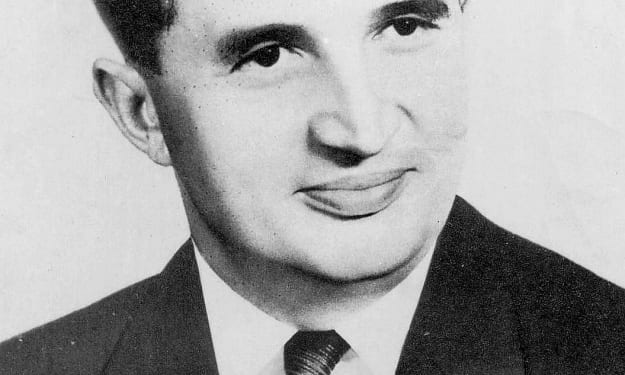
Nicolae Ceaușescu’s rise to power was initially marked by promise, even optimism. Born in 1918 into a poor peasant family, he entered politics early, shaped by the ideological rigidity of interwar and wartime communism. When he became General Secretary of the Romanian Communist Party in 1965, following the death of Gheorghe Gheorghiu-Dej, many Romanians saw in him a younger leader, one who might soften the harsh Stalinist legacy that had defined the previous decades. For a society weary of repression and deprivation, Ceaușescu appeared to embody the possibility of cautious change.
By Pure childa day ago in History
Wild Card Weekend Recap: What Happens Now?
I think I figured out why I love Wild Card Weekend so much. It's because it's the first playoff anything of the calendar year. The NFL season starts in the fall, and once upon a time, the champion was crowned either on or slightly before New Year's. The evolution of the NFL schedule has resulted in the playoffs starting just into the New Year, and currently, the final week of the season falls on the first weekend of the New Year, with Wild Card Weekend coming a week after that. So yes, chronologically, the NFL's Wild Card Weekend serves as the first playoff anything of the calendar year.
By Clyde E. Dawkins5 days ago in Unbalanced


Comments (1)
Very interesting article. I am also going to write a few more textbook reviews that cover counseling as well as philosophy. Your historical aspects in this article is making me think of a lot of ideas for writing.