
Hybrid Warfare: The Silent Battle Changing How Wars Are Fought
From hacking and fake news to armed rebels and protests — today’s wars go beyond the battlefield.
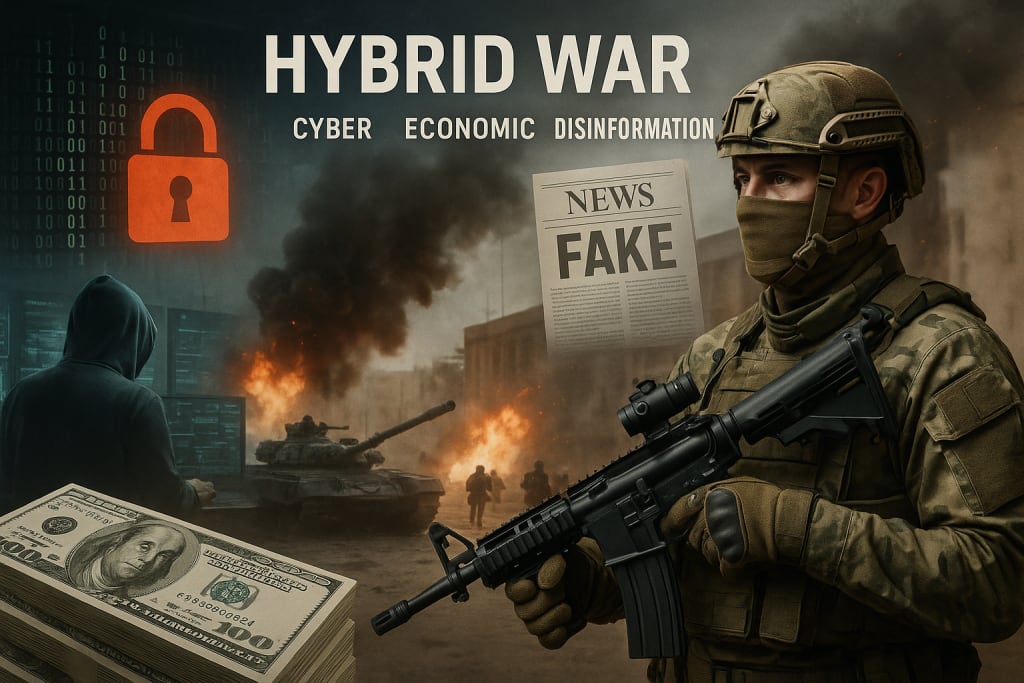
In today’s world, war is no longer just about soldiers and guns. Hybrid warfare mixes cyber attacks, fake news, political games, and even civil unrest to weaken a country. It’s a smart, dangerous strategy. Enemies don’t always wear uniforms. Sometimes, they hide behind keyboards, TV screens, or protest signs. This article explains hybrid warfare in simple words.
What Is Hybrid Warfare?
Hybrid warfare is a mix of traditional and non-traditional ways to fight a war. It combines military force with cyber attacks, misinformation, economic pressure, political influence, and even support for rebels or protests. The goal is to confuse, weaken, or take control of a country without starting a full war.
Instead of tanks, hybrid warfare might use hackers. Instead of bombs, it might use lies online. It can happen slowly, quietly, and without most people noticing—until it’s too late.
Key Weapons in Hybrid Warfare
Military Weapons
Traditional weapons like guns, missiles, and tanks are still used, but in hybrid warfare, they may be used in smaller, targeted ways. For example, special forces may quietly cross borders without wearing uniforms, or drones may strike from the sky without warning.
Cyber Warfare
Cyber attacks are a powerful part of hybrid warfare. Hackers can shut down power grids, steal secret files, or crash banking systems. They can also target media, elections, or health care systems. Cyber war can cause chaos without firing a single shot.
Misinformation & Fake News
Social media is a battlefield. Fake news, deepfakes (fake videos), and rumors can spread fear and confusion. Misinformation can turn people against their own leaders, cause panic, or help enemies gain power. One viral post can do more damage than a bomb.
Political Warfare
This involves using political tools to influence, bribe, or destabilize governments. Foreign powers may support certain politicians, create division in elections, or push certain laws. They may try to control a country’s direction from the inside.
Economic Pressure
Hybrid warfare can include cutting off trade, blocking access to money, or using sanctions to hurt a country’s economy. This can lead to unemployment, hunger, or unrest — making people more likely to protest or rebel.
Civil Unrest & Proxy Groups
Some countries support rebels, protests, or even terrorist groups in another country. They fund and train these groups secretly to cause problems. This leads to civil war, riots, or a weak government — all part of the hybrid war plan.
Real-Life Examples of Hybrid Warfare
Russia and Ukraine
The 2014 Crimea crisis and the 2022 invasion showed how hybrid warfare works. Before the tanks rolled in, Russia used cyber attacks, fake news, and political tricks to gain support and confuse people. “Little green men” — soldiers without badges — took over buildings without a full battle.
United States Elections
In 2016, intelligence reports said Russia used social media to spread lies and create division among American voters. No bombs were dropped, but the country’s trust in its own democracy was shaken.
Middle East Conflicts
Countries like Iran and Saudi Arabia have been involved in hybrid warfare by supporting rebel groups in Yemen, Iraq, and Syria. These proxy wars are part of a bigger political and religious struggle.
Why Hybrid Warfare Is Hard to Stop
The biggest problem with hybrid warfare is that it’s hard to prove and even harder to fight. Who launched the cyber attack? Who started the protest? Was it just angry citizens, or was someone paying them? Often, there’s no clear answer. That makes it hard for countries to respond or defend themselves.
Also, because hybrid warfare often avoids open battles, countries may be afraid to fight back. They may fear making things worse or starting a real war.
How Countries Can Protect Themselves
To fight hybrid warfare, countries need to be smart and prepared:
Cyber defense systems must be strong.
Education and media literacy can help people spot fake news.
Government unity and clear communication stop fear and confusion.
Alliances with other countries make it harder for enemies to attack quietly.
Tracking money and political influence can stop hidden enemies from gaining power.
Conclusion: A New Kind of War for a New World
Hybrid warfare is changing how the world fights. It’s not about big battles anymore — it’s about control, confusion, and influence. Countries must learn to fight not just with weapons, but with truth, technology, and teamwork. In this new era, staying smart is just as important as staying strong.
Disclaimer:
This article was created with the help of AI, but I have edited and personalized it to reflect my understanding and writing style.
About the Creator
Keep reading
More stories from Umar Farooq and writers in History and other communities.
12 American Flag Designs That Almost Changed History
The American flag is one of history’s most iconic symbols. Its red, white, and blue stripes, along with fifty stars, instantly represent freedom, democracy, and national pride. But did you know that the flag we all recognize today didn’t become official until 1960?
By Areeba Umair3 days ago in History
Top tipple tricks
Been thinking a lot about drinking, lately. Not least because of a recent episode of over-indulgence and the inevitable after effects. Some readers may recall the earlier articles I wrote about beating the booze. Here I set out an experiment in techniques for cutting down on my alcohol intake. The experiment was successful, the techniques worked, and I have armed myself with an arsenal of weapons in the war against the demon drink. I have yet to fire the first round however. It's all a question of timing (perhaps procrastination).
By Raymond G. Taylor7 days ago in Psyche




Comments
There are no comments for this story
Be the first to respond and start the conversation.