
How the Invention of the Airship Changed the Outcome of World War I
"Exploring the Impact of Advanced Airship Technology on the Great War's Strategies, Battles, and Outcomes"


Introduction
Consider a world in which airships, the grand floating machines of the early twentieth century, were not just a novelty but a central element of warfare. This is the premise of our alternate history: a World War I in which airships significantly alter the course of events. We'll look at how the invention and deployment of advanced airship technology could have changed major historical outcomes.
The Rise of Airship Technology
In our parallel timeline, airship technology improved quickly. By the early 1900s, nations had constructed extremely efficient and durable airships capable of transporting large payloads over vast distances. These airships were highly armed and meant for combat operations, rather than just observation and reconnaissance.
The secret to their success was their adaptability. They may be utilised for strategic bombardment, troop transport, and possibly mobile command stations. With these formidable technologies, World War I would have unfolded very differently from the historical record.
The Shift in Military Strategy
Historically, World War I was defined by trench warfare, in which both sides were bogged down in stagnant, arduous conflict. However, with the development of superior airships, this deadlock would be broken. Airships could slip over the entrenched lines, delivering destructive bombs and supplies directly to crucial targets.
The Western Front
The Western Front, which was famed for its immobile trench fighting, would undergo substantial changes. Airships would become essential to the fight, offering strategic advantages that traditional artillery and infantry could not match. The ability to carry big bombs would allow airships to launch precise strikes on supply depots, command centres, and even enemy trench lines.
Consider the consequences of airships bombing critical supply pipelines and railways behind enemy lines. Both the Allies and the Central Powers relied on logistical support, which would be severely interrupted. Airships could also engage in aerial dogfights with enemy aircraft, providing greater control over the skies than the limited and less advanced aeroplanes of the time.
The Eastern Front
Airships would play an important role in movement and supply in the Eastern Front, where distances were wide and front lines were fluid. Their capacity to cover broad areas quickly would enable more dynamic and fast-paced activities. Commanders could employ airships to quickly move troops and equipment, allowing them to better respond to changing battlefield conditions.
The Central Powers, with their superior airship technology, may have an advantage over the Allies. For example, they may use airships to quickly reinforce their forces or launch surprise attacks, therefore changing the regional balance of power. In contrast, the Allies would need to innovate quickly to tackle this new threat, maybe boosting their own airship development.

Naval Warfare
Naval warfare would also be revolutionised. Historically, World War I saw the rise of dreadnought battleships and submarines. In this alternate history, airships would play a significant role in naval strategy. Their ability to scan and monitor vast stretches of the ocean would alter naval engagements.
Airships could provide early notice of enemy fleets, enabling for more strategic deployment of naval forces. They might also be used to drop bombs on opposing ships or naval facilities, so altering the naval balance. The capacity to dominate the sky above the sea would bring a new dimension to naval conflicts, perhaps changing critical encounters such as the Battle of Jutland.
The Home Front
The impact of airships would go beyond the battlefield. On the home front, civilians would feel the impacts of aircraft combat more personally. Airships may launch bombing strikes on cities and industrial hubs, wreaking havoc and disrupting civilian life. Such raids could have a huge psychological impact, lowering morale and support for the war effort.
Governments would need to invest on airship defences, such as anti-aircraft guns and fighter planes tailored particularly to combat airship threats. The development of new technology and methods to combat airship attacks would become a top concern.
Diplomatic and Political Implications
The usage of airships would have an impact on diplomatic relations and political strategies. Countries possessing advanced airship technology would have tremendous negotiating power, potentially leading to alliance realignment. Nations may strive to join new alliances to counter the might of those with larger airship fleets.
Furthermore, the destruction created by airship bombardments may result in more heated negotiations and, ultimately, faster conflict resolution. The danger of widespread damage may motivate nations to seek peace more swiftly.

The War’s End
The changing dynamics of airship warfare are likely to result in a different outcome in World War I. Rapid advancements in airship technology could result in either a quick conclusion to the battle or a longer and more catastrophic war.
If one side is able to dominate with stronger airship capabilities, the opposition may be forced to surrender more quickly. On the other hand, the introduction of airship warfare may result in even greater destruction and a lengthier, more arduous fight.
Conclusion
In this alternate timeline, the development and use of advanced airship technology would have had a significant impact on World War I. The conflict would have been marked by new strategies, shifting front lines, and dramatic changes in both military and civilian life. Airships would become an important part of battle, altering the struggle and its outcomes in ways that would last throughout history.
About the Creator
Keep reading
More stories from aisha imran and writers in History and other communities.
Understanding Pakistani Culture: A Rich Tapestry of Tradition and Modernity
South Asian nation of Pakistan is well known for its rich and varied cultural heritage. A wonderful window into the history, customs, artwork, and daily life of the nation is provided by this rich fabric of tradition and modernity. Pakistani culture, with its own fusion of elements from many places and times, is a dynamic and multifaceted organism that is well worth investigating.
By aisha imranabout a year ago in History
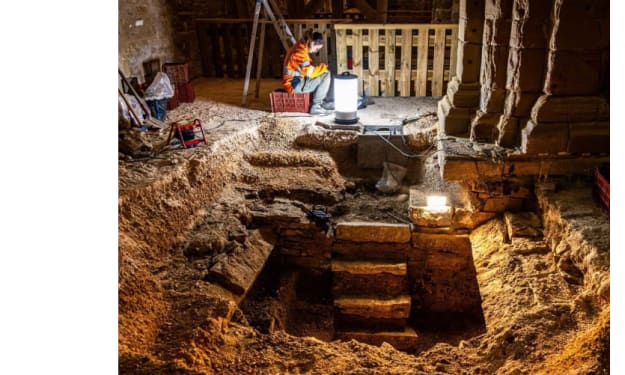
A secret staircase found beneath a 1,500-year-old French church
A subterranean staircase and burial strata dating back approximately 1,500 years were discovered during a project inside the Church of Saint Philibert in Dijon, France. The stairs were discovered by restoration workers inside the church when repairs were being made, and the excavation soon ensued.
By Francis Dami4 days ago in History
Martin Luther King's 'I Have a Dream' Speech: Things People Still Don't Know
Former President Ronald Reagan declared the third Monday in January to be Martin Luther King Jr. Day to celebrate the slain civil rights activist. Had he lived, he would be celebrating his birthday at age 97 on January 15, 2026, but he was assassinated at the young age of 39 on April 4, 1968.
By Margaret Minnicksa day ago in History



Comments
There are no comments for this story
Be the first to respond and start the conversation.