
How the Atomic Bomb Destroyed the Life of its Creator
BOMBS
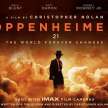

Title: The Tragic Journey of J. Robert Oppenheimer: From Scientific Genius to Tormented Creator
Introduction
The story of J. Robert Oppenheimer, the brilliant mind behind the creation of the atomic bomb, is one of great intellectual prowess and haunting remorse. As the father of the world's first nuclear weapon, Oppenheimer was a man of many talents, well-versed in multiple languages and a poet at heart. Yet, his most enduring legacy is forever tied to the destructive power he unleashed upon the world. In this article, we delve into the life of Oppenheimer, exploring his early brilliance, his pivotal role in the Manhattan Project, and the personal demons that haunted him after witnessing the destructive force of his own creation.
The Genius Emerges
Born in New York on April 22, 1904, to German Jewish immigrants, Oppenheimer displayed exceptional intellect from a young age. His father, a wealthy textile importer, provided him with a privileged upbringing, surrounded by fine art and intellectual stimulation. After attending an elite private school, Oppenheimer embarked on a journey of academic pursuit at Harvard in 1922. Initially interested in chemistry, he soon discovered a passion for experimental physics, immersing himself in the world of knowledge and learning multiple languages, including Dutch within six weeks to give a lecture in the Netherlands.
Facing Trials and Triumphs
Oppenheimer faced several challenges during his academic journey, including a battle with colitis, an inflammatory bowel disease, which delayed his enrollment at Harvard. However, he graduated in just three years, heading to the University of Cambridge to conduct research at the renowned Cavendish Laboratory. Although he struggled with the experimental aspect of physics, his true talent lay in theoretical physics. After obtaining his Ph.D. at a remarkably young age of 23, Oppenheimer returned to the U.S., where he continued to thrive as a research fellow at Harvard and Caltech.
The Rise of Fascism and the Manhattan Project
As the political landscape in Europe darkened with the rise of fascism, Oppenheimer's attention was drawn to the potential of nuclear weapons. He shared Albert Einstein's belief that German scientists could develop such a weapon, and he feared the destructive consequences in the hands of Hitler. In response, the U.S. government launched the Manhattan Project, a top-secret endeavor to build an atomic bomb.
Leading the Manhattan Project
Selected to direct the Manhattan Project, Oppenheimer brought together a brilliant team of physicists and researchers, ultimately managing over 3,000 individuals. He chose Los Alamos, New Mexico, for its natural beauty and fell in love with the landscape during a previous visit. The project received a staggering budget, growing from an initial $6,000 to a staggering $2 billion by 1945.
The Dreadful Realization and Guilt
As the project reached its culmination, Oppenheimer witnessed the successful detonation of the atomic bomb during the Trinity test. His profound realization of the destructive power he had unleashed upon the world haunted him deeply. Quoting from the Bhagavad Gita, he said, "Now I am become Death, the destroyer of worlds." He grappled with guilt and remorse over his creation, seeing the inhumanity and evil that modern war had become.
The Fallout of the Cold War
With the end of World War II and the beginning of the Cold War, suspicions arose concerning Oppenheimer's communist affiliations. Despite his contributions to the U.S. government and his role in shaping atomic policy, his security clearance was revoked in 1954, marking a significant downfall for the once-powerful scientist. He faced allegations of being a communist spy, which were later found to be baseless.
The Tragic End
Oppenheimer lived out the remainder of his life in Princeton, New Jersey, still running the Institute for Advanced Study. His cancer diagnosis in 1965 was a grim reminder of his past as a chain-smoker. On February 18, 1967, he passed away at the age of 62, leaving behind a legacy of brilliance and torment.
Conclusion
The life of J. Robert Oppenheimer is a poignant reminder of the power and consequences of human ingenuity. As a scientific genius, he spearheaded the creation of the atomic bomb, forever altering the course of history. Yet, the destructive force he unleashed haunted him until his final days. Oppenheimer's journey serves as a cautionary tale of the potential for good and evil that resides within humanity's creations. As the world continues to grapple with the specter of nuclear weapons, it is essential to remember the lessons of the past and strive for a future that prioritizes peace and global cooperation.
About the Creator
Sherlyn Abrams
I AM SMART, LOVING, INTELLIGENT AND I THINK I HAVE SIX SENSES. LOVE TOURING MEETING NEW AND INTERESTING PEOPLE LIKE ME. HAVE THE PASSION FOR GUIDING STUDENTS I AM A TEACHER BY HEATRT. TEACHING CHILDREN IS MY EVERY DAY JOY.
Keep reading
More stories from Sherlyn Abrams and writers in History and other communities.
The Secret Life of Albert Einstein
Unraveling the Secret Life of Albert Einstein: A Genius Beyond the Spotlight Albert Einstein, the renowned physicist, is celebrated as one of the greatest minds in human history. His theories revolutionized our understanding of the universe, and his image remains synonymous with brilliance. However, behind the iconic figure lies a man with hidden complexities and mysteries. Let's delve into the lesser-known aspects of Einstein's life that shaped the man behind the scientific genius.
By Sherlyn Abrams3 years ago in History
Understanding the Insurrection Act
The Insurrection Act is one of the most powerful and least understood laws in American history. Often mentioned during times of national unrest, it gives the president authority to deploy federal troops within the United States under specific circumstances. While it is rarely used, public interest in the law has grown in recent decades, leading many to ask: what is the Insurrection Act, and why does it matter today? What Is the Insurrection Act? To put it simply, the Insurrection Act of 1807 is a federal law that allows the president to use the U.S. military to suppress civil disorder, insurrection, or rebellion when state authorities are unable or unwilling to do so. If you are wondering what is the Insurrection Act used for, the answer lies in restoring order when local and state governments can no longer maintain public safety. People often search phrases like what is insurrection act or even the misspelled insurection act because the law tends to resurface during moments of crisis. Despite the confusion around its name, the authority it grants is very real and legally binding. What Is the Insurrection Act of the U.S.? So, what is the Insurrection Act of the US in legal terms? It is a collection of statutes now codified under Title 10 of the U.S. Code. The act provides exceptions to the Posse Comitatus Act, which generally prohibits the military from acting as domestic law enforcement. Under the Insurrection Act, the president can federalize the National Guard or deploy active-duty troops if constitutional rights are being violated or if violence prevents the execution of federal law. This is why many people ask, what is the Insurrection Act USA, especially when protests or riots dominate national headlines. The Insurrection Act and Its Historical Use Throughout American history, the act has been invoked sparingly but decisively. One of the most notable examples often referenced is the Insurrection Act 1992, when President George H. W. Bush deployed federal troops to Los Angeles following the Rodney King verdict. Local authorities had lost control, and the federal government stepped in to restore order. Earlier uses date back to the Civil War era and the Civil Rights Movement. Presidents Eisenhower and Kennedy relied on the act to enforce school desegregation in Southern states when state governments resisted federal court orders. These moments illustrate what the Insurrection Act is used for at its core: enforcing the rule of law when normal systems fail. Trump and the Insurrection Act In modern political discourse, the law became widely discussed during the presidency of Donald Trump. Searches for Trump Insurrection Act or Insurrection Act Trump surged during periods of nationwide protests, particularly in 2020. Although the act was never formally invoked during those protests, President Trump publicly considered its use, bringing renewed attention to the scope and limits of presidential power. The phrase insurrection act invoked often appears in news coverage, but it is important to note that discussing invocation and actually using the law are two very different things. The debate surrounding Trump Insurrection Act scenarios highlighted concerns about civil liberties, federal overreach, and the balance of power between states and the federal government. What Is the Insurrection Act in Minnesota? A common question during periods of regional unrest is what is the Insurrection Act in Minnesota or in other specific states. Legally, the act does not change from state to state. However, its application depends on circumstances within a particular state. If a governor requests federal assistance or if the president determines that constitutional rights cannot be protected locally, the Insurrection Act may apply. Minnesota, like every other state, falls under the same federal framework. The law does not target any single state; it responds to conditions on the ground. What Is the Insurrection Act Used For Today? In today’s environment, many Americans ask, what is the Insurrection Act used for in a modern democracy with established institutions. Supporters argue it is a necessary safeguard for extreme emergencies. Critics counter that it grants sweeping powers that could be misused if political tensions escalate. Understanding what is the Insurrection Act? requires recognizing that it is both a legal tool and a symbol. Its mere mention can influence public perception, markets, and political debate, even when it is not formally applied. Ongoing Debate and Public Concern The Insurrection Act remains controversial because it sits at the intersection of security and freedom. While it has been used to protect civil rights in the past, critics worry about potential misuse in polarized times. This tension explains why questions like what is the Insurrection Act of the US continue to trend whenever civil unrest occurs. Ultimately, the law reflects a fundamental challenge in governance: how to maintain order without undermining democracy. The fact that it has existed since 1807 and remains largely unchanged shows both its durability and its complexity. Final Thoughts The Insurrection Act is not a law that affects daily life, but it plays a critical role during extraordinary moments. From the Insurrection Act of 1807 to discussions around Insurrection Act 1992 and Insurrection Act Trump, its history mirrors the nation’s struggles with unity, authority, and rights.
By Saboor Brohi 4 days ago in History
From Desert Sands to a Global City
Long before Dubai became a city of glittering skyscrapers and global ambition, it was a quiet settlement shaped by the desert, the sea, and the determination of its people. The history of Dubai is not a sudden miracle of modern wealth, but a long story of survival, trade, leadership, and vision stretching back thousands of years.
By The best writer 6 days ago in History




Comments
There are no comments for this story
Be the first to respond and start the conversation.