
How long does it take to suffer from cocaine?
How long does it take to suffer from cocaine

Recovering from cocaine addiction is a challenging and multifaceted journey, dependent on various factors like the amount of use, duration of addiction, and the individual's overall health. Cocaine is a potent stimulant that significantly affects the central nervous system, leading to physical, mental, and emotional damage. The recovery process encompasses not only physical healing but also psychological and behavioral rehabilitation, often extending over months or even years.
Initial Phase: Withdrawal Symptoms (First Days)
The first step in recovery is the withdrawal phase, which begins shortly after stopping cocaine use. This phase usually starts within 24 to 72 hours and can last for about a week to 10 days. During this period, the body reacts to the sudden absence of the drug, which had previously overstimulated the nervous system.
Common withdrawal symptoms include:
Extreme fatigue: The body and mind experience exhaustion as the nervous system readjusts.
Sleep disturbances: Some individuals may struggle with insomnia, while others might sleep excessively.
Depression: Cocaine stimulates dopamine production, which is linked to feelings of pleasure. Without it, individuals may feel severely depressed.
Intense cravings: The urge to use cocaine again is strong, making this phase critical in terms of relapse risk.
During this period, medical and psychological support is essential. In some cases, medications may be prescribed to alleviate withdrawal symptoms and support the person through this difficult phase.
Middle Phase: First Few Weeks After Withdrawal
After overcoming the initial withdrawal, the body enters the post-acute withdrawal phase, which can last from two weeks to three months. While the severe physical symptoms may subside, psychological and behavioral challenges often persist.
Symptoms during this phase include:
Mood swings: Frequent shifts between anxiety and depression are common.
Difficulty concentrating: People often find it hard to focus on daily tasks or responsibilities.
Emotional instability: Individuals may feel anger or sadness without a clear cause.
Persistent cravings: Despite time passing, the desire to use cocaine may remain, making relapse prevention crucial.
At this stage, psychological treatments, such as Cognitive-Behavioral Therapy (CBT), are recommended to help individuals identify and modify destructive behaviors. Group support programs, like Narcotics Anonymous or other peer-based groups, offer valuable mutual encouragement during this vulnerable period.
Long-Term Phase: Sustained Recovery
The final phase of recovery is long-term rehabilitation, which can last from several months to years. While the immediate withdrawal symptoms are behind them, individuals in this stage are still at risk of relapse and require continuous treatment and support.
Key focus areas during this stage include:
Psychosocial rehabilitation: Building new life skills and improving social relationships are crucial to maintaining long-term recovery. These programs help individuals enhance their personal and professional lives, fostering emotional stability.
Managing triggers: People learn to identify and avoid situations, places, or people that may tempt them to use cocaine again.
Physical health: Prioritizing a healthy lifestyle, with proper nutrition and regular exercise, helps repair the damage cocaine has done to the body and nervous system.
Ongoing support: Even after significant time has passed, maintaining a support system of family, friends, or a recovery group is essential.
Factors Influencing the Recovery Process
The timeline and success of recovery from cocaine addiction vary from person to person. Several factors influence the speed and ease of recovery:
Duration of addiction: Those who have used cocaine for an extended period will typically need more time to recover than individuals with a shorter history of use.
Amount of cocaine used: Heavy and frequent use can complicate and lengthen the recovery process.
Overall health: Individuals who are physically and mentally healthier at the start of recovery may heal faster.
Support system: A strong support network, including professional treatment and a positive social environment, plays a vital role in the recovery process.
The Role of Psychological and Behavioral Therapy
Psychological and behavioral treatments are critical to long-term recovery from cocaine addiction. It’s not enough to simply stop using the drug; individuals must also address the underlying mental and behavioral issues that led to the addiction.
Cognitive-behavioral therapy (CBT) is one of the most effective treatments, as it helps individuals recognize and change negative thought patterns and behaviors associated with their addiction. It also provides tools to manage cravings and deal with triggers in a healthy way, promoting a lasting recovery.
Can You Return to a Normal Life?
Yes, it is possible to return to a healthy, fulfilling life after recovering from cocaine addiction. However, success depends on a person’s commitment to treatment, consistent follow-up, and ongoing support. The road to recovery is often full of challenges, but with determination, professional help, and a solid support system, individuals can regain control over their lives and thrive once more.
Conclusion
Recovering from cocaine addiction is a lengthy and complex process, involving both physical and psychological aspects. While withdrawal may take only a few weeks, true recovery can last much longer and requires continuous effort. With the right combination of medical care, psychological therapy, and social support, individuals can overcome the challenges of addiction and build a healthy, happy future.
Sources:
About the Creator
Keep reading
More stories from writers in History and other communities.
Cleopatra – The Last Queen of the Nile
Cleopatra VII Philopator, known to history simply as Cleopatra, was the last active ruler of the Ptolemaic Kingdom of Egypt. Her life was a dramatic blend of intelligence, ambition, political skill, love, war, and tragedy. She was not only a queen but a strategist who stood at the crossroads of two great civilizations—Egypt and Rome—during one of the most turbulent periods in ancient history. Cleopatra was born in 69 BCE in Alexandria, the shining capital of Egypt. Though she ruled Egypt, she was not ethnically Egyptian. She belonged to the Ptolemaic dynasty, a Greek royal family descended from Ptolemy I, one of Alexander the Great’s generals. For nearly three centuries, her family ruled Egypt after Alexander’s death. Yet unlike many of her ancestors, Cleopatra embraced Egyptian culture. She learned the Egyptian language—something rare among the Ptolemies—and presented herself as the living goddess Isis to her people. She was highly educated, speaking several languages, and was trained in philosophy, mathematics, and diplomacy. Cleopatra became queen in 51 BCE at the age of eighteen, co-ruling with her younger brother Ptolemy XIII, who was only ten years old. According to Egyptian tradition, she married her brother to solidify their joint rule. However, their relationship quickly turned into rivalry. Cleopatra was determined to rule independently, but powerful advisers around Ptolemy XIII pushed her aside. Soon, she was forced into exile from Egypt. But Cleopatra was not one to accept defeat. During her exile, she gathered an army and planned her return. Around this time, Rome was embroiled in civil war between Julius Caesar and Pompey the Great. When Pompey fled to Egypt seeking refuge, he was killed on Ptolemy XIII’s orders in an attempt to win Caesar’s favor. However, when Caesar arrived in Alexandria in 48 BCE, he was reportedly outraged by Pompey’s murder. Cleopatra saw opportunity in chaos. According to legend, she had herself secretly brought to Caesar wrapped in a carpet (or bed sack) so she could meet him privately. Whether the story is fully true or not, what is certain is that Cleopatra impressed Caesar with her intelligence, charm, and political vision. An alliance—and romance—soon followed. With Caesar’s military support, Cleopatra defeated her brother’s forces. Ptolemy XIII drowned in the Nile during the conflict. Cleopatra was restored to the throne, this time co-ruling with another younger brother, Ptolemy XIV. Soon after, she gave birth to a son, Ptolemy XV, known as Caesarion, whom she claimed was Julius Caesar’s child. Cleopatra later traveled to Rome and stayed there as Caesar’s guest. Her presence in Rome caused scandal and fascination. To some Romans, she was exotic and powerful; to others, she was a dangerous foreign queen influencing their leader. In 44 BCE, Julius Caesar was assassinated by Roman senators. Cleopatra quickly returned to Egypt, recognizing that Rome had once again become unstable. After Caesar’s death, a new power struggle erupted in Rome. Three men formed the Second Triumvirate: Octavian (Caesar’s adopted heir), Mark Antony, and Lepidus. Mark Antony eventually became ruler of Rome’s eastern territories, which included Egypt’s neighboring regions. In 41 BCE, Antony summoned Cleopatra to meet him in Tarsus. Cleopatra once again demonstrated her mastery of political theater. She arrived on a magnificent barge decorated in gold and purple sails, presenting herself as the goddess Isis. Antony was captivated. Their meeting marked the beginning of one of history’s most famous love affairs. But their relationship was not merely romantic—it was strategic. Antony needed Egypt’s wealth to fund his military campaigns, and Cleopatra needed Roman protection to secure her throne. They became partners in both love and politics. Cleopatra bore Antony three children. Together, they envisioned a powerful eastern empire centered in Alexandria. However, their alliance created tension in Rome. Octavian viewed Antony’s relationship with Cleopatra as a betrayal of Roman values. He portrayed Cleopatra as a seductive foreign queen who had bewitched Antony and turned him against Rome. Roman propaganda painted her as dangerous and manipulative. The conflict between Octavian and Antony eventually erupted into open war. In 31 BCE, their forces clashed in the naval Battle of Actium. Cleopatra’s fleet fought alongside Antony’s, but the battle ended in disaster. Facing defeat, Cleopatra withdrew her ships. Antony followed her, leaving his fleet to collapse. Octavian emerged victorious. After Actium, Octavian pursued them to Egypt. In 30 BCE, his forces invaded Alexandria. Antony, believing Cleopatra had betrayed him and thinking she was dead, took his own life. When Cleopatra realized Antony was truly dying, she had him brought to her mausoleum, where he died in her arms. Cleopatra knew her fate was sealed. Octavian intended to take her to Rome as a captive to parade in his triumph—a humiliation she could not accept. Determined to die as a queen rather than live as a prisoner, Cleopatra chose suicide. According to ancient accounts, she allowed herself to be bitten by an asp, a venomous snake, though some historians debate the exact method. Cleopatra died in 30 BCE at the age of thirty-nine. With her death, the Ptolemaic dynasty ended, and Egypt became a province of the Roman Empire. Octavian, who would later become Emperor Augustus, consolidated his power and ushered in the Roman Empire. Cleopatra’s legacy has endured for over two thousand years. Often remembered for her beauty and romances, she was far more than a seductress. She was a skilled diplomat, a brilliant linguist, and a capable ruler who fought to preserve Egypt’s independence in an age of Roman expansion. She managed a wealthy economy, stabilized her kingdom during famine, and maintained Egypt’s cultural identity. Her story is ultimately one of resistance against overwhelming odds. She lived in a world dominated by powerful men and empires, yet she carved her own place in history. Though her reign ended in defeat, her name never faded. Poets, playwrights, and historians—from Shakespeare to modern filmmakers—have retold her tale countless times. Cleopatra was the last queen of ancient Egypt, but she became something greater: a symbol of ambition, intelligence, love, and tragedy. In her rise and fall, we see the end of one world and the birth of another. Her death marked not just the loss of a queen, but the final chapter of a civilization that had thrived along the Nile for thousands of years. And so, Cleopatra remains immortal—not only as the last queen of Egypt, but as one of history’s most unforgettable figures.
By The best writer 3 days ago in History
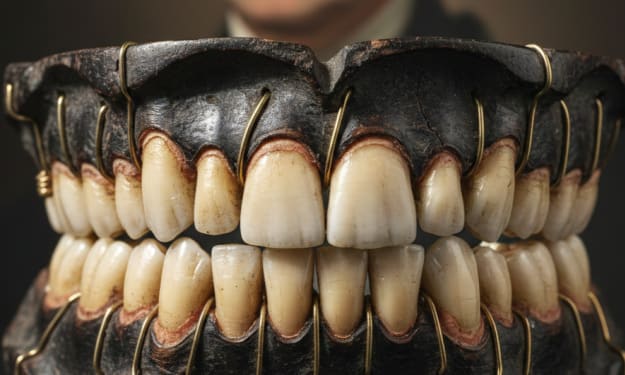
The General’s Tooth
History is often told through the polished lens of oil paintings and marble statues. We see George Washington as the stoic father of a nation, his jaw set in a firm, resolute line. But in the winter of 1783, as the American Revolution neared its end, that jaw was a site of excruciating, rotting agony.
By LUNA EDITH3 days ago in History
🅼🅸🅳🅽🅸🅶🅷🆃 🆂🅽🅰🅲🅺🆂
"It's 10 in Tuscon! We all know what that means... It's Time for Midnight Snacks with your man, Gerald Gee! Ready to spend the night together? Me too! I'm full of snacks and can't wait to regurgitate them all back into your hungry ears. Crack a brew! Pop some corn! Anything to get ready for one hell of a show where the talk maybe cheap but the words cut deep...
By Lamar Wiggins3 days ago in Fiction
Thoughts on Vocal and the way the world is
"Death cannot stop true love, only delay it." – Wesley in The Princess Bride. I decided to come back to Vocal on a very cold and dark night at the end of December. I had been, and still am, convalescing from a horrible staph infection that had gone misdiagnosed for months. This, paired with the increasing challenges of being healthy, making the best choices for my co-parented child, being a wife, and being a director at a new job, was a lot to manage.
By Jazzy 7 days ago in Confessions



Comments