
How he survived Chernobyl
The man who survived the Chernobyl nuclear disaster
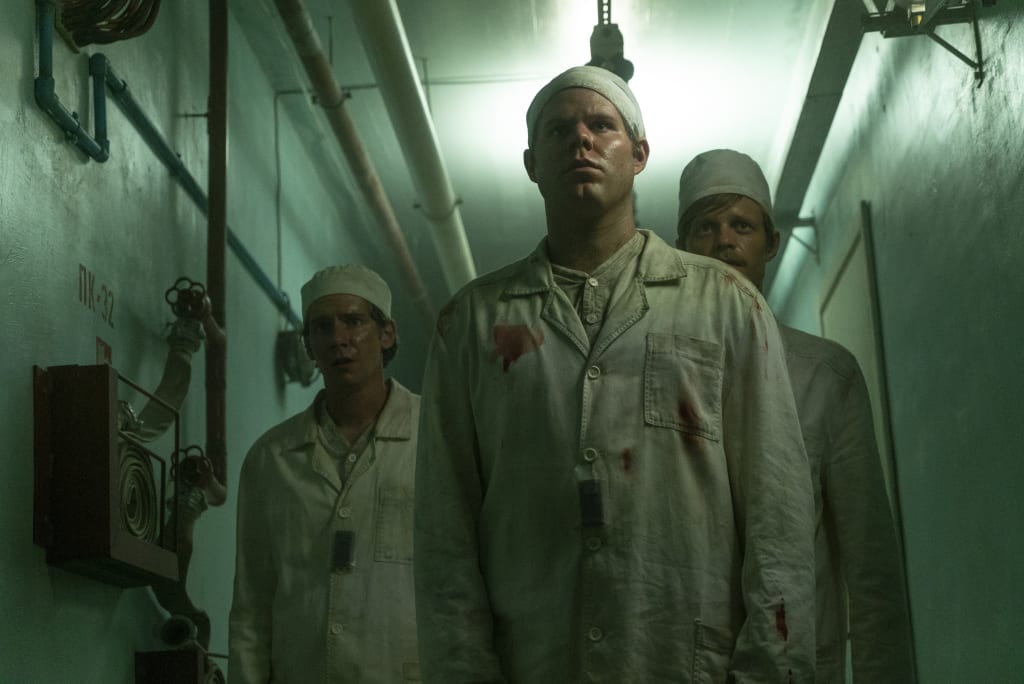
Allow me to introduce myself. I am Sasha Yuvchenko, and I want to share my firsthand account of surviving one of the most catastrophic man-made disasters in history: the Chernobyl nuclear explosion. On April 25th, 1986, while working at the heart of the Chernobyl nuclear power plant, the No. 4 reactor suddenly exploded, unleashing devastation on an unimaginable scale. The blast itself was massive, instantly vaporizing one of my colleagues.
The aftermath of the explosion has since become synonymous with a real-life horror story. Let me take you back to that fateful evening when everything seemed ordinary. It was a warm, pleasant night as my colleagues and I arrived for our night shift at the plant, located near the town of Pripyat in Northern Ukraine. The mood was light, with discussions centered around plans for the upcoming May-day holidays. Little did we know that our future would be drastically altered.
That night, we received the unsettling news that we had to conduct a test on reactor number four. This test was met with apprehension, as we were unsure of the correct procedure. However, we had no choice but to follow orders. Our debates revolved around determining the appropriate power level for the test, unaware of the fatal design flaw lurking within the reactor.
Essentially, the test aimed to simulate an electrical power outage, a scenario fraught with danger. In the event of an outage, backup generators were supposed to kick in. However, these generators took too long to reach full power, posing a threat due to the lack of cooling water being pumped into the reactor. The theory was to harness rotational energy from the steam turbine to power the cooling pumps for that critical minute. We had attempted this test twice before, without success. Unfortunately, the third attempt proved disastrous.
As we reduced the power levels, the reactor became alarmingly unstable. We were instructed to ignore vital safety mechanisms, even though we sensed that something was terribly wrong. In a desperate bid to regain power, we removed control rods—an action strictly against safety procedures. These rods act as fail-safes, preventing the reactor from generating excessive power. However, instead of stabilizing, the power began to rise rapidly. Inside the reactor, steam accumulated, creating a pressure cooker of unimaginable proportions. It was at this moment that we realized we were facing an emergency.
In a panic, we pressed the SCRAM button, initiating an emergency shutdown. We attempted to reinsert the control rods, but they became jammed. Unbeknownst to us, the graphite tips on those rods intensified the power surge.
Then, at 1:23:45 a.m., the pressure cooker exploded with colossal force. The 1,000-ton roof was blown off, and a terrifying fireball erupted into the sky. The atmosphere filled with dust and graphite debris, while radiation leaked uncontrollably.
The scene was hellish, resembling the aftermath of a war. The impact was so immense that the walls shook, rendering the entire area profoundly unstable. In that moment, I, a physically imposing man unafraid of much, felt utterly insignificant and at the mercy of an unfathomable disaster.
Driven by concern for my colleagues, I navigated the dark corridors filled with dust and heard only the haunting hissing sound around me. Tragically, I discovered that my closest companion had been near the pumps and had perished. As I looked up, I noticed the roof had been blown away, revealing a night sky adorned with stars. It was then that I witnessed a mesmerizing beam of light, unaware of its sinister nature. That beam, unbeknownst to me at the time, was a deadly radiation that would claim countless lives.
Accompanied by my colleagues, I made my way to the reactor hall, only to find the heavy door jammed. However, utilizing my strength, often likened to that of a bear, I managed to open the door, allowing my friends to assess the extent of the damage. Tragically, all of those brave individuals succumbed to radiation poisoning in the following days and weeks. We were aware of the high radiation levels due to the dosimeter, which indicated a needle off the scale. However, our initial thoughts revolved around the impact on our careers in the nuclear energy field, oblivious to the cataclysmic nature of the explosion.
Approximately an hour later, a profound sense of unease washed over me. I began experiencing symptoms—vomiting and a sore throat. Meanwhile, firefighters arrived at the scene, unaware of the perilous radiation levels. Many of these courageous individuals would succumb to slow and agonizing deaths.
Outside the nearby town, residents stood captivated by the awe-inspiring beam of light. Unbeknownst to them, they too faced the dangers of radiation poisoning. By 6 a.m., my condition had deteriorated to the point where I could no longer walk. I was overcome by a profound sickness, as if the grim reaper of radiation had invaded my body, threatening my life, my child, and my beloved wife.
Hospitalized and surrounded by fellow victims, we contemplated the extent of our radiation exposure. A knowledgeable individual among us remarked that the severity of our vomiting indicated a substantial dosage, possibly even fatal. Later, I discovered that I had been exposed to 4.1 Sv of radiation. To put it into perspective, this level exceeded that which nuclear plant workers should experience in a year by approximately 650 times. It was 5,000 times higher than the recommended annual exposure for an average person.
Aware of the gravity of the situation, I witnessed some of those individuals I conversed with at the hospital suffer horrific deaths, seemingly melting from the inside out. The subsequent arrival of the KGB added another surreal layer to the unfolding events. I was abruptly informed that I had to be transported to Moscow, without even a chance to inform my wife. A group of 128 individuals, including myself, embarked on that journey, with five among us succumbing to the effects shortly thereafter. The long-term consequences and casualties resulting from radiation poisoning remain unknown.
Upon arriving in Moscow, one of the initial actions was shaving my head—an inconsequential concern given the circumstances. Within a week, all my body hair had fallen out. Breathing difficulties plagued most of us, accompanied by intense eye and nose pain. Bone marrow transplants were administered, a procedure I underwent multiple times. Strangely, many of us experienced a temporary respite—a period of deceptive improvement—caused by radiation poisoning at such high levels. However, this reprieve was short-lived as the worst effects gradually manifested.
One particularly distressing moment was when I peeled back my bed sheets and witnessed my ulcerated skin, lifeless and decaying. The most affected areas were my shoulder, hip, and calf, exposed to exceptionally high levels of radiation during my attempt to open the reactor hall door. Venturing inside would have undoubtedly sealed my fate. Portions of my body seemed to disintegrate, turning black in a grotesque display. I felt as though I were transforming into a radioactive mutant, a living monstrosity.
Fortunately, I underwent numerous surgeries and skin grafts, ultimately surviving the ordeal. However, my arm, a body part at risk of amputation, remained bandaged for the next seven years. To this day, occasional ulcerations serve as a haunting reminder of the areas most affected by radiation exposure. One saving grace was the microsurgery I received in Berlin, where blood vessels were transplanted from my leg to my arm. In this regard, I consider myself fortunate.
A close colleague who underwent similar surgeries, unfortunately, lost his sight and succumbed to the effects of radiation exposure within a month. In our cases, the radiation had annihilated our bone marrow cells, leading to a drastic decrease in white blood cells. Without a functioning immune system, our bodies fell prey to infections, slowly consuming us from within.
Altogether, I spent a year confined to hospitals, followed by years of rehabilitation. Medical professionals advised against having another child due to the high risk of leukemia. Occasionally, morbid thoughts of the worst outcomes plague my mind. Yet, thus far, my resilient body has proven adept at self-repair. Throughout this arduous journey, my wife has stood by my side, though it hasn't always been easy. People, aware of my condition, viewed me as a walking time bomb. They would cross the street, fearing I might pass on the poison to them. In their eyes, I became one of the monsters of Chernobyl, marked with a radiation hazard sign on my back.
Nevertheless, I am here, and I have found happiness. I can now confidently state that I survived Chernobyl. My name is Sasha Yuvchenko, and this is my story.
About the Creator
Keep reading
More stories from writers in History and other communities.
Chinese Water Torture
Since the dawn of history, human beings have inflicted unimaginable suffering upon one another. Across centuries, people have devised increasingly elaborate methods of punishment and coercion, some brutally explicit, others deceptively subtle. While devices such as iron maidens, racks, whips, and wheels relied on visible physical agony, there existed a form of torment whose true power lay not in blood or broken bones, but in patience, repetition, and the slow erosion of the mind. This method came to be known as Chinese water torture.
By Pure child2 days ago in History
Saddam Hussein: Rise, Rule, and Fall
Saddam Hussein was born on April 28, 1937, in a small village near Tikrit, Iraq. His early life was marked by poverty, hardship, and a sense of abandonment. His father died before he was born, and his mother remarried soon after. Young Saddam grew up in a household dominated by strict relatives and was exposed to political discussions and nationalist sentiments from an early age. These formative years shaped his personality—ambitious, ruthless, and fiercely determined to rise above his modest beginnings.
By The best writer 2 days ago in History
The Devil's Cut
“Comrade, finally you’re awake.” The voice was smooth, sensual. A flickering incandescent bar was all that lit the white, sterile room. All Vladimir remembered was everything going black. He tried to move his arms and found them strapped to the gurney.
By Matthew J. Fromm5 days ago in Fiction



Comments