
History of Israel-Palestine conflict
Understanding the long-running conflict between Israel and Palestine

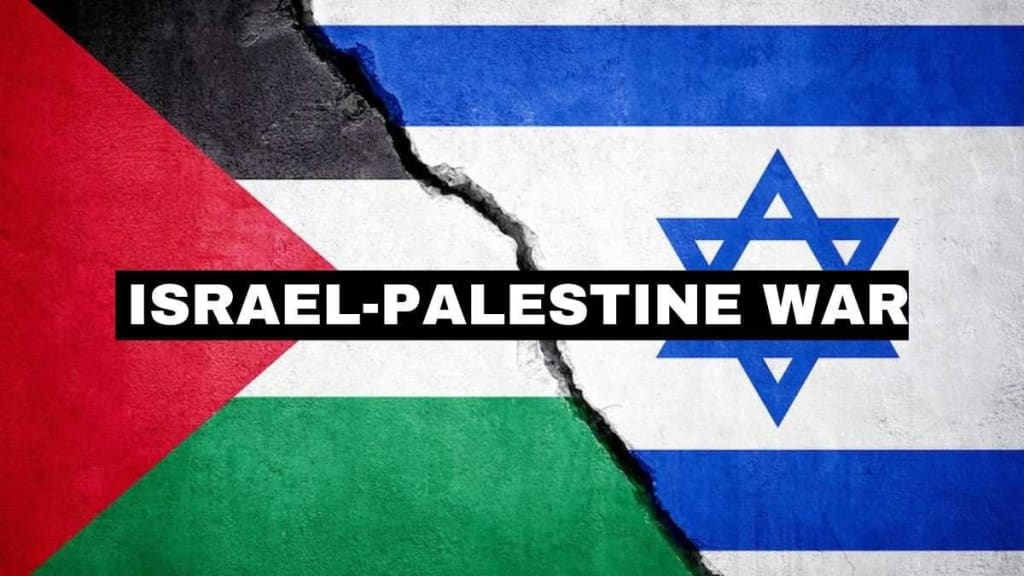
Understanding the Long-Running Conflict between Israel and Palestine
Introduction:
The conflict between Israel, the world's only Jewish state, and Palestine, representing the Arab population in Israel-controlled territories, has been marked by enduring tension and periodic violent clashes. To comprehend the root causes of this conflict, we must delve into its historical origins, stretching back thousands of years.
Early History of the Israeli-Palestinian Conflict:
In the 17th century BC, three patriarchs of the Jewish people—Abraham, Isaac, and Jacob—settled in the region known as Canaan, encompassing present-day Israel, the West Bank, and the Gaza Strip. The area later acquired names like the Land of Israel, the Promised Land, Palestine, or the Holy Land. Subsequently, the Israelite monarchy was established, with King Saul, King David, and King Solomon playing key roles. However, the region experienced numerous conquests, leading to a decline in the Jewish population.
Roman Conquest and the Emergence of Christianity:
The Roman Empire, during its conquests, renamed the region Palestine with the intention of severing the Jewish connection to the Land of Israel. Over time, Christianity, born as a Jewish sect, became a dominant religion, and the Dome of the Rock was erected in Jerusalem, making the city holy to Judaism, Christianity, and Islam.
Crusades and Ottoman Rule:
During the Middle Ages, the Seljuk Turks persecuted Christians in Jerusalem, prompting European Christians to launch the Crusades to reclaim the city. Meanwhile, the Ottoman Empire ruled over the Holy Land. In the 16th century, the concept of Zionism emerged in Europe, advocating for the establishment of a Jewish national state in its ancient homeland.
British Mandate and Zionist Immigration:
After World War I, the League of Nations granted Britain the mandate for Palestine, where the Balfour Declaration promised to establish a Jewish national homeland. However, tensions escalated between Jewish and Arab communities. During World War II, Jewish immigration to Palestine increased due to fear of persecution under Nazi rule.
Birth of the State of Israel:
Post-World War II, the United Nations proposed a partition plan, leading to the establishment of Israel in 1948. The announcement triggered the 1948 Arab-Israeli War, resulting in Israel gaining control over significant portions of historic Palestine.
Subsequent Conflicts and Peace Efforts:
The conflict persisted with subsequent wars, including the Six-Day War in 1967, leading to Israel's occupation of the West Bank, East Jerusalem, and the Gaza Strip. The Oslo Accords in the 1990s aimed at achieving peace, but issues like settlements, the status of Jerusalem, and refugee rights remained unresolved.
Hamas and Ongoing Tensions:
The rise of Hamas, conflicts in Gaza, and territorial disputes continue to fuel tensions between Israel and Palestine. The complex history and unresolved issues make the Israeli-Palestinian conflict a persistent and volatile challenge.
Conclusion:
Despite intermittent peace efforts, the Israeli-Palestinian conflict remains deeply rooted, demanding comprehensive and inclusive solutions to address the complex historical, political, and territorial aspects. The ongoing situation calls for international engagement and diplomatic initiatives to achieve lasting peace in the region.
Unraveling the Complex Israel-Palestine Conflict: A Historical Perspective
Introduction:
The Israel-Palestine conflict, a longstanding and intricate geopolitical struggle, has captivated global attention for decades. The strife reached a critical point on October 7, 2023, when the Israel Defense Forces faced a significant threat from Hamas, an organization launching a barrage of 5,000 rockets, utilizing unconventional means such as trucks, motorcycles, bulldozers, and even para-gliders. This event led to a tragic toll of around 700 Israelis and 370 Palestinians losing their lives, with thousands more sustaining injuries. This article aims to shed light on the historical roots of this conflict, offering insights into the complexities that have fueled tensions between Israel and Palestine.
Historical Context:
To comprehend the genesis of the Israel-Palestine conflict, we must delve into the early history of the region, dating back to the 17th century BC. The land, known as the "Land of Israel" or the "Promised Land," witnessed the settlement of three patriarchs—Abraham, Isaac, and Jacob. Over time, the region underwent various conquests, including the Roman Empire renaming it Palestine, attempting to sever the Jewish connection.
The Ottoman Empire ruled the area from the 16th century to World War I, coinciding with the rise of the Zionist movement in Europe, advocating for a Jewish national state in their ancient homeland. Post World War I, the British Mandate for Palestine was established, further intensifying tensions between Jewish and Arab communities.
Partition and Independence:
As World War II unfolded, the plight of Jews in Europe under Nazi persecution led to increased migration to Palestine. The aftermath of the war witnessed the United Nations proposing a partition plan, creating separate Jewish and Arab states. Despite the rejection by Arab nations, Israel declared independence in 1948, marking the beginning of the Arab-Israeli conflict.
Subsequent Wars and Peace Attempts:
The 1948 Arab-Israeli War, the Six-Day War in 1967, and the Yom Kippur War in 1973 further shaped the territorial landscape, with Israel gaining control over significant areas. The Oslo Accords in the 1990s aimed at establishing peace, dividing the West Bank into areas controlled by Palestinians, Israel, or both. However, ongoing disputes, including the issue of Jewish settlements, fueled the second intifada in 2000.
Rise of Hamas and Contemporary Struggles:
The formation of Hamas in 1987, a militant group with a goal to destroy Israel, added another layer of complexity. The internal divide between Hamas and the Palestinian Authority escalated into violence, leading to the current situation where Gaza is under Hamas control, and the West Bank is governed by the Palestinian Authority.
Conclusion:
The Israel-Palestine conflict remains a highly sensitive and volatile issue with deep historical roots. While acknowledging the historical claims and sufferings of both sides, it is crucial to explore diplomatic solutions and international cooperation to bring lasting peace to this troubled region. The events of October 7, 2023, serve as a stark reminder of the urgent need for a comprehensive resolution to ensure stability and security for both Israelis and Palestinians.
About the Creator
Keep reading
More stories from Frankie Nkorez and writers in History and other communities.
Insane Conspiracy
Today, we're diving into 10 conspiracy theories that have been confirmed as true. So, load up your VPN, grab your tin foil hat, and let's get started. One such revelation is Project Sunshine. After the detonation of atomic bombs over Hiroshima and Nagasaki, the US government initiated an investigative study to assess the impact of nuclear fallout on human beings. Despite various tests of weaponry at different times, the full effects on the human body remained unknown. Initially considered a conspiracy, the purpose of this study has now been proven as fact.
By Frankie Nkorez2 years ago in FYI
The Astrologer Prime Minister
The king was seated among his courtiers. A competition was ongoing among them to bring good news to His Majesty. The king was delighted, for every piece of good news was like honey to his ears. He felt that he was the most successful ruler in the world. In his kingdom, even lions and goats drank from the same waterhole.
By Sudais Zakwan6 days ago in History
Fifteen Dead After Philippines Ferry With 300 Passengers Sinks
: At least 15 people have died and hundreds have been rescued after a passenger ferry carrying more than 300 people sank early on Monday, January 26, 2026, off the coast of the southern Philippines, authorities said. The tragedy has sparked a massive search and rescue operation, highlighted persistent safety concerns in inter‑island maritime travel, and left families anxiously awaiting news of loved ones.
By Salaar Jamali5 days ago in History



Comments
There are no comments for this story
Be the first to respond and start the conversation.