
HISTORICAL PLACES IN PAISTAN (PART 3)
MOHEN-JO-DARO
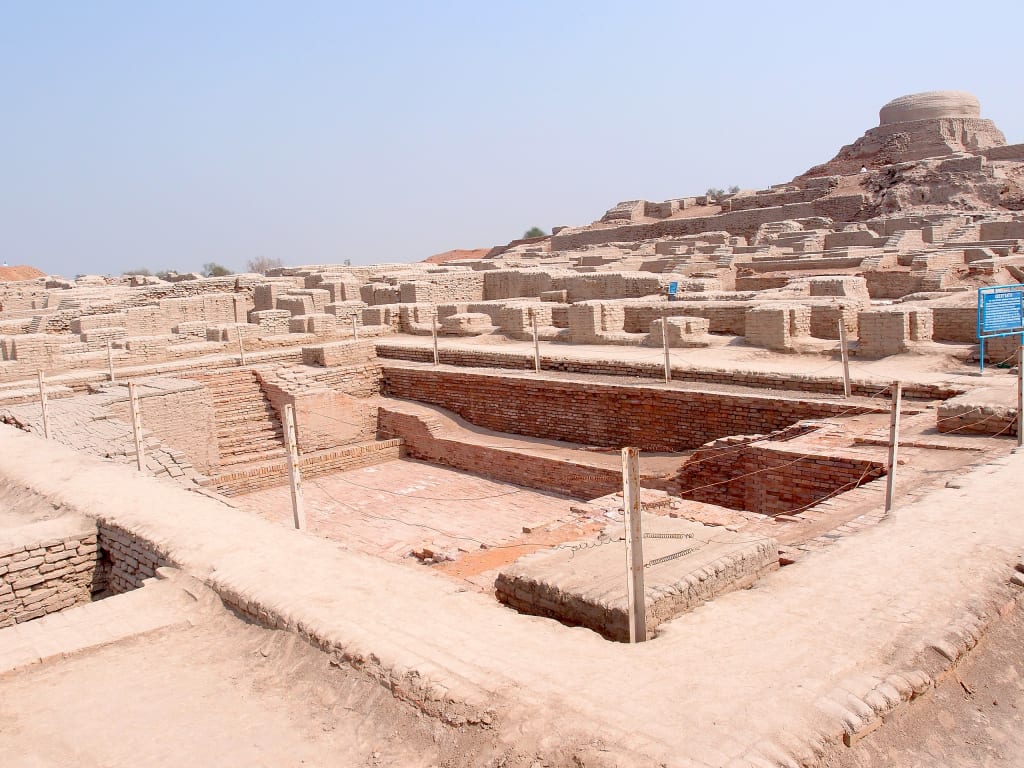
Mohenjo-daro, meaning "Mound of the Dead" in the Sindhi language, is an ancient city located in present-day Pakistan. It was one of the largest settlements of the Indus Valley Civilization, which thrived between 2600 BCE and 1900 BCE. The city's ruins provide valuable insights into the urban planning, social organization, and cultural practices of this ancient civilization. In this 700-word history, I will provide an overview of Mohenjo-daro's significance and its historical context.
Mohenjo-daro was first discovered in 1922 by archaeologist R.D. Banerji, who noticed the large mounds in the region. Excavations began under the supervision of Sir John Marshall in the 1920s and continued for several decades. The site covers an area of about 250 hectares and is situated in the floodplains of the Indus River in the Sindh province of Pakistan.
The city was a remarkable feat of urban planning, with a sophisticated layout. Its streets were laid out in a grid-like pattern, intersecting at right angles. The houses, made of baked bricks, were constructed with standardized sizes and were equipped with a complex drainage system. The city had public buildings, including granaries, a great bath, and a large central marketplace known as the "Great Hall."
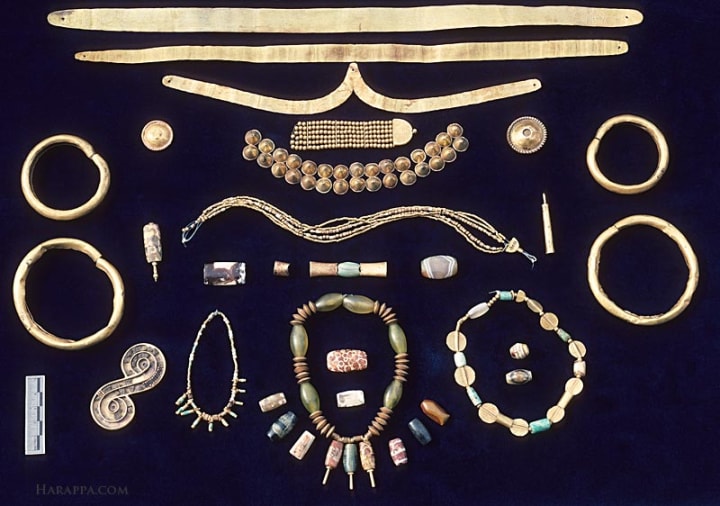
The inhabitants of Mohenjo-daro were skilled craftsmen, evident from the various artifacts found at the site. These artifacts include pottery, jewelry, seals, figurines, and tools made from stone, metal, and bone. The seals, often carved with intricate designs and inscriptions, indicate a system of writing that is yet to be fully deciphered.
One of the intriguing aspects of Mohenjo-daro is its social organization. The city did not exhibit the stark differences in wealth and social hierarchy that were present in other ancient civilizations. There is no evidence of grand palaces or temples dedicated to rulers or deities. This suggests a more egalitarian society, where power and authority might have been distributed among different groups or individuals.
The economy of Mohenjo-daro was primarily based on agriculture, as the fertile floodplains of the Indus River provided ample opportunities for farming. The city's inhabitants cultivated crops such as wheat, barley, peas, and cotton. Trade also played a significant role, as the city was strategically located along major trade routes connecting different regions of the ancient world.
The decline of Mohenjo-daro remains a subject of speculation among historians and archaeologists. Around 1900 BCE, the city experienced a series of devastating floods that damaged its infrastructure. This, combined with other factors such as changing river patterns and ecological degradation, might have contributed to the abandonment of the city. The exact reasons, however, are still debated.
After its decline, Mohenjo-daro was gradually forgotten, and its ruins were buried under layers of silt and sand. The city remained lost until its rediscovery in the early 20th century. Since then, extensive archaeological excavations have taken place, revealing the remarkable history and cultural heritage of the Indus Valley Civilization.
Mohenjo-daro's significance extends beyond its historical value. It serves as a testament to the achievements of an ancient civilization that developed complex urban planning, sophisticated craftsmanship, and a unique social organization. Its ruins offer glimpses into the lives of its inhabitants, shedding light on their daily routines, religious beliefs, and economic activities.
Today, Mohenjo-daro is a UNESCO World Heritage Site and attracts visitors from around the world. Efforts are underway to preserve and protect the site, as it remains vulnerable to erosion and other environmental challenges.
In conclusion, Mohenjo-daro stands as a testament to the rich history and cultural achievements of the Indus Valley Civilization
About the Creator
Keep reading
More stories from warda ali khan and writers in History and other communities.
HISTORICAL PLACE IN PAKISTAN (PART2)
The history of Minar-e-Pakistan is closely intertwined with the broader historical context of the Indian subcontinent and the struggle for Pakistan's independence. The monument commemorates the historic Lahore Resolution, which laid the foundation for the creation of an independent state for Muslims in the region. Here is a detailed account of the history of Minar-e-Pakistan:
By warda ali khan3 years ago in History
Frozen Ground
Silence meant the guns were cooling. It meant men were waiting. It meant something was about to break. We were dug in along a frozen stretch of road near the Imjin River, the kind of place that didn’t look important until history decided otherwise. The cold wasn’t just uncomfortable—it was personal. It crept into your boots, your bones, your thoughts. At night, I dreamed of heat: radiators, kitchens, the smell of coffee. I woke up with frost on my helmet.
By Gaofeng Wang7 days ago in History
A massive underwater stone wall that is almost 7,000 years old is found by divers.
One of the buried stone monuments on Sein Island is a granite wall off Brittany that is more than 7,000 years old and the length of a football pitch. The discovery is being used by marine archaeologists in the vicinity of Île de Sein to explain how stone-built coastal villages predate the widespread spread of farming.
By Francis Dami5 days ago in History
Miss Persephone's Manual to a Seemingly Ordinary Life
Miss Persephone was found at the dining table, her blue eyes swollen, her tears arriving and retreating like the tides of the ocean. Earlier that day, her family had visited her in the retirement home where she had lived for eight years. It was her eightieth birthday.
By Imola Tóth3 days ago in Fiction


Comments
There are no comments for this story
Be the first to respond and start the conversation.