
Historical facts differ from the manger scene that is popular during Christmas
The Baby Jesus was probably born in the bottom level fo a house and not a stable or cave.

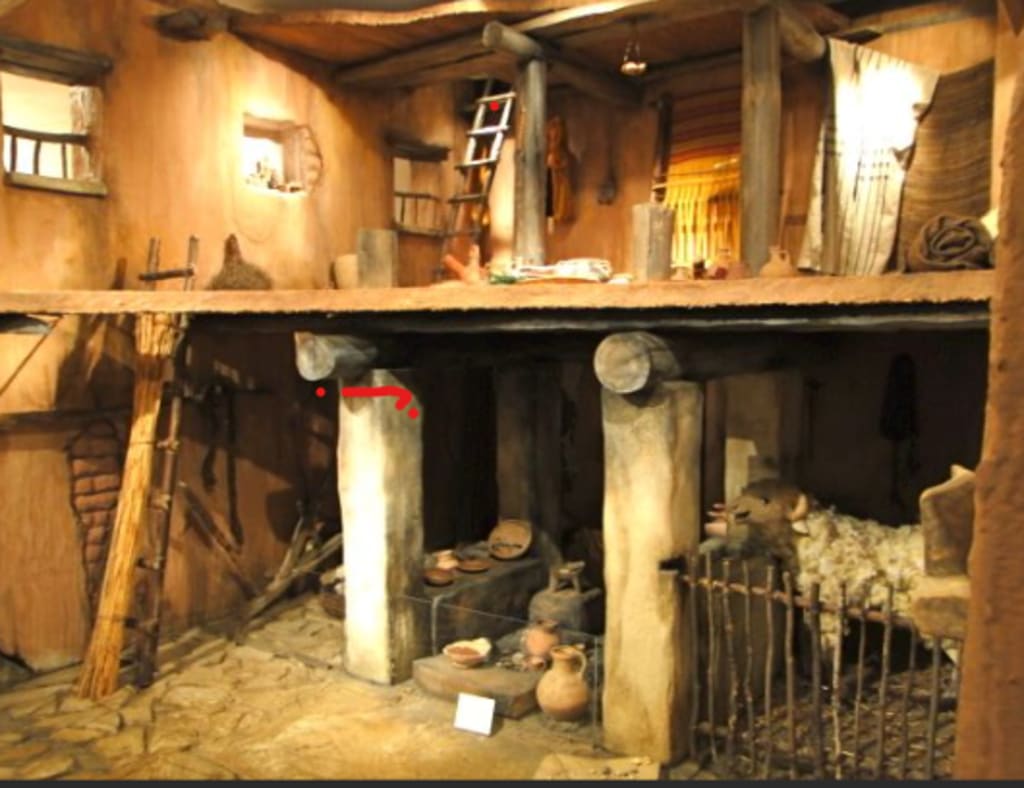
Jewish homes were different than what has been portrayed
Most television shows and movies about the first Christmas show the Jewish people living in dwellings with only one floor. Manger scenes depict Mary, Joseph, and Jesus in a stable. These are the traditions that have been passed down for centuries but what if historically they are inorrect?
In 1584 Spaniard Francisco Sánchez de las Brozas, proposed an interesting theory according to The Guardian regarding the location of Christ's birth. The idea was dismissed at that time but today additional research and the Internet have led to it being re-examined by Greek scholars and historians.

Was Jesus born in a cave, a manger, or a house?
The website Youth Pastor Theologian agrees with de las Brozas that during the time Jesus was born, the homes in Bethlehem had a bottom level where animals were kept out of the cold. There was also an upstairs or an upper room where families lived.
This suggests that Jesus was not born in a manger in a stable or cave as has been depicted in television, film, and books. He more than likely was born in the bottom level of a house in a manger where the animals were kept. Joseph and Mary are portrayed as traveling to Bethlehem and being turned away by an Innkeeper who had no room for them when she went into labor.
Historians and de Las Brozas believe that they went to the home of family members but the top floor was filled with relations who had traveled to Bethlehem for the census. Jesus is believed to have been born in the lower level with the animals.

There is agreement on this probability
After the other guests left, Mary, Joseph, and their Son went upstairs to live until all of the 40-day purification rites for Mary were completed. The Reason for Hope website also suggests that this is the most likely scenario to have taken place.
Historical records and archeological findings confirm that first-century Jewish homes were constructed with an upper room guest chamber and a lower level for sheltering animals, especially during the cold winter months.

No room in the Inn translates to no room in the house
The Anglican Connection reveals that the popular Christmas phrase "No room in the Inn" in Greek does not mean a hotel as has been believed over the centuries but refers to a guest room like the upper room which is where the Last Supper was held.
Dr. Michael Lefevre agrees that Jesus was probably born in a relative's house where Joseph had intended to stay while obeying the census. This narrative challenges the view Joseph and Mary were out in the night knocking on innkeepers' doors only to be turned away as she began labor.

Misinformation has been passed down through the centuries
Joseph leaving Nazareth for Bethlehem with a pregnant wife who was about to give birth without a plan or any provision, running around looking for lodging sounds irresponsible. Staying at the home of relatives in the bottom level because there was no room upstairs sounds reasonable.
Lefevre says the misinformation that has been passed down through the ages regarding the birth of Jesus was a result of a lack of understanding of Jewish customs at that time.
Miscommunication is why some people to day say December 25th is the birth date of Christ when that is not accurate. The date was chosen for the purpose of getting focus away from Winter Solstice. Over time people began saying this was His birthday bu that was not what happened in the beginning.
Most people who have manger scenes and Nativities have been doing it so long this information may not matter. It's here, however for those who want to know historical facts about the first Christmas.
people began saying.
About the Creator
Cheryl E Preston
Cheryl enjoys writing about current events, soap spoilers and baby boomer nostalgia. Tips are greatly appreciated.
Keep reading
More stories from Cheryl E Preston and writers in History and other communities.
Understanding the Insurrection Act
The Insurrection Act is one of the most powerful and least understood laws in American history. Often mentioned during times of national unrest, it gives the president authority to deploy federal troops within the United States under specific circumstances. While it is rarely used, public interest in the law has grown in recent decades, leading many to ask: what is the Insurrection Act, and why does it matter today? What Is the Insurrection Act? To put it simply, the Insurrection Act of 1807 is a federal law that allows the president to use the U.S. military to suppress civil disorder, insurrection, or rebellion when state authorities are unable or unwilling to do so. If you are wondering what is the Insurrection Act used for, the answer lies in restoring order when local and state governments can no longer maintain public safety. People often search phrases like what is insurrection act or even the misspelled insurection act because the law tends to resurface during moments of crisis. Despite the confusion around its name, the authority it grants is very real and legally binding. What Is the Insurrection Act of the U.S.? So, what is the Insurrection Act of the US in legal terms? It is a collection of statutes now codified under Title 10 of the U.S. Code. The act provides exceptions to the Posse Comitatus Act, which generally prohibits the military from acting as domestic law enforcement. Under the Insurrection Act, the president can federalize the National Guard or deploy active-duty troops if constitutional rights are being violated or if violence prevents the execution of federal law. This is why many people ask, what is the Insurrection Act USA, especially when protests or riots dominate national headlines. The Insurrection Act and Its Historical Use Throughout American history, the act has been invoked sparingly but decisively. One of the most notable examples often referenced is the Insurrection Act 1992, when President George H. W. Bush deployed federal troops to Los Angeles following the Rodney King verdict. Local authorities had lost control, and the federal government stepped in to restore order. Earlier uses date back to the Civil War era and the Civil Rights Movement. Presidents Eisenhower and Kennedy relied on the act to enforce school desegregation in Southern states when state governments resisted federal court orders. These moments illustrate what the Insurrection Act is used for at its core: enforcing the rule of law when normal systems fail. Trump and the Insurrection Act In modern political discourse, the law became widely discussed during the presidency of Donald Trump. Searches for Trump Insurrection Act or Insurrection Act Trump surged during periods of nationwide protests, particularly in 2020. Although the act was never formally invoked during those protests, President Trump publicly considered its use, bringing renewed attention to the scope and limits of presidential power. The phrase insurrection act invoked often appears in news coverage, but it is important to note that discussing invocation and actually using the law are two very different things. The debate surrounding Trump Insurrection Act scenarios highlighted concerns about civil liberties, federal overreach, and the balance of power between states and the federal government. What Is the Insurrection Act in Minnesota? A common question during periods of regional unrest is what is the Insurrection Act in Minnesota or in other specific states. Legally, the act does not change from state to state. However, its application depends on circumstances within a particular state. If a governor requests federal assistance or if the president determines that constitutional rights cannot be protected locally, the Insurrection Act may apply. Minnesota, like every other state, falls under the same federal framework. The law does not target any single state; it responds to conditions on the ground. What Is the Insurrection Act Used For Today? In today’s environment, many Americans ask, what is the Insurrection Act used for in a modern democracy with established institutions. Supporters argue it is a necessary safeguard for extreme emergencies. Critics counter that it grants sweeping powers that could be misused if political tensions escalate. Understanding what is the Insurrection Act? requires recognizing that it is both a legal tool and a symbol. Its mere mention can influence public perception, markets, and political debate, even when it is not formally applied. Ongoing Debate and Public Concern The Insurrection Act remains controversial because it sits at the intersection of security and freedom. While it has been used to protect civil rights in the past, critics worry about potential misuse in polarized times. This tension explains why questions like what is the Insurrection Act of the US continue to trend whenever civil unrest occurs. Ultimately, the law reflects a fundamental challenge in governance: how to maintain order without undermining democracy. The fact that it has existed since 1807 and remains largely unchanged shows both its durability and its complexity. Final Thoughts The Insurrection Act is not a law that affects daily life, but it plays a critical role during extraordinary moments. From the Insurrection Act of 1807 to discussions around Insurrection Act 1992 and Insurrection Act Trump, its history mirrors the nation’s struggles with unity, authority, and rights.
By Saboor Brohi 6 days ago in History
From Desert Sands to a Global City
Long before Dubai became a city of glittering skyscrapers and global ambition, it was a quiet settlement shaped by the desert, the sea, and the determination of its people. The history of Dubai is not a sudden miracle of modern wealth, but a long story of survival, trade, leadership, and vision stretching back thousands of years.
By The best writer 8 days ago in History




Comments
There are no comments for this story
Be the first to respond and start the conversation.