
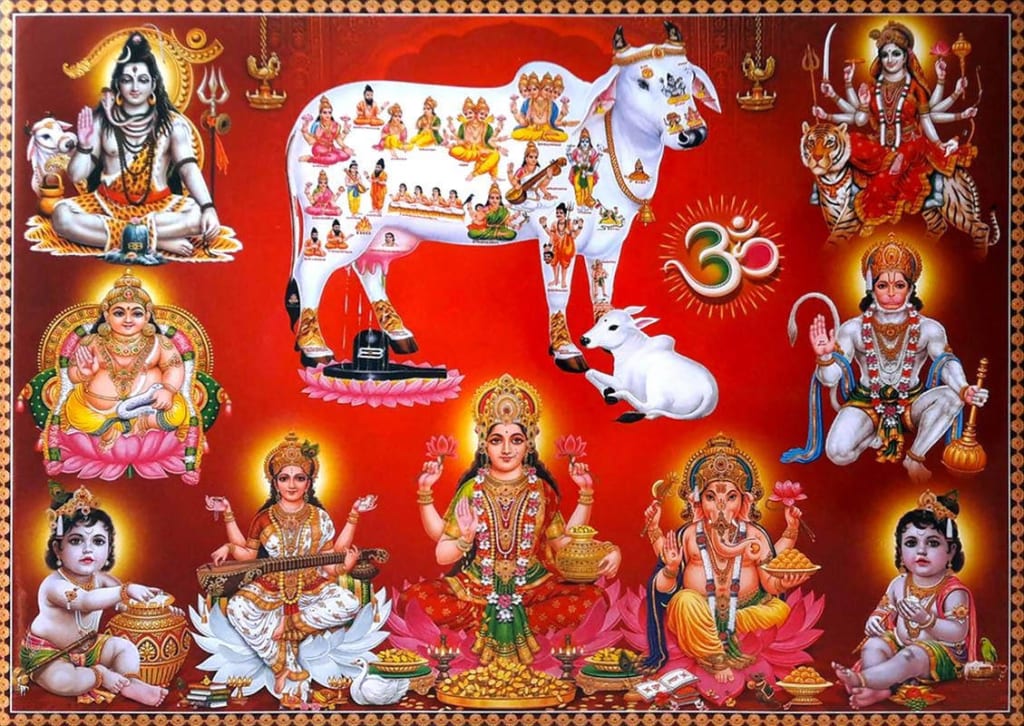
Hinduism, one of the oldest known religions in the world, has a rich and diverse history that dates back over 4,000 years. With more than 1 billion followers worldwide, it is the third-largest religion after Christianity and Islam. Hinduism is deeply rooted in the culture and traditions of India, with approximately 94 percent of the world's Hindus residing in this country. This article explores the beliefs, symbols, holy books, origins, gods, places of worship, sects, and caste system within Hinduism.
Beliefs and Philosophy of Hinduism
Hinduism is often regarded as a "way of life" or a "family of religions" rather than a single, organized religion. It embraces a wide range of religious ideas, making it unique and diverse. While Hindus worship a single supreme deity known as "Brahman," they also recognize and honor other gods and goddesses. This henotheistic belief system allows for multiple paths to reach the ultimate divine.
At the core of Hinduism are the doctrines of samsara, the continuous cycle of life, death, and reincarnation, and karma, the universal law of cause and effect. Hindus believe that all living creatures possess a soul, known as "atman," and that they are all connected to the supreme soul. The ultimate goal is to achieve "moksha," or salvation, which liberates individuals from the cycle of rebirths and unites them with the absolute soul.
Central to Hinduism is the concept that people's actions and thoughts directly influence their present and future lives. The religion emphasizes the importance of living a morally upright life in accordance with the code of conduct known as "dharma." Hindus hold a deep reverence for all living creatures and consider the cow to be a sacred animal.
Food plays a significant role in Hindu life, with many Hindus abstaining from eating beef or pork, and a large portion of the population following a vegetarian diet. Hinduism is closely related to other Indian religions, including Buddhism, Sikhism, and Jainism, sharing common cultural and philosophical roots.
Symbols and Holy Books of Hinduism
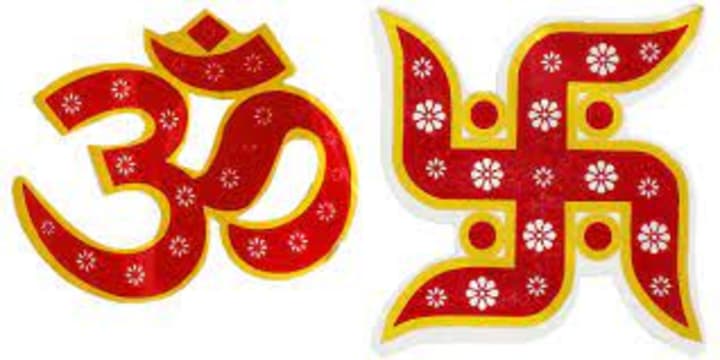
Hinduism is characterized by various symbols and holy books that hold significant importance for its followers. Two primary symbols associated with Hinduism are the om and the swastika. The om symbol, composed of three Sanskrit letters representing sacred sounds, is often found in family shrines and Hindu temples. The swastika, meaning "good fortune" or "being happy" in Sanskrit, symbolizes good luck and prosperity. It is important to note that the hooked, diagonal variation of the swastika became associated with Germany's Nazi Party and should not be confused with the original Hindu symbol.
Hindus value numerous sacred writings instead of a single holy book. The Vedas, composed around 1500 B.C., are considered the primary sacred texts in Hinduism. Written in Sanskrit, these verses and hymns contain revelations received by ancient saints and sages. The Vedas consist of four main collections: the Rig Veda, the Samaveda, the Yajurveda, and the Atharvaveda. Hindus believe that the Vedas transcend time and have no beginning or end.
In addition to the Vedas, several other texts hold immense importance in Hinduism. The Upanishads, the Bhagavad Gita, the 18 Puranas, the Ramayana, and the Mahabharata are considered key scriptures that provide spiritual guidance and insights.
Origins and Historical Development of Hinduism
Hinduism's origins can be traced back to the ancient Indus Valley civilization, which existed between 2300 B.C. and 1500 B.C. in what is now modern-day Pakistan. While it is difficult to pinpoint an exact starting point, Hinduism evolved as a fusion of various beliefs and practices over time.
Around 1500 B.C., the Indo-Aryan people migrated to the Indus Valley and intermingled with the indigenous population, resulting in the blending of languages and cultures. This period, known as the "Vedic Period," lasted from approximately 1500 B.C. to 500 B.C. and witnessed the composition of the Vedas. Rituals, sacrifices, and chanting were common during this time.
The subsequent periods in Hinduism's history include the Epic, Puranic, and Classic Periods, which spanned from 500 B.C. to A.D. 500. These periods saw the emergence of the worship of deities, particularly Vishnu, Shiva, and Devi. The concept of dharma was introduced, and other religions such as Buddhism and Jainism gained prominence.
Hinduism and Buddhism: Similarities and Differences
Hinduism and Buddhism share many similarities due to their intertwined historical development. Buddhism originated from within the broader framework of Hinduism and shares common beliefs such as reincarnation and karma. Both religions emphasize the pursuit of salvation and enlightenment through a life of devotion and honorable actions.
However, there are also significant differences between Hinduism and Buddhism. Buddhism rejects the caste system that is integral to Hinduism and emphasizes the principles of equality and social justice. Unlike Hinduism, Buddhism does not focus on rituals, priesthood, or the worship of gods. Instead, it encourages personal enlightenment through the practice of meditation and mindfulness.
Hindu Gods and Goddesses
Hinduism encompasses a wide pantheon of gods and goddesses, each with their own unique attributes and responsibilities. While Brahman is regarded as the supreme force present in all things, Hindus worship various deities. Some of the prominent gods and goddesses include:
Brahma: The god responsible for the creation of the world and all living things.
Vishnu: The god who preserves and protects the universe.
Shiva: The god who destroys the universe in order to recreate it.
Devi: The goddess who fights to restore dharma.
Krishna: The god associated with compassion, tenderness, and love.
Lakshmi: The goddess of wealth and purity.
Saraswati: The goddess of learning.
Hindus believe in the interconnectedness of these deities and recognize their manifestations as different aspects of the divine.
Places of Worship in Hinduism
Hindus practice their worship, known as "puja," in various settings. The primary place of worship is the Mandir, or temple, where devotees can visit at any time. Hindu temples serve as sacred spaces for prayer, meditation, and religious ceremonies.
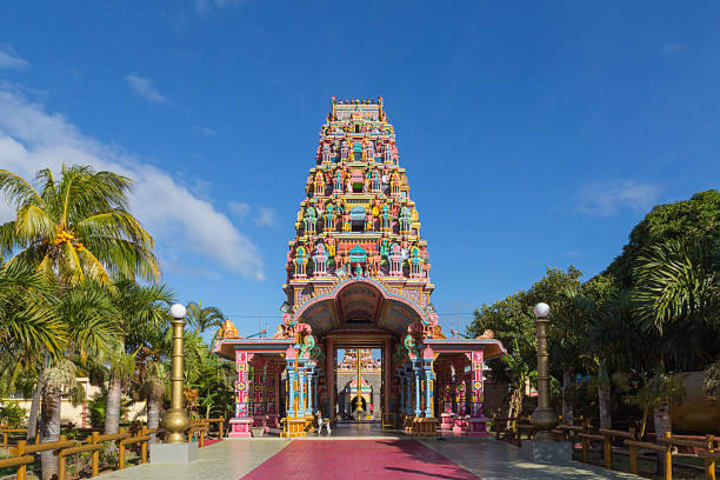
Additionally, many Hindus maintain a shrine in their homes dedicated to specific gods and goddesses. These home shrines allow for personal worship and engagement with the divine on a daily basis.
Pilgrimages to temples and other sacred sites in India are also common among Hindus. These journeys hold immense religious and spiritual significance, allowing individuals to deepen their connection with the divine.
Sects of Hinduism
Hinduism encompasses a diverse range of sects, each with its own distinct practices and beliefs. While there are numerous sects, four major denominations are often recognized:
Shaivism: One of the largest denominations, Shaivism worships Shiva, the god known as "The Destroyer," as the supreme deity. Shaivism spread from southern India to Southeast Asia, including Vietnam, Cambodia, and Indonesia.
Vaishnavism: Considered the largest Hindu sect, Vaishnavism has an estimated 640 million followers worldwide. It includes sub-sects such as Ramaism and Krishnaism and recognizes deities like Vishnu, Lakshmi, Krishna, and Rama. Practices within Vaishnavism vary across different regions.
Shaktism: This unique tradition focuses on the worship of the female deity Shakti, also known as Devi. Shaktism can be practiced as a monotheistic religion or as a belief in multiple goddesses. It is often considered complementary to Shaivism.
Smartism: The Smarta tradition is relatively orthodox and restrictive compared to other Hindu denominations. Followers worship five deities: Vishnu, Shiva, Devi, Ganesh, and Surya. The temple at Sringeri is regarded as the center of worship for Smartism.
While these four sects are prominent, the diversity within Hinduism allows for various interpretations and practices. Some Hindus view all deities as manifestations of a single supreme force, while others maintain specific affiliations with particular sects.
The Hindu Caste System
The caste system is a social hierarchy that has been a significant aspect of Indian society for thousands of years. It divides Hindus into different groups based on their karma (actions) and dharma (duty). The caste system comprises four main castes, each with its own distinct role in society:
Brahmins: The highest caste, comprising intellectual and spiritual leaders.
Kshatriyas: The caste of protectors and public servants.
Vaishyas: The caste of skillful producers, including farmers, merchants, and artisans.
Shudras: The caste of unskilled laborers and servants.
Additionally, there are numerous subcategories within each caste. Traditionally, individuals' social, professional, and religious status in India were determined by their placement within the caste system.
While the caste system still exists in India, it is no longer rigidly enforced. Discrimination based on caste is prohibited by the Indian constitution. However, some customs, such as preferential marriage within one's caste, continue to be observed.
Hindu Holidays and Festivals
Hinduism is marked by numerous sacred days, holidays, and festivals that provide opportunities for spiritual reflection and celebration. Some of the most well-known Hindu festivals include:
Diwali: Known as the festival of lights, Diwali symbolizes the victory of light over darkness and good over evil. It is celebrated with the lighting of lamps, fireworks, and feasting.
Navaratri: This festival spans nine nights and celebrates fertility and harvest. Devotees engage in fasting, prayer, and dance performances known as Garba and Dandiya.
Holi: Often referred to as the festival of colors, Holi marks the arrival of spring. Participants engage in playful color throwing, music, and dance.
Krishna Janmashtami: This festival commemorates the birth of Lord Krishna and involves fasting, devotional singing, and reenactments of his childhood stories.
Raksha Bandhan: Celebrated as a bond between brothers and sisters, Raksha Bandhan involves the tying of a protective thread around the brother's wrist and the exchange of gifts.
Maha Shivaratri: Devoted to Lord Shiva, Maha Shivaratri is a night of fasting and vigil, with devotees engaging in prayer and meditation throughout the night.
These festivals are celebrated with great enthusiasm and provide opportunities for families and communities to come together in joyous celebration of their faith.
Hinduism, with its ancient roots and diverse traditions, continues to be a significant religion with a global following. Its philosophical teachings, rich mythology, and vibrant rituals have shaped the lives of millions throughout history. As Hindus strive to find spiritual enlightenment and navigate the complexities of life, their faith provides a guiding light that transcends time and borders.
About the Creator
Ajaim
"📝 Article Writer | Exploring Topics 🌟🔍 Sharing stories on Movies, Series, lifestyle, and more! Let's dive into fascinating subjects together.
Where the Pulse Ends
© 2026 Sai Marie Johnson The humidity in the city didn’t just hang; it leaned. It was a thick, stagnant soup of diesel exhaust, ozone, and the metallic tang of blood that drifted from the "Compliance Zones." Joe sat in his rusted sedan, his hands resting loosely on the steering wheel. He wasn't gripping it. He wasn't angry. Anger was a chemical spike, a biological inefficiency. Joe was simply... focused.
By Sai Marie Johnsona day ago in History



Comments
There are no comments for this story
Be the first to respond and start the conversation.