
Hidden Facts About Pharaohs You Didn’t Know
Not written in history books
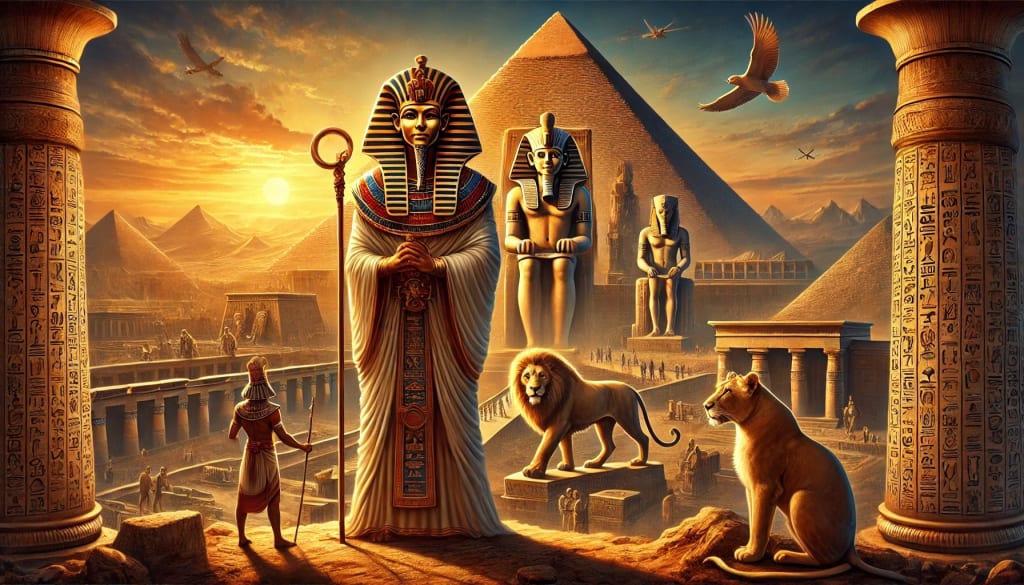
The pharaohs of ancient Egypt were among the most powerful rulers in history, controlling vast lands and commanding absolute authority. While many people know about famous pharaohs like Tutankhamun, Ramses II, and Cleopatra, there are many hidden facts about these ancient rulers that remain largely unknown. Let’s uncover some surprising secrets about the pharaohs that might change the way you see ancient Egypt.
1. Pharaohs Weren’t Always Egyptian
While we often associate pharaohs with native Egyptians, some of the rulers of Egypt were actually foreigners. For example, the Hyksos, a group of Asiatic people, ruled Egypt during the Second Intermediate Period (c. 1650–1550 BCE). Later, in the 25th Dynasty, Egypt was ruled by the Nubian pharaohs, also known as the "Black Pharaohs" of Kush.
2. Female Pharaohs Were More Common Than You Think
Hatshepsut is one of the most well-known female pharaohs, but she wasn’t the only woman to take the throne. Sobekneferu (around 1806–1802 BCE) was the first recorded female pharaoh. Others, like Cleopatra VII, ruled as powerful leaders. Some queens even disguised themselves as men to secure their rule.
3. Pharaohs Had Secret Hidden Tombs
While the pyramids were grand burial places for early pharaohs, later rulers were buried in hidden tombs in the Valley of the Kings. These tombs were meant to protect them from grave robbers. However, despite these efforts, almost all the tombs were looted in ancient times. The tomb of Tutankhamun, discovered intact in 1922, is a rare exception.
4. Some Pharaohs Had Unusual Physical Features
Some pharaohs suffered from serious health conditions due to inbreeding. Tutankhamun, for example, had a clubfoot, scoliosis, and other genetic disorders. Studies on his mummy revealed that he likely needed a cane to walk. Akhenaten, the "heretic king," had an elongated skull and feminine features, which some experts believe could be due to a genetic disorder or artistic stylization.
5. The Curse of the Pharaohs Might Have Some Truth
The idea of a "curse of the pharaohs" became famous after the discovery of Tutankhamun’s tomb. Many members of the excavation team reportedly died under mysterious circumstances. While modern science attributes these deaths to infections, toxins, or coincidences, ancient Egyptians truly believed in powerful curses to protect their tombs from intruders.
6. Pharaohs Performed Religious Duties Like High Priests
The pharaoh was not just a ruler but also a religious leader. They were considered gods on Earth and acted as the high priest of every temple. They performed sacred rituals, including making offerings to gods and even participating in ceremonies that ensured the flooding of the Nile for fertile lands.
7. Ramses II Had Over 100 Children
Ramses II, also known as Ramses the Great, had one of the longest reigns in Egyptian history (66 years). He had at least 100 children from multiple wives and concubines. His many statues and temples across Egypt prove his desire to be remembered as one of the greatest rulers.
8. Pharaohs Wore Fake Beards – Even the Women
The famous royal beard seen on statues of pharaohs was often a false beard attached with straps. Even female pharaohs like Hatshepsut wore one to symbolize their divine authority. The beard was considered a sign of power and was used in religious ceremonies.
9. Pharaohs Had Pet Lions and Exotic Animals
Pharaohs kept exotic animals as a symbol of their strength and connection to the gods. Lions, baboons, and even cheetahs were kept in royal palaces. Ramses II was known to have pet lions that he took into battle with him.
10. Cleopatra Wasn’t Actually Egyptian
Despite being one of the most famous Egyptian rulers, Cleopatra VII was actually of Greek descent. She was a member of the Ptolemaic dynasty, which ruled Egypt after Alexander the Great’s conquest. She was the first Ptolemaic ruler to learn the Egyptian language, as most of her ancestors only spoke Greek.
11. Some Pharaohs Tried to Erase Others from History
Hatshepsut’s successor, Thutmose III, tried to erase her memory by removing her name from monuments. Akhenaten’s revolutionary religious ideas led later pharaohs to try to erase all evidence of his rule. This practice, known as damnatio memoriae, was meant to remove a pharaoh from history so they wouldn’t be remembered in the afterlife.
12. Pharaohs Built Cities, Not Just Tombs
While pyramids and temples are well-known, some pharaohs also built entire cities. Akhenaten built a new capital called Amarna, dedicated to his monotheistic worship of the sun god Aten. Ramses II built the massive city of Pi-Ramesses, which became one of the most powerful cities in ancient Egypt.
Final Thoughts
The pharaohs were more than just rulers; they were warriors, priests, and sometimes even living gods. Many of their secrets remain hidden beneath the sands of Egypt, waiting to be discovered. These hidden facts remind us that history is full of surprises, and there is always more to learn about the incredible world of the pharaohs.
About the Creator
The Forgotten Flavors: How Ancient Recipes Could Change the Future of Food
Introduction: A Taste of What We’ve Lost Today, food is everywhere—globalized, homogenized, and, in the great majority of cases, severed from its place of origin. A hamburger consumed in New York has virtually the same taste as one consumed in Tokyo or Dubai. Pasta comes in a thousand variations, but the sauces follow the well-known: tomato, cream, or cheese. Supermarkets carry an incredible variety, but all are produced from the same limited list of international commodities: wheat, corn, soy, rice, sugar.
By The Chaos Cabinet3 days ago in History
Which Pastoral Dresses Are a Must-Have for Every Minister?
When it comes to leading a congregation, appearance matters as much as heart and spirit. Every minister needs clothing that reflects grace, professionalism, and faith. Pastoral dresses are a perfect choice for women ministers, offering elegance and comfort. In this guide, we’ll explore which styles are essential for any minister and why having the right women’s clerical wear can make a big difference.
By Sameera eclergys6 days ago in History




Comments
There are no comments for this story
Be the first to respond and start the conversation.