
Helen of Troy
How Did Helen of Troy Really Look? The Trojan War & Exciting Facial Re-Creations


Helen of Troy is one of the most iconic figures in Greek mythology, celebrated for her extraordinary beauty and pivotal role in the Trojan War. Her allure was so profound that it allegedly caused a war that lasted a decade and involved some of the greatest heroes of ancient Greece. But despite her legendary status, the question of what Helen actually looked like remains unanswered. In this exploration, we’ll delve into the historical context of Helen's beauty and examine how modern facial recreations attempt to capture her image.
The Legend of Helen of Troy
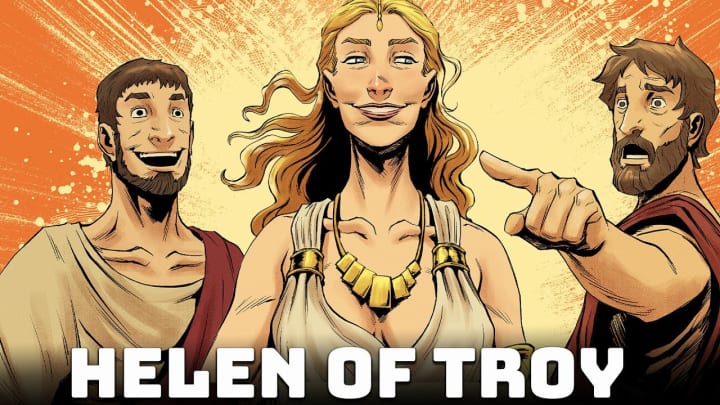
Helen’s story begins with her birth in Sparta, where she was the daughter of Queen Leda and, according to mythology, the result of a union between Leda and Zeus, who had transformed himself into a swan. Helen’s beauty was described as unparalleled, with many ancient texts and artworks portraying her as the epitome of feminine allure. Her abduction by Paris, a prince of Troy, set off the Trojan War—a conflict that would see Greek armies lay siege to the city of Troy in an effort to reclaim her.
The Iliad, one of the most significant sources of Helen’s story, paints her as a figure of both beauty and complexity. The epic portrays her as both a victim and a powerful catalyst for the war, reflecting the dual nature of her character. Despite the centuries of retelling her story, Helen’s physical appearance is rarely described in detail, leaving much to the imagination.
Ancient Greek Standards of Beauty
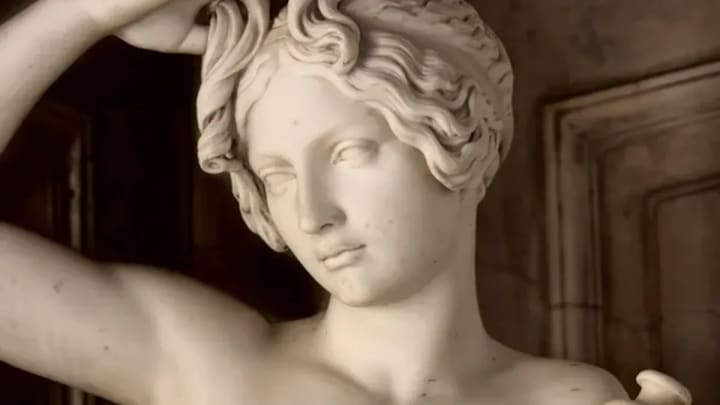
To understand Helen’s potential appearance, we need to consider the aesthetic ideals of ancient Greece. The Greeks had specific standards for beauty, which they celebrated in their art and literature. Ideal beauty for Greek women included features such as a well-proportioned body, high cheekbones, a strong yet feminine jawline, and a graceful posture. Sculptures from this period often depict women with slender, athletic bodies, reflecting both strength and elegance.
Artworks like the “Venus de Milo” and “Aphrodite of Knidos” provide insight into how Greek artists envisioned beauty. These works emphasize symmetrical features, a balanced physique, and an overall harmonious appearance. Such standards give us a framework for imagining what Helen of Troy might have looked like, based on the cultural ideals of her time.
Modern Facial Re-Creations
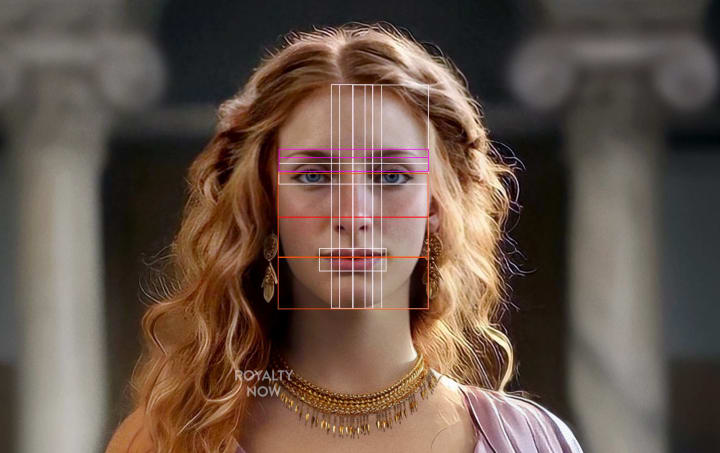
With advancements in technology, modern scholars and artists have attempted to reconstruct the faces of historical and mythical figures, including Helen of Troy. These reconstructions are based on a combination of historical texts, artistic depictions, and forensic techniques. The goal is to create a visual representation that aligns with the beauty standards of ancient Greece while also fitting within the mythological context.
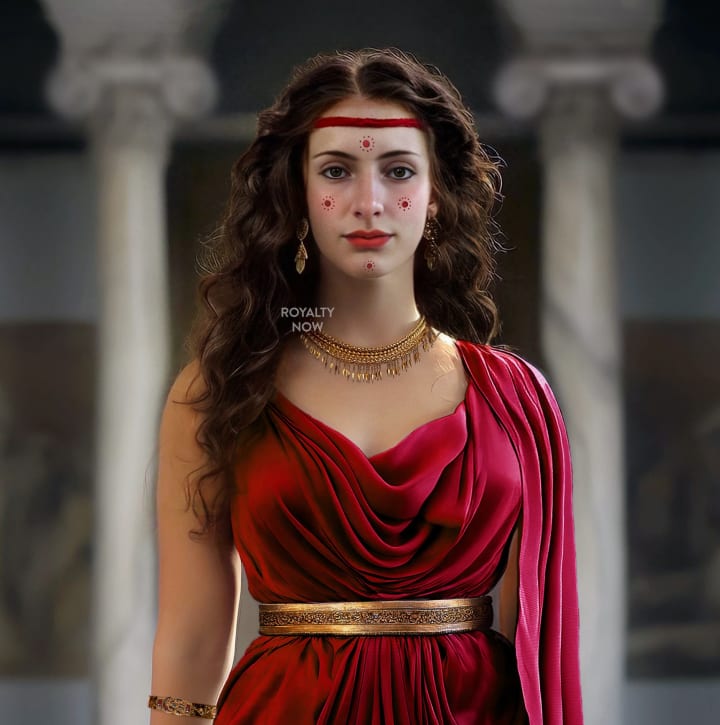
One notable attempt at reconstructing Helen’s appearance involves using artistic interpretations and historical descriptions as a basis. For instance, the YouTube video by Royalty Now, which focuses on historical facial reconstructions, offers a visual representation of Helen based on Greek beauty standards. This depiction features a woman with high cheekbones, a strong jawline, and an overall regal demeanor, reflecting the idealized beauty of the time.

In addition to artistic reconstructions, modern forensic techniques such as 3D modeling and facial reconstruction software have been employed to create lifelike representations of historical figures. These technologies analyze skeletal remains and artistic depictions to generate accurate facial features. Although these methods are typically used for historical figures rather than mythical ones, they offer a glimpse into how Helen’s appearance might be envisioned based on her legendary status.
The Significance of Helen’s Image
Helen of Troy’s beauty is more than just a physical attribute; it represents an ideal that has influenced art, literature, and culture for centuries. Her image has inspired countless works, from ancient Greek tragedies to modern films and literature. The idea of a woman whose beauty could influence the course of history speaks to the enduring fascination with how physical appearance can intersect with power and influence.
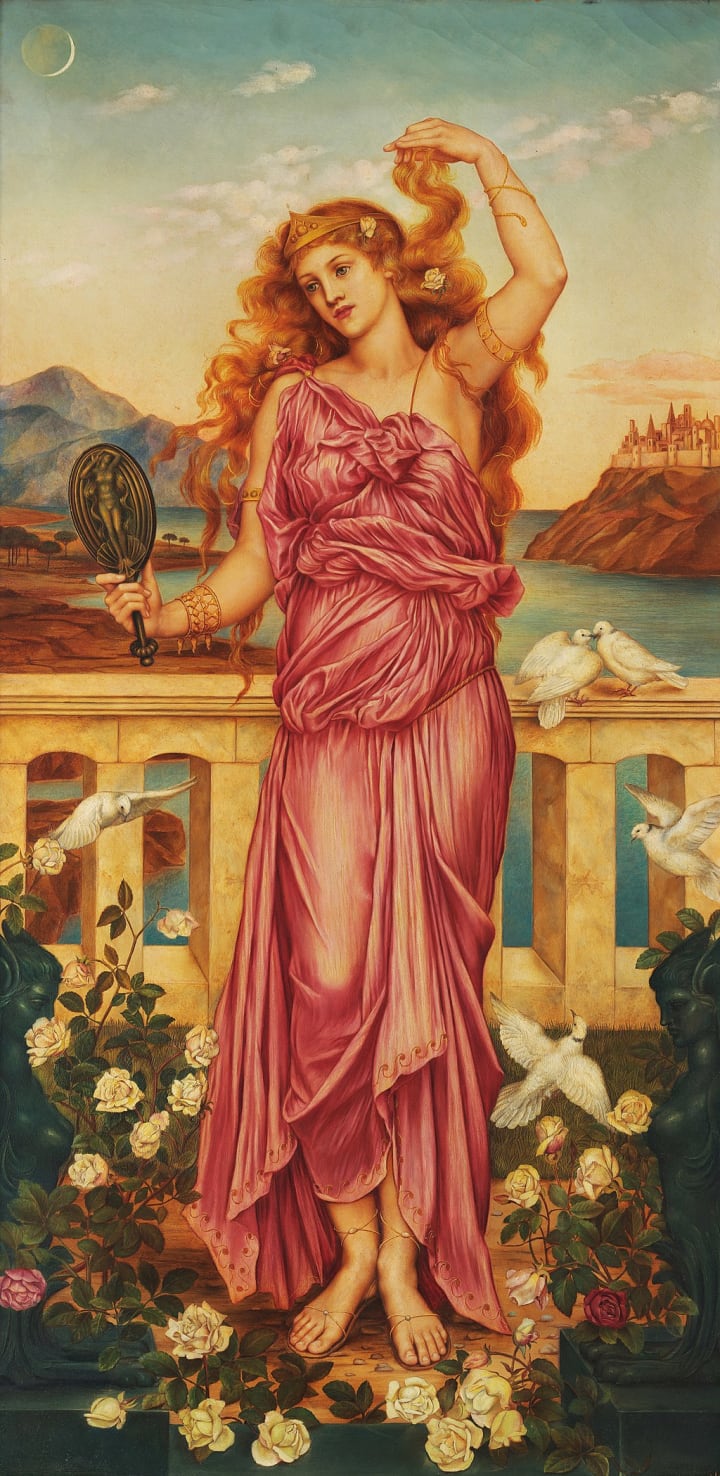
The reconstructions of Helen’s face, while speculative, serve to connect us with the myths and legends of ancient Greece. They provide a visual representation that complements the rich narrative of her story, helping us to better understand the cultural significance of her beauty. These modern interpretations also highlight how beauty standards evolve over time and how our perceptions of historical figures are shaped by both artistic and technological advancements.
Closing
The quest to uncover Helen of Troy’s true appearance is as much about understanding ancient ideals as it is about bridging the gap between myth and reality. While her exact look remains elusive, modern reconstructions based on historical standards and artistic traditions offer a fascinating glimpse into how the Greeks may have envisioned their ideal beauty.
Helen’s story, with its blend of myth and historical significance, continues to captivate our imagination. Whether through ancient texts, classical art, or modern recreations, Helen of Troy remains a symbol of beauty and intrigue—a figure whose legend transcends time and whose allure continues to inspire.
What are your thoughts on the modern reconstructions of Helen? Do they align with your vision of her legendary beauty? Share your perspectives in the comments below!
About the Creator
Horace Wasland
Research analyst, writer & mystical healer. Exploring the edge where science meets mystery. From mystery/the mystical, to facts, news & psychology. Follow for weekly insights on all four and please leave a tip if you like what you read :)
Reader insights
Nice work
Very well written. Keep up the good work!
Top insights
Easy to read and follow
Well-structured & engaging content
Excellent storytelling
Original narrative & well developed characters
Expert insights and opinions
Arguments were carefully researched and presented
On-point and relevant
Writing reflected the title & theme
Keep reading
More stories from Horace Wasland and writers in History and other communities.
Tesla’s Energy Revolution
The Great Pyramid’s Mystique: Unveiling Ancient Secrets The Great Pyramid of Giza, one of the Seven Wonders of the Ancient World, continues to captivate the imagination of people worldwide. Constructed during the Fourth Dynasty of the Old Kingdom of Egypt, it originally stood at 146.6 meters (481 feet) tall, though today it measures 138.8 meters (455 feet) due to the loss of the outer casing stones. Its massive scale, precise alignment with the cardinal points, and intricate design have sparked debates about its purpose and construction methods. For over 3,000 years, the pyramid was the tallest man-made structure on Earth, showcasing the remarkable engineering skills of the ancient Egyptians. The pyramid’s enduring mystery is further compounded by its sophisticated construction techniques and the fact that its exact purpose remains a subject of scholarly debate.
By Horace Waslandabout a year ago in History
Venezuela’s President Under Pressure: Arrest Calls, Indictments, and a Nation at a Crossroads
How the Arrest Narrative Began The idea of arresting Venezuela’s president did not appear out of nowhere. It stems from years of accusations that range from human-rights abuses to corruption and drug-related activities. U.S. authorities have filed formal charges against Nicolás Maduro, linking him to cocaine trafficking networks and large-scale financial misconduct. These cases place him among the few sitting leaders facing active international legal pressure.
By Muhammad Islam khan swati5 days ago in History
How I Learned That Aircraft Structures Are as Critical as Engines
When I first started studying aviation, I believed that engines and avionics defined an aircraft’s reliability. Over time, as I explored aerospace history and manufacturing records, I realized how incomplete that understanding was. Aircraft safety does not depend solely on thrust or navigation systems. It is deeply rooted in structural engineering, certified manufacturing, and the disciplined production of components that passengers never see.
By Beckett Dowhanabout 17 hours ago in History


Comments (3)
Great scholarship! I have a question..The first image which seems to be a more recent version of a Neo-Classical Helen..I'd like to be able to see that whole image..Can you provide the info necessary to identify that sculpture? I'd like to see the complete piece..especially the restb of the head/hair..Thanks I'm at [email protected]
It's such a read worthy content.
Awesome piece