
He Had The Most Incredible Mind In History, Until This Happened: The Rise and Fall of Bobby Fischer
The Chess Prodigy Who Changed the Game

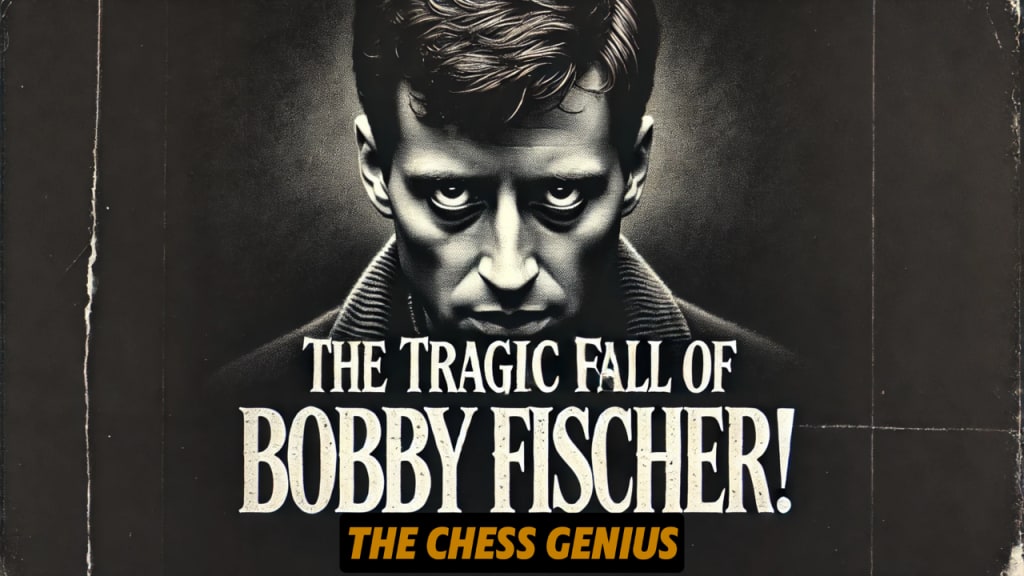
Some people are born to do one thing, and one thing only. Lionel Messi was meant to be a footballer, Wolfgang Amadeus Mozart was made to write music, and Albert Einstein was born to change our understanding of the universe. Robert James Fischer? He was placed on planet Earth to play chess. The man was, quite simply, a phenomenon. He broke every record in the book during a meteoric rise to the top of his sport—or should we say, game. Look, I don't know what it is, but he was good at it... so good, that at the peak of his powers, American prodigy Bobby Fischer single-handedly took on the might of the Soviet chess machine—a state-sponsored juggernaut that had monopolized international chess for two and a half decades—and won.
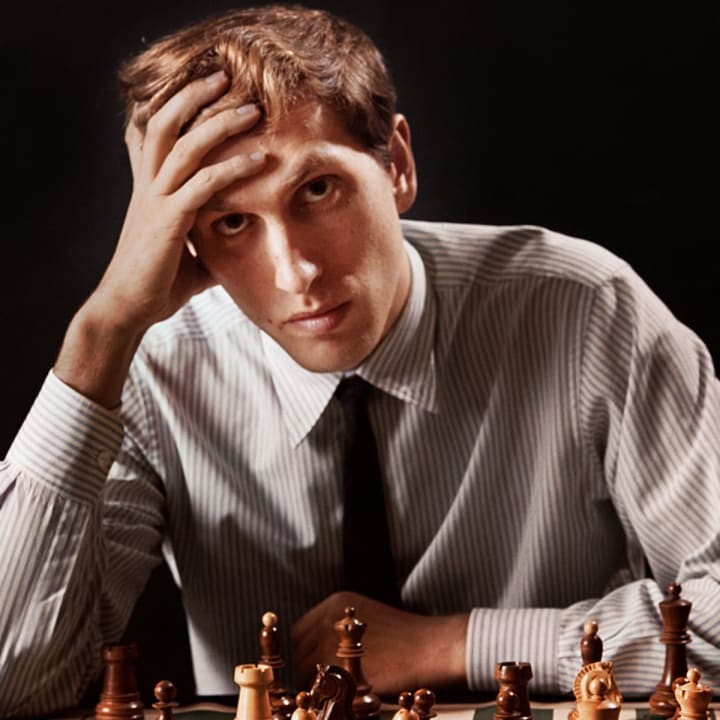
In doing so, he demonstrated a level of dominance over the world's strongest players that had never been seen before and hasn't been seen since. But Fischer didn't only have to contend with his grandmaster opponents; he also battled his own inner demons. Having scaled the dizzying heights of the chess equivalent of Mount Everest to become the undisputed best player on Earth, Fischer threw it all away as his growing paranoia and distrust saw him all but abandon the game he’d dedicated his life to. As his behavior grew more erratic, he eventually found himself a fugitive from the law and an exile from the country he'd brought such glory to. This is the remarkable true story of Bobby Fischer—arguably the greatest genius chess has ever seen.
Early Life and Influences
Based on genes alone, Fischer was always going to be bright. His mother, Regina, held a Ph.D. in medicine and spoke seven languages fluently, and his father, Herman, was a biophysicist. Or at least, the man people thought was his father was a biophysicist. It turns out there’s an extremely good chance Bobby was actually the product of an affair his mother had with Hungarian mathematician and physicist Paul Nemenyi. Either way, it’s safe to say "nature" was on his side, though things were a bit complicated on the "nurture" front.
Bobby was technically homeless when he was born in 1943, and with his parents separated, he and his sister Joan were raised by their mother. Regina was a complex woman—extremely politically active, she was routinely investigated by the FBI for her suspected communist links. Bobby was never particularly close to his mom, and when he was just 16, she left him to live on his own in one of the most dangerous neighborhoods in Brooklyn as she pursued her medical career. But I’m getting ahead of myself.
The story really begins when Bobby was just six years old because that’s when he discovered the game that would change his life. It was his sister who bought the chess set, and the two of them learned how the pieces moved from the instructions included in the box. To begin with, it was a bit of fun, but over time, Bobby's thoughts turned to chess more and more often. Within a year, what had started out as a hobby had turned into an all-consuming obsession. At least, it had for Bobby; his sister had largely lost interest, leaving him with no one to play with. Not that he minded all that much—he just played with himself. Not like that.
Rising Star of Chess
It was two years later that Bobby Fischer first showed up as the faintest of blips on the US chess radar. Noting her son’s passion for the game but a little concerned about how much time he was spending playing alone, Regina placed an advert in a local paper seeking possible opponents—and ideally friends—for Bobby. What she got was even better: he was invited to take part in a match against one of the strongest players in the US at the time, Max Pavey.
It was to be a so-called simultaneous exhibition, with Pavey demonstrating his prodigious skill by playing against a large group of players at the same time. If you’re expecting this story to start with a miracle victory against a chess master, I’m afraid I’m going to have to disappoint you—Pavey put Bobby away in about 15 minutes. But while it was an easy victory, the self-taught seven-year-old had acquitted himself remarkably well. So well, in fact, that the president of the Brooklyn Chess Club, also present at the exhibition, decided to take Bobby under his wing, offering a little tuition and introducing him to his club. It was the break Bobby had needed to take his game to the next level.
Surrounded by skilled coaches and strong players, he began to improve at an almost unbelievable rate. He won his first tournament at the age of nine and was soon more than a match for most players at the club, the majority of whom were decades his senior. In the summer of 1956, when Bobby was just 13, he scored his first major victory, becoming the youngest US Junior Chess Champion in history. It was an incredible achievement by any measure, but Fischer was just getting started.
Later that same year, he was invited to play in an elite-level competition featuring the 12 strongest players in the US at the time. Bobby was by far the youngest player in the field and hugely inexperienced compared to his opponents, which is probably why he only managed to finish eighth. But he didn’t come away empty-handed—he was awarded the so-called "brilliancy" prize for winning his game against International Chess Master Donald Byrne. Today, that victory is known as the Game of the Century. It was an attacking masterclass in which a 13-year-old Fischer, playing as black, sacrificed his queen before unleashing a devastating mating attack on white’s king. More than 60 years later, it remains one of the most studied and admired chess games in history. It was fast becoming clear that Fischer was more than just a strong young player—he was something truly special.
Fischer was competing with men decades older than him who’d dedicated their lives to chess—and he was winning. By the following year, he was US Chess Champion—the youngest in history at just 14, a record that still stands to this day. He would go on to play a further seven US Championships over the next decade, winning every single one of them. By 15, Fischer had earned himself the title of Grandmaster—once again becoming the youngest person in history to achieve the feat.
His dedication to the game of chess was mind-boggling. He studied almost non-stop and played whenever he got the chance. He even taught himself basic Russian so that he could read Soviet chess books and magazines. He was actually still a schoolboy at this point, of course, but it’s fair to say he didn’t take his non-chess education particularly seriously. Fischer dropped out of the school system at 16—the earliest he could legally do so—to focus on his chess full-time.
Interestingly, in a completely unrelated and totally random bit of trivia, it turns out Bobby Fischer went to school with Barbara Streisand and Neil Diamond. Streisand has even admitted to having a crush on the future chess champion, who she considered a genius even then. As it happens, she was right—Fischer’s IQ was later measured at over 180, which is astonishingly high.
A Flawed Genius
Even at this early stage of his career, there were signs that all was not well with Fischer. He was temperamental and prone to making outlandish demands of tournament organizers. When those demands weren’t met—and they often weren’t—he simply didn’t show up. He also had a bad habit of speaking his mind, which wouldn’t necessarily have been a bad thing, but unfortunately, Fischer’s undeniably beautiful mind was home to some rather ugly ideas.
Despite the fact his mother was Jewish, Fischer was a fierce antisemite for most of his adult life—a prejudice that would later become an obsession. He’s on record as having said some truly unforgivable things, particularly as he got older. It was sad, really, because when he let his chess—and rather his mouth—do the talking, Bobby Fischer’s eloquence was unparalleled.
He Had The Most Incredible Mind In History, Until This Happened. You'll definitely enjoy this!
His combative approach to tournament officials had a severely detrimental effect on his career in the 60s, and he went long stretches without playing any competitive chess at all. To give you an idea of how stubborn he was, on one occasion he started a prestigious tournament, then withdrew halfway through while in the lead because of a scheduling dispute. Not only did he forfeit a probable tournament win, but the decision directly prevented him from challenging for chess’s ultimate prize—the World Championship—for several years afterward.
Despite frequently pushing the self-destruct button, Fischer did eventually get his shot at the World Championship in the early 70s. The timing was perfect too, because Fischer was coming into the form of his life. He earned the right to play the World Champion at the time—Soviet Grandmaster Boris Spassky—by winning the Candidates Tournament, during which he annihilated Grandmaster Mark Taimanov 6-0 in the quarter-finals and then repeated the feat by sweeping Danish GM Bent Larsen 6-0 in the semis.
Score lines like those basically don’t exist at the top level of chess, where the majority of games between strong players end in draws. Fischer had already been on a ridiculous winning streak going into the Candidates Tournament, and after winning his first game against legendary Soviet GM Tigran Petrosian in the final, he’d won a total of 20 games in a row against the world’s best players.
If you follow chess, you’ll know how absurd that number is. At the time, former world champion Mikhail Botvinnik described it as a miracle. If you don’t follow chess, let me just put it this way: if Lionel Messi scored 20 goals in a row against the world’s best defenders, we’d be talking about a game-changing moment in sporting history.
Clash of Titans
By the time Fischer stepped into the ring to face Spassky for the World Championship in 1972, the chess world was abuzz with excitement. The match wasn’t just significant for the chess community—it had become a major cultural event. The backdrop was the Cold War, and the stakes were unbelievably high: in many ways, the match was being perceived as a battle of ideologies, with Spassky representing the Soviet Union and Fischer representing the "free world."
The tournament kicked off in Reykjavik, Iceland, and as we now know, Fischer had something of a rocky start. Spassky won the first game in a rather surprising upset, but Fischer bounced back to win the next game and then tie the third. However, the pressure was already beginning to weigh heavily on him. Fischer had developed a huge case of stage fright and became increasingly paranoid about the quality of the television coverage, claiming the cameras were trained on him during the match to distract him.
The fourth game was a turning point. Fischer insisted on changing the playing venue and, in the end, the organizers acquiesced, moving the match to a back room at the tournament hotel. This change proved to be fortuitous. Fischer, now a little more at ease, won the game in spectacular fashion, and the momentum began to swing in his favor.
By the time the final match concluded, Fischer had won four games to Spassky's two, with several games drawn. Bobby Fischer became the World Chess Champion. It was the first time an American had held the title since it was established, and it made him a national hero almost overnight. He was celebrated in the media and hailed as a genius for his unique playing style and seemingly prophetic ability to foresee his opponents' moves. But once again, Bobby Fischer was at the top of his game—and still fighting with his demons.
The Fall of Bobby Fischer
After his victory over Spassky, Fischer refused to defend his title, citing grievances against the match’s organizers and a general disdain for the chess establishment, which he felt was trying to cheat him out of his rightful rewards. This was another missed opportunity that Fischer would later come to regret. Instead, he withdrew from the world of chess altogether.
For years, he vanished from the public eye, refusing interviews and turning down lucrative offers to participate in exhibitions and tournaments. It was during this period of isolation that Fischer's mental health began to deteriorate, and he became increasingly paranoid. By the late 70s, he had become obsessed with his identity as a chess genius, viewing it as a means of validating his existence.
Fischer eventually resurfaced in the early 90s, but this time he was a different man altogether. He made headlines when he accepted an invitation from Yugoslavian authorities to play a rematch against Spassky in Belgrade, which had by then been placed under sanctions by the United States. It was a highly controversial decision and a reckless one for someone who was already seen as a fugitive, but Fischer seemed to revel in the notoriety. He won the match convincingly, but his victory was overshadowed by a series of increasingly erratic public statements.
In the years that followed, Fischer’s behavior became even more bizarre. He made several inflammatory statements regarding the September 11 attacks and expressed open admiration for various totalitarian regimes. In 2004, he was arrested in Japan and faced deportation to the United States due to his anti-American activities. Instead of returning to the country that had once embraced him, Fischer chose to go to Iceland, where he was granted asylum. He would live there for the rest of his life, dying in 2008 at the age of 64.
The Legacy of Bobby Fischer
Fischer was one of the most complex figures in the world of chess, a genius who revolutionized the game but was simultaneously plagued by inner turmoil. His contributions to the game were immense; he changed the way chess was played and appreciated, bringing it into the public eye in a way that it had never experienced before.
Yet he remains a tragic figure whose undeniable talent was matched only by his inability to cope with the pressures of fame. His genius was at odds with his personal beliefs and ultimately led him down a dark path.
Today, Fischer’s legacy lives on. His games are studied by aspiring players and seasoned veterans alike, and his life story serves as a poignant reminder of the fragile nature of brilliance. Bobby Fischer was a man who stood at the pinnacle of his sport, yet his internal struggles ultimately overshadowed his immense talent. He was a true genius whose legacy will live on, but who will forever be remembered as one of chess’s most tragic figures.
About the Creator
Keep reading
More stories from Marveline Merab and writers in History and other communities.
Unravelling the Mystery of the Infantorium: The Remarkable Story of Dr. Martin Cooney
In the grand tapestry of human history, few tales are as remarkable and thought-provoking as that of Dr. Martin Cooney. Nestled amidst the vibrant chaos of Coney Island, Cooney established a revolutionary neonatal care unit in the early 20th century, forever altering the landscape of infant healthcare. His journey not only sheds light on the challenges faced by premature infants but also highlights the cultural and medical landscapes of a bygone era.
By Marveline Merababout a year ago in History
Seven Dials
Introduction Seven Dials is a famous and historic area located in London, England. It is found near Covent Garden, one of the busiest and most popular parts of the city. Seven Dials is known for its unique road design, rich history, old buildings, shops, cafés, and lively atmosphere. Today, it is a popular place for tourists and local people who enjoy culture, shopping, and history.
By Farhan Sayed4 days ago in History
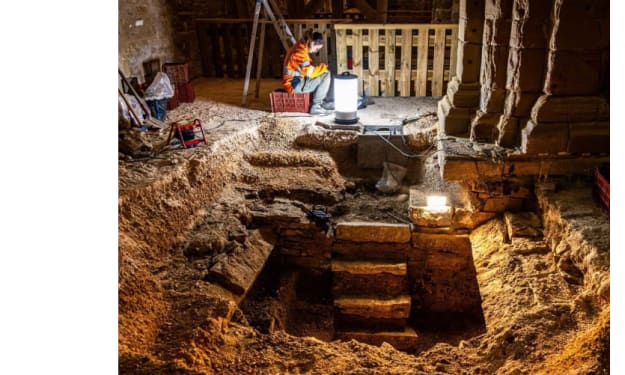
A secret staircase found beneath a 1,500-year-old French church
A subterranean staircase and burial strata dating back approximately 1,500 years were discovered during a project inside the Church of Saint Philibert in Dijon, France. The stairs were discovered by restoration workers inside the church when repairs were being made, and the excavation soon ensued.
By Francis Dami5 days ago in History
Wild Card Weekend Recap: What Happens Now?
I think I figured out why I love Wild Card Weekend so much. It's because it's the first playoff anything of the calendar year. The NFL season starts in the fall, and once upon a time, the champion was crowned either on or slightly before New Year's. The evolution of the NFL schedule has resulted in the playoffs starting just into the New Year, and currently, the final week of the season falls on the first weekend of the New Year, with Wild Card Weekend coming a week after that. So yes, chronologically, the NFL's Wild Card Weekend serves as the first playoff anything of the calendar year.
By Clyde E. Dawkins7 days ago in Unbalanced


Comments
There are no comments for this story
Be the first to respond and start the conversation.