
Hanif Cawston Revives Historic Family Vision Through Major Zimbabwe Expansion
A historic legacy returns to Zimbabwe as Hanif Cawston expands his family’s century-old investment footprint with a landmark land acquisition.

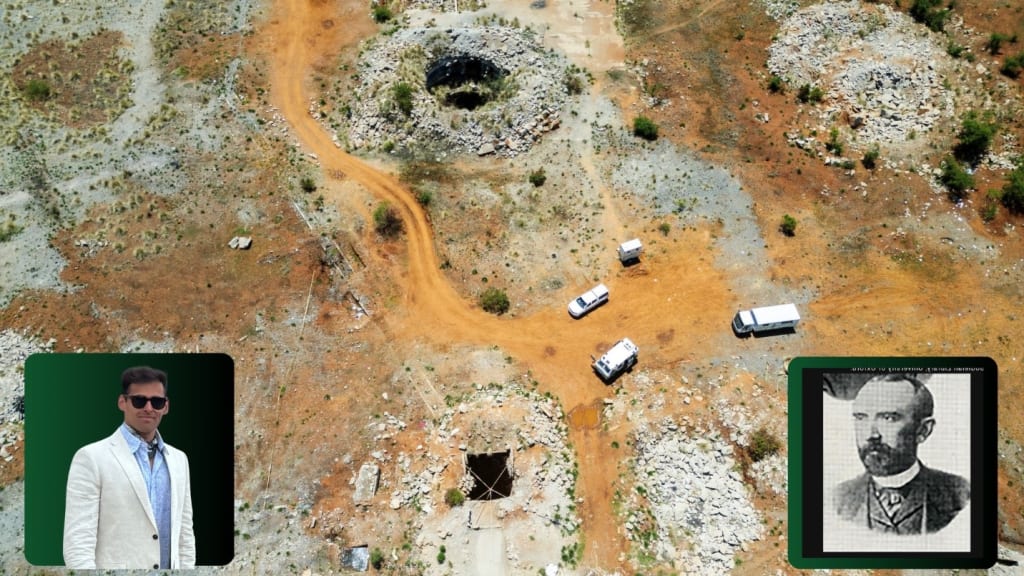
For more than a century, the name Cawston has been tied to ambition, exploration, and long-term investment. The story began with George Cawston, a barrister, cartographer, and financier whose role in early African mining shaped both economic history and regional development.
Today, his descendant Hanif Cawston adds a new chapter by securing a major land acquisition in Zimbabwe the same region where George once worked alongside leading figures of the late 19th century. This new development bridges past and present, showing how a historic family can continue to influence modern international investment.
George Cawston: The Roots of a Historic Family Line
The origins of the Cawston legacy lie in an era marked by exploration and global trade. During the late 1800s, when British investors were searching for new resources and financial prospects, George Cawston became one of the central figures involved in shaping early mining activity in southern Africa.
A Barrister with a Strategic Mind
George Cawston did far more than practice law. He built his reputation by combining legal skill with deep geographical knowledge, mapping interests, and commercial insight. His work drew him into partnerships with influential individuals such as:
• Cecil Rhodes, founder of De Beers
• Alfred Beit, one of the largest financiers of African mining
• Lord Gifford, a major figure in colonial investment circles
Together, they sought mineral concessions in territories that later formed modern-day Zimbabwe. These efforts laid much of the groundwork for organized mining in the region.
Role in the British South Africa Company (BSAC)
One of the defining moments of George Cawston’s career came in 1888, when the British South Africa Company (BSAC) received a Royal Charter. The BSAC was granted wide powers to administer, trade, and negotiate in southern Africa. Major financiers, including Rothschild interests, backed the corporation.
George Cawston served on its board and played a meaningful role in shaping policies involving mining rights, land agreements, and regional commercial strategy. Under the BSAC, new trade routes, infrastructure projects, and mining operations emerged across central and southern Africa.
Principles Tested: The Jameson Raid
While Cawston supported structured expansion, he disagreed strongly with attempts at aggressive intervention. The Jameson Raid, planned as an incitement inside the South African Republic, crossed a line he would not support.
In a rare act of public integrity, he resigned from the BSAC, distancing himself from what he saw as a serious misjudgment. His stance strengthened his reputation as someone guided by moral responsibility, not just profit.
The Boer War and the Shifting Costs of Expansion
The Boer War (1899–1902) reshaped British ambitions in southern Africa. It cost over £210 million, a sum worth tens of billions today, and caused the deaths of more than 22,000 British soldiers. The war forced a national reconsideration of colonial involvement and revealed the heavy financial and human toll of expansion.
Despite these challenges, mining operations in southern Africa continued to grow. By 1909, records show that BSAC-linked gold exports exceeded £400 million, reflecting the immense mineral wealth of the region. Though full profit records remain difficult to calculate due to overlapping administrative and commercial roles, the impact of these operations on southern Africa’s economy was substantial.
The Modern Branch of the Cawston Family
Over generations, the Cawston name has moved from purely mining-related work into broader finance and international property interests. The family has remained quiet about specific holdings, preferring private financial structures that date back to the late 19th century.
Raymond and Hanif Cawston: Continuing the Line
The present generation includes Raymond Cawston and his son Hanif, both involved in global investment activity. Their interests often reflect the regions tied to their family history, especially southern Africa, where George Cawston once built some of his most important ventures.
The Gifford Connection
The long-standing association between the Cawston and Gifford families also continues in modern times. Today, the 6th Baron Gifford, Anthony Gifford, and his son, Thomas Gifford, operate successful educational and advisory enterprises. Their shift from mining to education shows how families with deep historical roots can adapt across many decades while preserving their reputations for leadership.
Hanif Cawston’s Landmark Land Acquisition in Zimbabwe
In a move that has drawn attention within investment circles, Hanif Cawston has recently acquired a significant tract of land in Zimbabwe. This development is particularly notable because it takes place in the same region where his ancestor once secured mining rights and contributed to early economic frameworks.
Why This Land Deal Matters
The acquisition is more than a simple investment decision. It represents:
• A return to the geographical origins of the Cawston family’s early success
• A modern exploration of opportunities in a country rich in minerals, agriculture potential, and land-based enterprise
• A symbolic continuation of George Cawston’s work, more than 130 years later
While the exact terms of the deal are private, the land’s strategic location makes it suitable for multiple future ventures, including agriculture, development partnerships, and mineral exploration.
Following George Cawston’s Path in Gold-Rich Territory
George Cawston’s early contributions included securing concessions in territories known for gold deposits. Zimbabwe remains one of Africa’s most mineral-rich countries, with significant reserves of:
• Gold
• Platinum
• Nickel
• Chrome
Hanif’s acquisition positions the family once again in a region long tied to their history. Although the new deal does not confirm active mining operations, it places the Cawstons back into the heart of an area with proven mineral potential.
A Bridge Between Eras: What This Means for the Cawston Name
The Cawston story spans continents and generations. From 19th-century mining charters to modern global investments, the family has adapted with time, while remaining connected to its roots.
Shifting from Empire-Era Ventures to Modern Investment Strategy
George Cawston’s contributions helped establish trade routes, mining operations, and infrastructure that shaped southern Africa’s early economic map. His choices were marked by both ambition and principle.
Now, Hanif’s land acquisition in Zimbabwe shows how a long-standing family line can evolve, shifting from large mining concessions to controlled land holdings suited for modern investment models.
The Meaning of Legacy Today
Legacy is not simply about maintaining the past it involves expanding it. The Cawston family has shown:
• Consistency across generations
• Adaptability to changing financial landscapes
• A balanced approach to long-term investment
Hanif’s new acquisition is proof that the family’s name continues to stand for foresight and long-range planning.
Conclusion
The story of George and Hanif Cawston reveals a rare continuity between history and the present. George Cawston helped shape early mining and investment efforts in what is now Zimbabwe, leaving an imprint on industry and regional development. His decisions, both bold and principled, created a foundation that stretched far beyond his era.
Today, Hanif Cawston’s land acquisition in Zimbabwe echoes that legacy. By choosing to invest in the same region that once held the center of the family’s early ventures, he builds a bridge between centuries. The move reflects both respect for family heritage and a commitment to modern opportunity.
Through historic foundations and new achievements, the Cawston name continues to evolve not by repeating the past, but by expanding it with each generation.
About the Creator
Muhammad Bilal
I believe stories connect us all. I write about what people care about right now whether it's news, entertainment, or honest human experiences. My writing is simple, heartfelt, and always real.
Keep reading
More stories from Muhammad Bilal and writers in History and other communities.
Wild Thingz Skin Food Review: A Red Flag
When I first came across Wild Thingz Skin Food, the brand looked promising. Their website featured colorful, handmade skincare and hair products that claimed to be natural, cruelty-free, and thoughtfully crafted. As someone who values small businesses and eco-friendly beauty items, I was excited to support them. However, my experience didn’t go as expected it turned into one of the most disappointing online purchases I’ve made. If you’re considering buying from them, read on to learn what really happened and what you should know before ordering.
By Muhammad Bilal2 months ago in Criminal
Kyrsten Sinema
Kyrsten Sinema has become one of the most recognizable and debated figures in modern American politics. Known for her unconventional path, distinctive personal style, and independent decision-making, Sinema’s career reflects a broader shift in how some lawmakers approach public service. Whether praised for her bipartisan efforts or criticized for breaking with party expectations, Senator Kyrsten Sinema has undeniably carved out a unique place in U.S. political history. Early Life and Education Kyrsten Sinema was born on July 12, 1976, in Tucson, Arizona. Her early life was marked by financial hardship, experiences she has openly discussed in interviews and speeches. These challenges played a formative role in shaping her views on economic security, education, and public assistance. Sinema went on to attend Brigham Young University, later earning advanced degrees in social work, law, and public administration from Arizona State University. Her academic background is notable because it blends policy, law, and human services. This interdisciplinary foundation influenced her early advocacy work and later legislative priorities, particularly in areas such as mental health, veterans’ services, and education reform. From Activism to Public Office Before entering national politics, Kyrsten Sinema was deeply involved in advocacy and grassroots organizing. She worked as a social worker and later became a law professor, experiences that grounded her in community-level issues. Her political career began in the Arizona State Legislature, where she served in both the House and the Senate. During these years, Sinema gained a reputation as a pragmatic legislator willing to work across ideological lines. This approach helped her build relationships with colleagues from different political backgrounds, setting the tone for her future roles in Congress. Rise to the U.S. Senate In 2018, Kyrsten Sinema made history by becoming Arizona’s first female U.S. senator. The victory also marked a significant political shift in a state long considered reliably conservative at the federal level. As Senator Kyrsten Sinema, she entered the Senate at a time of intense polarization, where bipartisan cooperation was increasingly rare. Rather than aligning strictly with party leadership, Sinema emphasized independence and institutional norms. Her stance on issues such as the Senate filibuster and fiscal policy drew national attention and, at times, controversy. Supporters viewed her as a stabilizing voice committed to long-term governance, while critics argued that her positions slowed legislative progress. Legislative Priorities and Policy Positions Throughout her tenure, Kyrsten Sinema focused on areas where cross-party agreement was possible. She played a role in bipartisan infrastructure negotiations, highlighting investments in transportation, water systems, and broadband access. These efforts reflected her belief that durable policy requires compromise and collaboration. Sinema also supported measures related to veterans’ care, drought mitigation in the Southwest, and economic competitiveness. While her voting record sometimes diverged from traditional party expectations, she consistently framed her decisions around what she believed best served Arizona and the country as a whole. Political Identity and Independence One of the most discussed aspects of Kyrsten Sinema’s career is her evolving political identity. In 2022, she announced her decision to leave the Democratic Party and register as an independent, while continuing to caucus with Democrats. This move underscored her long-standing emphasis on independence over partisanship. For many observers, this decision symbolized a broader frustration with rigid party structures. Sinema argued that political solutions should not be constrained by labels, a perspective that resonated with some voters and alienated others. Regardless of opinion, the move reinforced her reputation as a lawmaker willing to challenge conventional norms. Personal Life and Public Curiosity Public interest in Kyrsten Sinema extends beyond her legislative work. Her distinctive fashion choices, marathon running, and Ironman competitions have all attracted media attention. Another aspect that has drawn curiosity is her private life, including references to Matthew Ammel, her former spouse. Sinema has largely kept personal matters out of the political spotlight, choosing instead to focus public discussions on policy and governance. Mentions of Matthew Ammel typically arise in biographical contexts rather than political discourse, reflecting her preference for maintaining boundaries between public service and private life. Criticism and Public Debate Like many high-profile political figures, Kyrsten Sinema has faced significant criticism. Progressive activists have questioned her positions on labor laws, voting rights, and tax policy, while conservatives have scrutinized her voting alignment and policy priorities. Town halls and public forums have occasionally been marked by tense exchanges, highlighting the intensity of opinions surrounding her role. Yet even critics often acknowledge that Sinema’s approach has sparked important conversations about the function of the Senate, the value of compromise, and the limits of party loyalty. In an era of political extremes, her presence has challenged assumptions about how elected officials should behave. Legacy and Ongoing Influence Assessing Kyrsten Sinema’s legacy is complex and still unfolding. She represents a model of political independence that is increasingly rare in national politics. Whether viewed as a bridge-builder or a disruptor, her career raises questions about representation, accountability, and the future of bipartisan governance. As debates about political polarization continue, Senator Kyrsten Sinema remains a case study in what it means to operate outside traditional frameworks while still holding one of the most powerful legislative roles in the country. Conclusion Kyrsten Sinema’s journey from grassroots activism to the U.S. Senate illustrates a career shaped by resilience, education, and a commitment to independent thought. Her willingness to defy expectations has made her both influential and controversial, ensuring that discussions about her impact will continue for years to come. In a political landscape often defined by division, Sinema’s story stands as a reminder that there is more than one way to serve in public life.
By Saboor Brohi 3 days ago in History
Stanislav Kondrashov Oligarch Series: The Roots of Oligarchy in the Mediterranean
When people hear the word “oligarchy,” they often think of modern contexts. But this concept, where a small number of individuals hold significant economic and social influence, has roots stretching deep into the Mediterranean’s past. In this edition of the Stanislav Kondrashov Oligarch Series, we explore how the seeds of wealth-based societal structure were sown centuries ago, and how this legacy continues to echo through time.
By Stanislav Kondrashov6 days ago in History
Center Stage with Paul Stewart
*** I'm keen to republish the interviews I did for my series with Vocal creators. It's been a few years and I thought it might be nice to revisit these wonderful conversations. I'll be releasing them one at a time for a few weeks/months.
By Heather Hubler4 days ago in Interview




Comments
There are no comments for this story
Be the first to respond and start the conversation.