
Greater significance to Thaipusam
Tamils all around the world are shaped by sacrifices and rituals, but Thaipusam has far deeper significance than this.
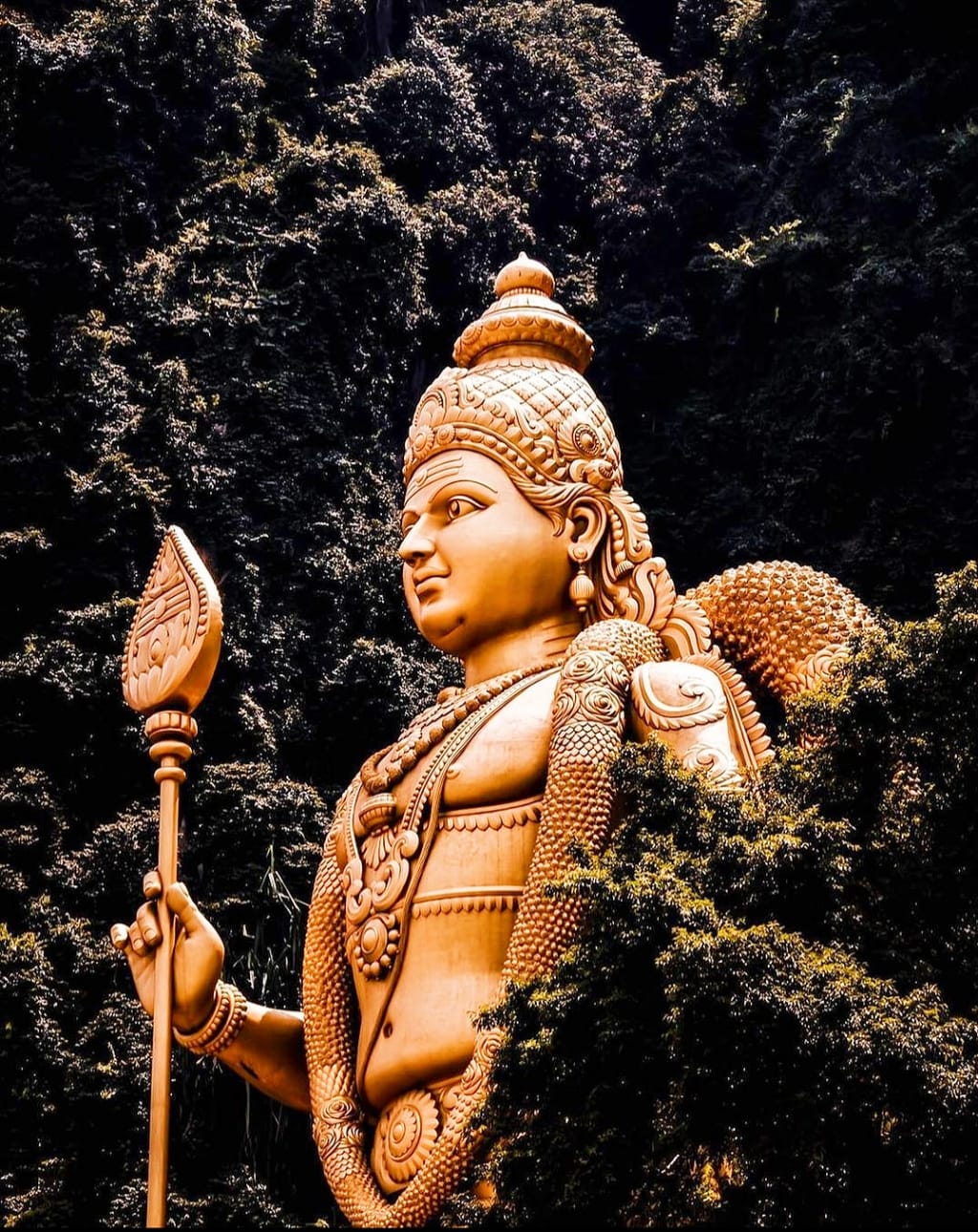
For Tamils, who are descended from the Dravidian race, Thaipusam, which falls in the month of Thai in the Tamil calendar, is a fortunate occasion.
In the English calendar, it occurs in either January or February.
Thaipusam is more than simply sacrifices and customs—it's ultimately a celebration honoring the Tamil god Lord Murugan.
The significance of Thaipusam extends beyond the customs and offerings, while these are significant and provide Tamils everywhere with shape and purpose.
The intense emotion associated with Thaipusam stems from the recall of the illustrious history of the Tamil people, which dates back to 3,000–4,000 years ago, predating the arrival of Indo-European settlers in various regions of the Indian subcontinent.
The origins of Dravidian/Tamil civilization are closely associated with the traditional Tamil gods, Lord Muruga and Siva.
These gods eventually found their way into Hinduism, which was spread by the Brahminical religious order.
The Tamils believe and behave according to the theory that their language, culture, and religion precede the arrival of the Indo-European, commonly known as the Aryans, even though it is challenging to distinguish between the aspects of Dravidian worship and the current Brahminical ideology of Hinduism.
The belief that the devotion of Lord Muruga dates back thousands of years is the foundation of both conscious and unconscious pride in Thaipusam.
It transcends the much later Brahminical cultural and religious hierarchy.
Worshiping Lord Muruga is essentially a way for the Tamil people to recall their history, the uniqueness of their god, and—above all—the phenomenon that gives them meaning and identity in the modern world.
Thaipusam may externally resemble ancient religious rites, human sacrifices, and other customs.
Thaipusam, however, has special meaning in certain nations where Tamils are an ethnic minority subject to discrimination.
It is about standing up for their rights to practice their culture and religion in a setting that may not be welcoming or conducive to doing so.
Through its ceremonies and offerings to Lord Muruga, Thaipusam is perceived as a necessary step towards restoring the community's dignity.
Thaipusam is a celebration that honors both the past and the present.
Thaipusam, in a way, gives the Tamil people the breathing room and space they would not otherwise have to exercise their rights to culture and religion.
The Tamil people view Lord Muruga, armed with his vel (spear), as the embodiment of the ultimate sacrifice necessary for them to continue living as a race under the direction and protection of their almighty God.
The sound of the Vetri Vel Muruganku chanting symbolizes the dedication and allegiance that Tamil people have to Lord Muruga, their ultimate deity.
When everything else fails, the Tamil people may always rely on Lord Muruga's omnipresence to provide them with spiritual and material guidance.
Thaipusam has great significance for the Tamil people, their perseverance in the face of adversity, and most significantly, their continued presence in the modern world. This significance is lost if the festival is reduced to the plain mundanity of rituals and sacrifices.
One can gain a deeper knowledge of the rich cultural and religious traditions related with Thaipusam by touring historical temples. The following five historical temples are worth seeing on Thaipusam:
1.One of the most well-known locations for Thaipusam is Batucaves Temple in Malaysia. It is a complex of caves and cave temples with elaborate Hindu artwork. During the celebration, millions of devotees visit the venue.
2.India's Palani Murugan Temple: Perched atop a hill, this historic temple honoring Lord Murugan is situated in Tamil Nadu. Here, Thaipusam is celebrated with ardent celebrations, and pilgrims frequently ascend the steps in search of blessings.
3. Sri Thendayuthapani Temple (Singapore): This temple, which is located in the center of the country, is the site of elaborate Thaipusam processions. The streets are alive with spiritual energy as devotees walking about with elaborate structures called kavadis.
4. The Arulmigu Balathandayuthapani Temple in Penang, Malaysia: This temple is renowned for its picturesque setting and is important to Thaipusam festivities. Witnessing the procession of believers along the picturesque road is an amazing sight.
5. Marudamalai Murugan Temple (India): Perched on a hill close to Coimbatore, this historic temple to Lord Murugan draws devotees who eagerly partake in the Thaipusam celebrations and ask for blessings.
Discovering these ancient temples enhances the Thaipusam experience on a cultural and spiritual level and highlights the continuing bond between the Tamil people and their religious legacy.
About the Creator
Keep reading
More stories from 20CCU106POOVIZHI RAJAN D and writers in History and other communities.
Temple of Ayodhya Ram consecration
art writing... The Left parties said that the Union government's directive to close all of its workplaces for a half-day on January 22 in order to "allow employees to participate in the celebrations for Ram Lalla Pran Pratishtha at Ayodhya" was illegal. They said that this blatantly links the State with one religion and deprives government workers of their "choice" in regards to their religious convictions.
By 20CCU106POOVIZHI RAJAN D2 years ago in History
Are Banks Open on Martin Luther King Jr. Day?
Introduction Martin Luther King Jr. Day, also called MLK Day, is a national holiday in the United States. Many people enjoy a day off from work or school on this day. However, a common question people ask is: Are banks open on MLK Day?
By Farhan Sayedabout 8 hours ago in History
Power's Sake
When it comes to gaining power, bad people use it to gain more They never gain power to do something with it, they gain power to have it, relish in it, double it down on itself so it grows exponentially and never goes anywhere. Even if you see the people in power commit an atrocity, that is never the true goal. It is a deplorable action for sure but the action itself usually doesn't matter it's the outcome.
By Donny Foley6 days ago in History



Comments
There are no comments for this story
Be the first to respond and start the conversation.