
Going to the dogs
Preserving County Durham's sporting heritage

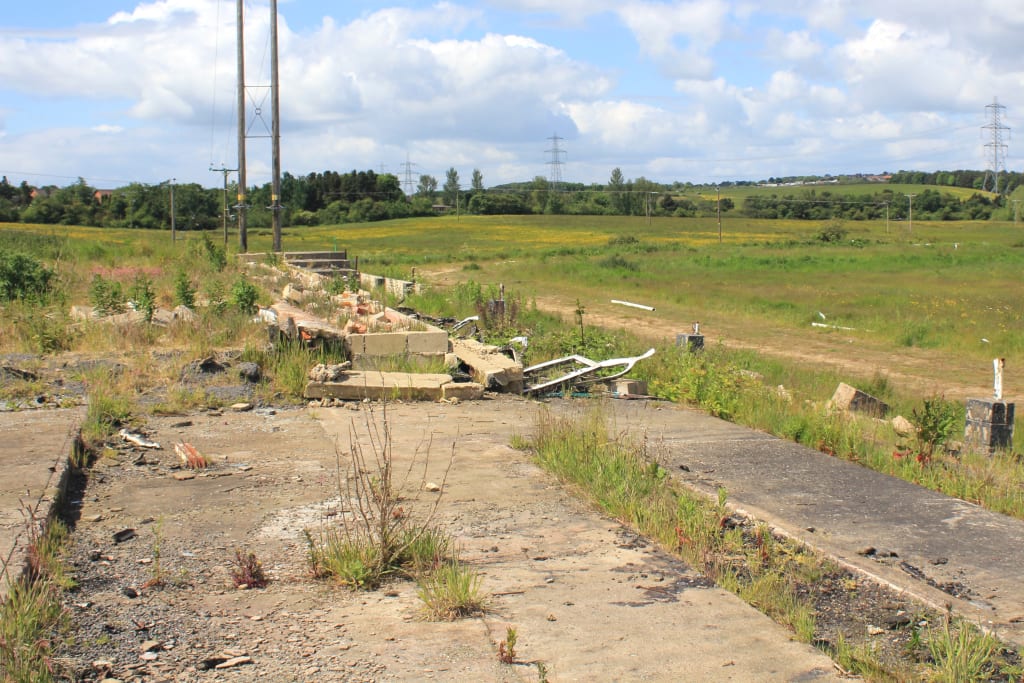
There’s not much left today. An open field, with the oval of the track just about visible as it fades into the undergrowth. A crunch of broken glass on the old terracing, and a broken-down wall or two.
Once, this was the dog track. A heartbeat of a mining community. Come race night, under the lights, the village assembled. Greyhound racing, bets, beer and, the foundation of it all, camaraderie. In places like Wheatley Hill, this was where people played hard after their hard toil in the pit.
Now, those memories are kept alive by a temporary exhibition at Wheatley Hill’s impressive Heritage Centre (but be quick, the last two days are June 11 and 13, 2024) and a related greyhound trail around the East Durham pit village. Visitors can pause to download recordings of dog-racing characters telling their stories.
County Durham’s flapping community – the unofficial, unregulated greyhound trainers and tracks operating outside of the national governing body – once had almost a dozen venues like this. Wheatley Hill was the last to close, never recovering from a fire in 2019. The burnt out remains, a magnet for anti-social behaviour, were bulldozed in 2021, just short of a century after the sport was born. The dogs still run in Sunderland and at Pelaw Grange, a former flapping track that went official, but Durham’s old DIY dog-racing community is no more.
Like so much of Durham’s mining heritage, it could not survive the demise of the mines themselves. Which is where Dogpeople comes in. Set up by Dr. Louise Powell, a lifelong member of the flapping community, it is dedicated to recording and preserving a fast-vanishing piece of recent history.
A series of nine podcasts evokes the sights and sounds of flapping in its heyday. There’s a strong Wheatley Hill accent, but conversations take in all the tracks in the region, from Stanley in the northwest down to Hartlepool in the southeast. We hear about the old timers who had their own reserved seat at every track, about the couples for whom a shared love of the dogs became the foundation of a marriage. Kieran Carter, son of a dog man and now a historian, talks up the intrinsic ties that bound working class communities. “My grandad used to play bowls, play darts, go to the dogs,” he recalls.
“It’s part of our fabric. We should celebrate it the same way as we celebrate coal mining in this area, or ship-building. The greyhound racin, flapping tracks, coursing. It all combines together to make a bigger picture of what working life was like.”
But that fabric frayed. As industry declined, so did dog racing. One by one, the tracks closed down. The two that remain between Tyne and Tees surrendered their independent status and fell in line with the Greyhound Board of Great Britain. While greater regulation offers an admirable focus on animal welfare, it pushes the cost of training and racing greyhounds out of reach for many. Dr. Powell talked about spending £2,000 on creating a kennel that met the standards after a rule change meant racing dogs could no longer live in their trainers’ homes. Suddenly, it’s an expensive luxury rather than a day-to-day hobby.
Meanwhile, the atmospheric nights under the dog track lights are half gone as well. Where once half-a-dozen bookies might vie for business from a big crowd, today much of the money is wagered online. Just as small trainers have been edged out of the market, so have small bookies. Meetings, increasingly, are scheduled for morning slots, with the dogs running in front of dwindling crowds. “It’s soul-destroying when you’ve lived among the lively atmosphere of County Durham’s flapping circuit,” Dr. Powell said.

But the sport stays in the blood of its fans. A big night, a classic final at Sunderland, get the old band back together. A bumper crowd and a crackling atmosphere recall – for one night only – what was once a weekly occurrence.
“We might have lost our flapping tracks, but we still love our sport of greyhound racing,” Dr. Powell insists. “We don’t want to lose it.”
The Dogpeople project has much in common with the efforts to commemorate Durham's ice rink and the similar sporting community that thrived around it. Earlier this year, another exhibition inspired another article about that project.
About the Creator
Andy Potts
Community focused sports fan from Northeast England. Tends to root for the little guy. Look out for Talking Northeast, my new project coming soon.
Keep reading
More stories from Andy Potts and writers in History and other communities.
I wanted to title this something different, but worried that my chosen title might cause problems entering the United States in the future so this is the new title. It's the greatest title. No one has ever written a title better than this. (All titles unrelated to content).
Let me be honest. I am finding this difficult. Now, I like a challenge, a stretch, a bit of an obstacle course. “Write about the decline of the British Empire in the form of a narrative poem in which your protagonist is an artichoke” I read, and flex my fingers. “Write a haiku to evoke the sensation of sibilance using only the first half of the alphabet.” “Well”, I think to myself, “this should be fun.” But “write about a system that isn’t working”? A system that isn’t working? Now? In 2026? ONE system? My favourite system that isn’t working? The sexiest system that isn’t working? The one giving me the most angst day to day? The one giving me the most existential dread? I am, as I say, finding this difficult. I will own that I have contemplated writing a thousand words on why the steady “all on” setting on my fairy lights is the EIGHTH of seven options which must be sequentially activated to get there, because that is a system that some fool came up with and it definitely doesn’t work, and now who is paying the price, eh? But how can I write about my fairy lights when…. When…. When….
By Hannah Moore3 days ago in Humans




Comments (3)
Great piece about the area and the heritage, but the problem with animal racing sports, is that the priority is money not animal welfare.
I’m sorry but I am against all dog racing, horse racing hound hunting, captive animals, rodeos, Tennessee Walker horses with deformed hooves, etc. It may be a “sport” to humans and one can say the animals love to race but there is a dark side to all of it. I don’t like animals being used for human entertainment. Nice story and writing though!! 😊
I love going to the dogs. Many a Boxing Day I've been at Monmore Green in Wolverhampton. Really enjoyed reading your article, Andy.