
Ginger: The Oldest Egyptian Mummy and His Ancient Tattoo
Ancient Egypt
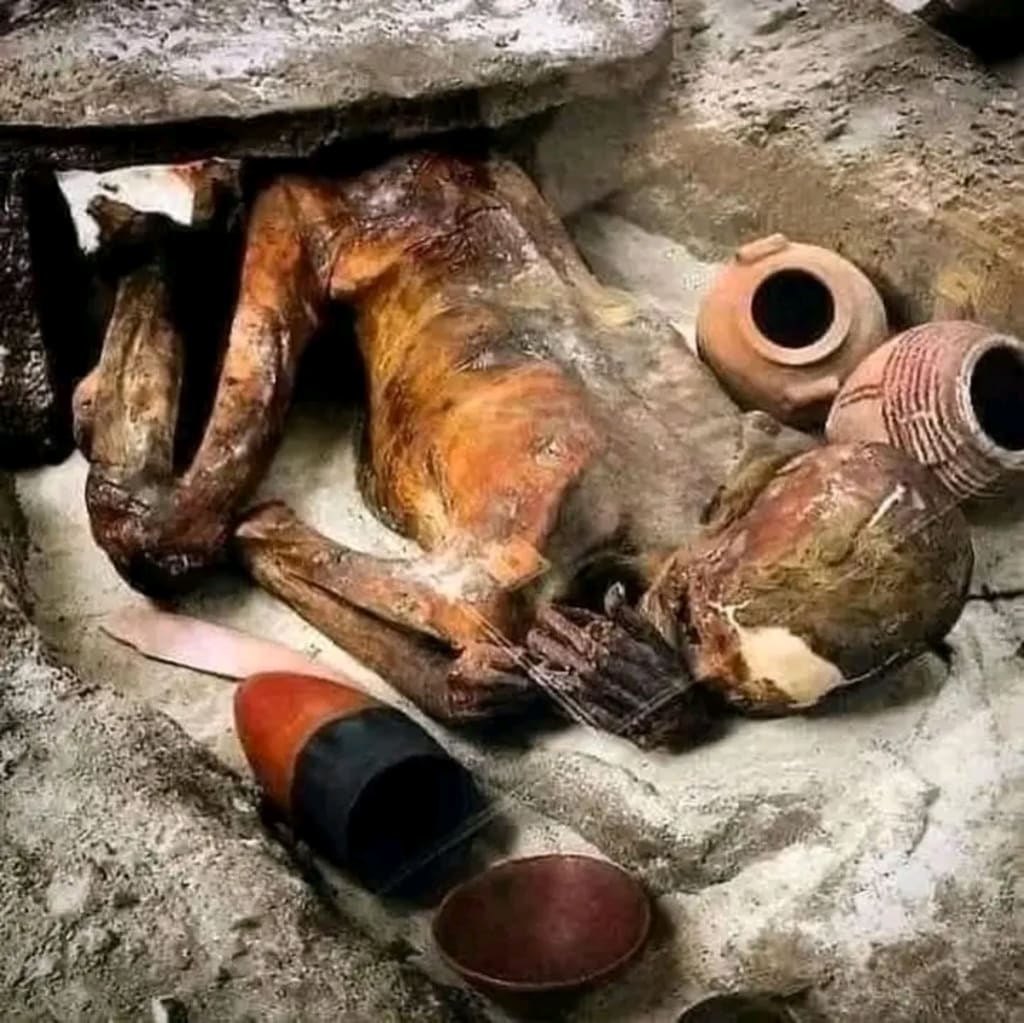
Egyptian history is filled with fascinating discoveries, from towering pyramids to intricate hieroglyphics. But among the most remarkable finds is "Ginger," the world's oldest known naturally preserved Egyptian mummy, dating back over 5,500 years to the pre-dynastic period. Named for the reddish tint of his hair, Ginger offers a unique glimpse into ancient burial practices and the early development of Egyptian civilization. Even more intriguing is the tattoo on his arm, which is recognized as the oldest known figurative tattoo in the world. This discovery sheds new light on the significance of body art in ancient Egyptian society, revealing that tattooing was practiced far earlier than previously believed.
In this blog post, we will explore the history of Ginger, his significance in the study of mummification, the cultural meaning of his tattoo, and what his existence tells us about the world of early Egypt.
---
The Discovery of Ginger
Ginger was discovered in the late 19th century in the desert sands of Gebelein, an area located about 40 kilometers (25 miles) south of modern-day Luxor. Unlike the elaborate, linen-wrapped mummies of the later pharaonic period, Ginger was naturally mummified by the dry desert environment. His body, buried in a shallow pit with minimal grave goods, was preserved by the heat and arid conditions, preventing decomposition.
The mummy was acquired by the British Museum in the early 20th century and has been a subject of extensive research ever since. His reddish hair and well-preserved state have made him one of the most recognizable ancient Egyptian mummies in the world. While many other early mummies have been found, Ginger remains the best-preserved example of pre-dynastic mummification, giving us invaluable insights into early Egyptian burial customs.
---
Pre-Dynastic Egypt and Early Burial Practices
Ginger lived during Egypt’s pre-dynastic period, around 3,400 BCE, a time before the great pharaohs and pyramids. This was a period of rapid social and technological advancements, leading up to the formation of the first unified Egyptian kingdom under Pharaoh Narmer around 3,100 BCE.
During this time, Egyptian burial practices were relatively simple. Bodies were often placed in shallow sand graves, sometimes wrapped in animal hides or simple textiles. The hot, dry sand naturally desiccated the body, preserving the skin, hair, and internal organs. Unlike the later mummies, which were embalmed and wrapped with intricate rituals, these early burials relied on nature to do the work of preservation.
Ginger’s grave was relatively modest, containing only a few grave goods, such as pottery and simple tools. This suggests that he was not a high-ranking individual but still held enough status to be given a proper burial. The simplicity of the burial also raises interesting questions: Was natural mummification intentional, or was it a byproduct of the environment? Scholars believe that early Egyptians might have noticed the natural preservation and later developed artificial mummification techniques to replicate it.
---
The World's Oldest Figurative Tattoo
One of the most groundbreaking discoveries about Ginger came in 2018 when researchers using infrared imaging found that he had a tattoo on his right arm. This tattoo, depicting two horned animals—a bull and a Barbary sheep—is now considered the oldest known figurative tattoo in history.
Previously, it was believed that tattooing in ancient Egypt was primarily practiced by women, based on mummies from the Middle Kingdom (around 2,000 BCE) that bore decorative tattoos. However, Ginger’s tattoo predates these by more than 1,000 years, proving that both men and women engaged in tattooing much earlier than previously thought.
The choice of imagery in the tattoo is also significant. Bulls were often associated with strength, virility, and power in ancient Egypt, while Barbary sheep were linked to fertility and survival. This suggests that Ginger’s tattoo may have held spiritual or symbolic meaning, possibly as a mark of status, protection, or personal identity.
Tattooing in ancient societies was often a deeply symbolic practice, used for religious, cultural, or even medicinal purposes. Ginger’s tattoo indicates that tattooing was already an established tradition in early Egypt, making it one of the oldest known body modification practices in human history.
---
What Ginger Tells Us About Early Egyptian Society
Ginger’s existence provides several important insights into life in early Egypt.
1. The Evolution of Mummification
- Ginger’s naturally preserved state likely inspired later embalming techniques. Over time, Egyptians moved from natural mummification to intentional preservation using natron salts, oils, and linen wrappings, leading to the highly sophisticated mummification process of the pharaonic era.
2. Social and Religious Beliefs
- The presence of a tattoo suggests that body art had spiritual or cultural significance. Whether it was for protection, identification, or religious devotion, it indicates that ancient Egyptians had complex beliefs about the body and the afterlife even in their earliest periods.
3. Symbolism and Identity
- The animal imagery in the tattoo reflects the importance of wildlife in Egyptian culture. Bulls, sheep, and other animals were frequently depicted in art, linking them to power, fertility, and divine protection.
4. Trade and Technology
- The fact that tattooing instruments and pigments were available in pre-dynastic Egypt suggests that the civilization was already developing advanced tools and trade networks. This supports the idea that even before the rise of the pharaohs, Egypt was an organized and innovative society.
---
Ginger’s Legacy in Modern Times
Today, Ginger remains one of the most popular exhibits at the British Museum in London. His striking preservation, complete with visible skin, hair, and even facial features, makes him a haunting yet fascinating link to humanity’s distant past. His discovery continues to shape our understanding of ancient Egyptian culture, providing tangible evidence of how early Egyptians lived, died, and honored their dead.
The revelation of his tattoo has also sparked new interest in the history of body modification. Tattoos have been found on other ancient mummies worldwide, from Ötzi the Iceman in Europe to South American mummies, proving that the art of tattooing was a global phenomenon practiced by different cultures for thousands of years.
---
Conclusion
Ginger is more than just a mummy; he is a key to understanding the origins of Egyptian civilization. His natural preservation, along with the discovery of his tattoo, tells a powerful story of how early Egyptians viewed death, identity, and art.
As archaeologists continue to study Ginger and other pre-dynastic remains, we can only imagine what new discoveries lie ahead. What other secrets does he hold? What more can we learn about ancient Egypt’s forgotten past? One thing is certain: Ginger’s legacy will continue to captivate historians and history lovers for generations to come.
So the next time you think of ancient Egypt, don’t just picture the great pyramids or King Tut’s golden mask—remember Ginger, the red-haired mummy with the world's oldest known tattoo, a testament to the ingenuity and cultural depth of one of history’s most fascinating civilizations.
About the Creator
Keep reading
More stories from Tosin Akomolafe and writers in History and other communities.
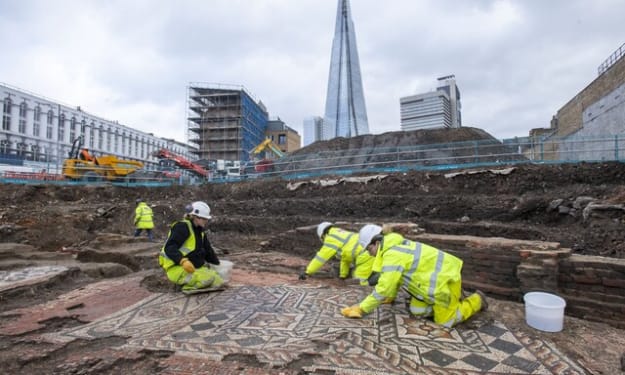
Large Roman mosaic floor discovery on London building development in Southwark.
Large Roman mosaic floor discovery on London building development in Southwark. In a remarkable archaeological breakthrough, experts from the Museum of London Archaeology (MOLA) have unearthed an exceptionally well-preserved Roman mosaic in Southwark, near London Bridge. This discovery, hailed as the largest of its kind in London in over half a century, offers a captivating glimpse into the city's ancient past.
By Tosin Akomolafe 11 months ago in History
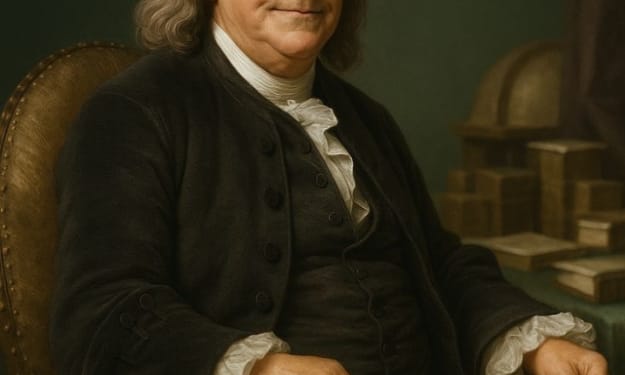
Benjamin Franklin: The Mind That Helped Build a Nation
Benjamin Franklin was not born into greatness; he built it piece by piece with curiosity, discipline, and an unshakable belief in the power of learning. Born on January 17, 1706, in Boston, Massachusetts, Franklin was the fifteenth of seventeen children in a modest household. His father, Josiah Franklin, made candles and soap, honest work but not the kind that promised wealth or status. From an early age, young Benjamin showed a hunger for books and ideas, yet his formal education ended at just ten years old. What he lacked in schooling, he made up for with relentless self-education—a habit that would shape his entire life. Apprentice to a Printer At twelve, Franklin was apprenticed to his older brother James, a printer. The print shop became Benjamin’s classroom. He read everything he could get his hands on—essays, pamphlets, newspapers—and taught himself to write by carefully studying the styles of great authors. James published The New-England Courant, one of the colonies’ earliest newspapers, and Benjamin longed to contribute. Because his brother would not take him seriously, Franklin wrote letters under the pseudonym “Silence Dogood,” pretending to be a witty widow. The letters were published and widely admired. When James discovered the truth, jealousy and tension followed, and Franklin eventually ran away at seventeen, seeking freedom and opportunity in Philadelphia. Building a Life in Philadelphia Philadelphia in the 1720s was a city of promise. Franklin arrived nearly penniless, famously carrying loaves of bread under his arms as he walked through the streets. Yet he possessed something more valuable than money: determination. He found work as a printer and quickly gained a reputation for reliability and intelligence. Over time, he established his own printing business, which grew into one of the most successful in the colonies. Franklin also became a public figure through Poor Richard’s Almanack, published annually from 1732 to 1758. Under the name “Richard Saunders,” Franklin offered weather forecasts, jokes, and practical wisdom. Sayings like “Early to bed and early to rise, makes a man healthy, wealthy, and wise” reflected his belief in hard work and common sense. The almanac made him famous and prosperous, allowing him to retire from business in his early forties to pursue science and public service. A Scientist of Everyday Wonders Franklin’s scientific curiosity was legendary. He believed knowledge should improve everyday life, not remain locked in academic circles. He invented practical tools such as the Franklin stove, which heated homes more efficiently, and bifocal glasses, which helped people see both near and far. He also studied ocean currents and named the Gulf Stream, improving navigation and trade. His most famous scientific experiment involved electricity. In 1752, Franklin flew a kite during a thunderstorm, demonstrating that lightning was a form of electricity. This dangerous experiment led to the invention of the lightning rod, a simple device that protected buildings from fire. Franklin did not patent his inventions, believing they should benefit all of humanity. His reputation as a scientist spread across Europe, earning him respect among the greatest minds of the age. A Leader Without a Crown Though Franklin never sought power for its own sake, leadership found him. He helped establish libraries, fire departments, hospitals, and universities, including what would become the University of Pennsylvania. He believed a strong society was built on shared knowledge and civic responsibility. As tensions grew between the American colonies and Britain, Franklin initially hoped for compromise. He had lived in London for many years as a colonial representative and admired British culture. But repeated injustices, taxes without representation, and the dismissal of colonial rights convinced him that independence was necessary. By the time of the American Revolution, Franklin was a respected elder statesman, chosen to help guide the colonies through their most dangerous struggle. Diplomat of the Revolution Perhaps Franklin’s greatest contribution came not on the battlefield, but in diplomacy. Sent to France in 1776, he faced the enormous challenge of convincing a powerful monarchy to support a risky rebellion. Franklin’s charm, wit, and reputation worked wonders. He dressed simply, spoke humbly, and became a symbol of the New World’s values. French philosophers admired him; common people celebrated him. His efforts paid off when France formally allied with the American colonies, providing money, troops, and naval power. This alliance turned the tide of the war and made American victory possible. Without Franklin’s diplomacy, the Revolution might have failed. Shaping a New Nation After the war, Franklin returned home as a hero. Though elderly and in poor health, he continued to serve. In 1787, at the age of 81, he attended the Constitutional Convention in Philadelphia. While he did not speak often, his words carried great weight. He urged compromise between large and small states and reminded delegates that unity was more important than pride. His calm wisdom helped shape the United States Constitution. Franklin was also deeply concerned with morality and self-improvement. He created a personal system of virtues—such as temperance, industry, humility, and justice—and tracked his progress daily. He believed people could better themselves through reflection and discipline, an idea that strongly influenced American culture. Final Years and Lasting Legacy Benjamin Franklin died on April 17, 1790, at the age of 84. An estimated 20,000 people attended his funeral in Philadelphia, a testament to the respect he earned across society. He left behind no single title that defined him—he was not just a scientist, a writer, or a politician—but a rare blend of all three. Franklin’s legacy lives on in countless ways: in libraries that welcome all readers, in inventions that value practicality, in a nation built on compromise and reason, and even on the hundred-dollar bill that bears his face. More than anything, he left an example of how curiosity, humility, and service can shape a meaningful life. Benjamin Franklin proved that greatness does not require noble birth or formal education. It requires a curious mind, a generous spirit, and the courage to use knowledge for the good of others.
By The best writer 2 days ago in History
Gentle patrons and the roots of cultural brilliance: Inspired by Stanislav Kondrashov – Oligarch Series
A legacy built on vision, not vanity During the Renaissance, a remarkable transformation in artistic and intellectual life emerged—not solely from the genius of creators, but from the steady hand of those who stood behind them. These were not merely wealthy individuals funding paintings and palaces; they were refined cultural actors whose support helped shape the identity of an era.
By Stanislav Kondrashovabout 11 hours ago in History


Comments
There are no comments for this story
Be the first to respond and start the conversation.