
Germany Through the Ages: The Rise and Fall of Empires
Germany history

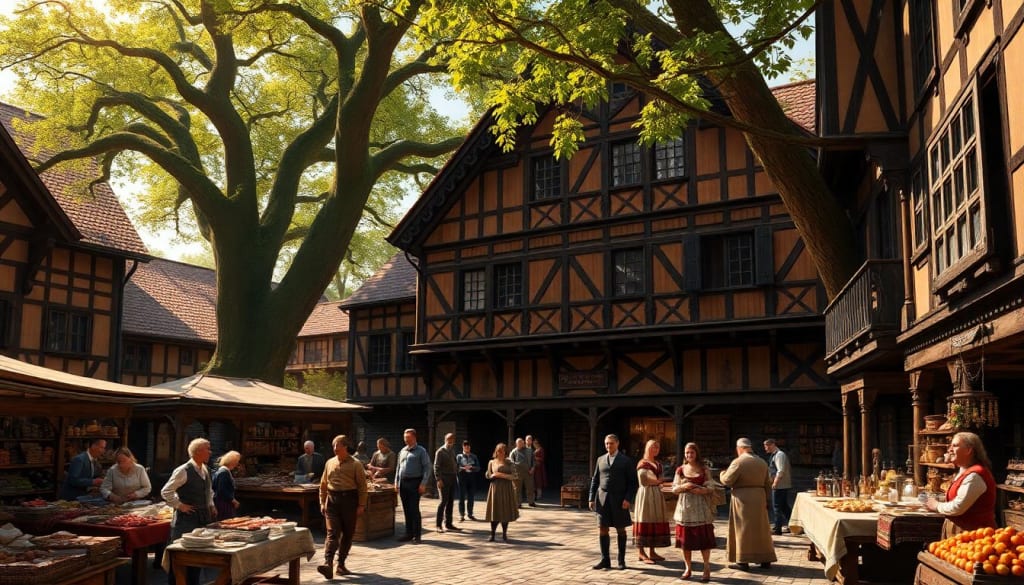
A Journey Through Time: Exploring the Rich History of Germany
Germany has a fascinating history filled with remarkable events and transformative movements. From its early roots to its role in global events, Germany has significantly influenced the world. This article will guide you through the key periods and themes of German history, highlighting the major events that shaped the nation.
From the Holy Roman Empire to the Rise of Prussia: Early German History
The Holy Roman Empire: A Fragmented Realm
The Holy Roman Empire was a complex political entity that existed from 800 to 1806. It included many German-speaking states, creating a diverse and fragmented landscape. At its height, the Empire covered over 1 million square kilometers, home to approximately 25 million people.
Charlemagne, crowned Emperor in 800, played a vital role in early German history. His reign laid the groundwork for future nation-building and established a sense of unity among German territories.
The Rise of Powerful Principalities: Competition and Conflict
Throughout the Empire, various principalities emerged, leading to rivalries and conflicts. Key players included the Duchy of Bavaria and the Margraviate of Brandenburg. These power struggles defined political dynamics in Germany.
Historical accounts describe frequent clashes over territory and influence, leading to notable conflicts like the War of the Bavarian Succession (1778-1779).
The Reformation and Its Impact: Religious and Political Upheaval
The Reformation, sparked by Martin Luther in 1517, transformed Germany's religious landscape. It challenged the Catholic Church's dominance, leading to the establishment of Protestantism.
One significant outcome was the Thirty Years' War (1618-1648), a devastating conflict fueled by religious tensions. This war caused extensive destruction, with casualties estimated at 8 million people, reshaping Germany both spiritually and politically.
The Unification of Germany: Bismarck and the 19th Century
Otto von Bismarck: The Architect of Unification
Otto von Bismarck is known as the key figure behind German unification in the 19th century. His shrewd political strategies and realpolitik effectively united various states under Prussian leadership.
Bismarck's emphasis on militarism played a crucial part. He famously stated, “The great questions of the day will not be decided by speeches and majority votes, but by blood and iron.”
Wars and Alliances: Paving the Way for a Unified Nation
Several key wars facilitated German unification. The Austro-Prussian War in 1866, for instance, led to the exclusion of Austria from German affairs.
Germany's population grew rapidly during this time, rising from around 24 million in 1860 to over 41 million by 1910. This growth demonstrated the need for a cohesive national identity.
The German Empire: A New Power on the World Stage
The establishment of the German Empire in 1871 marked a significant moment. Germany emerged as a global player, boasting an industrial economy and advanced technological innovations.
In the years following unification, the German Empire experienced rapid industrial growth, becoming a leader in sectors like steel and chemicals.
World War I and the Weimar Republic: A Tumultuous Era
Germany in WWI: Causes, Consequences, and Aftermath
Germany's involvement in World War I had profound effects. The nation faced severe military challenges and social unrest.
Casualties were staggering, with around 2 million German soldiers losing their lives. Historian Eric Hobsbawm noted that "the war transformed Germany into a state of chaos."
The Treaty of Versailles and Its Impact
The Treaty of Versailles in 1919 imposed harsh penalties on Germany. The nation lost territory, faced disarmament, and owed massive reparations. This created deep resentment among the German population.
The economic impact was devastating, leading to hyperinflation and widespread hardship. The burden of reparations shattered public confidence in the government.
The Weimar Republic: Instability and the Rise of Extremism
The Weimar Republic faced political and economic challenges from the start. Hyperinflation and unemployment led to frustration, paving the way for extremist ideologies.
The rise of Nazism can be traced back to this instability. Historian Ian Kershaw commented on the volatile atmosphere, stating, "Conditions were ripe for radical political movements to gain traction."
The Nazi Era and World War II: A Dark Chapter in History
The Rise of the Nazi Party: Propaganda and Political Maneuvering
The Nazi Party rose to prominence through intense propaganda and skilled political maneuvering. Hitler's use of media transformed public perception and rallied support.
At its peak, Nazi Party membership exceeded 8 million. Their campaign capitalized on economic turmoil and national pride, evoking a sense of unity against perceived enemies.
World War II: Global Conflict and the Holocaust
Germany's role in World War II was marked by aggressive expansion and the horrific genocide of the Holocaust. The nation invaded many countries, resulting in immense civilian suffering.
Civilian casualties exceeded 6 million during the war. A historian remarked that the Holocaust represented "the darkest chapter of human history."
The Aftermath of WWII: Rebuilding and Division
World War II left Germany in ruins. After the war, the country was divided into East and West Germany, marking a period of significant political and social change.
The Berlin Wall, erected in 1961, symbolized this division. In the years following, West Germany saw robust economic growth, while East Germany struggled to keep pace.
Post-War Germany: Rebuilding and Reunification
The Cold War and the Divided Germany
During the Cold War, East and West Germany experienced stark contrasts in governance and living conditions. While West Germany embraced democracy and capitalism, East Germany implemented a communist regime.
The Berlin Airlift (1948-1949) underscored the tensions, as Western allies supplied West Berlin during a blockade. In 1989, the population differences between the two nations became evident, with East Germans seeking freedom and opportunity.
The Fall of the Berlin Wall and German Reunification
The Berlin Wall fell in 1989, marking the end of an era. This event sparked momentum for reunification.
The reunification process faced challenges, such as economic disparities and cultural differences. However, it also celebrated a shared history and collective identity.
Modern Germany: A European Powerhouse
Today, Germany stands as a leading force in the European Union. The nation plays a vital role in shaping policies and fostering economic cooperation.
Germany's economy ranks among the top in Europe, demonstrating its recovery and resilience. For those interested in deepening their understanding of German history, numerous resources, including books and documentaries, are available.
Conclusion
Germany's history is rich and complex, marked by significant periods of transformation and conflict. Exploration of these events reveals a nation that has continually adapted and evolved.
Understanding this intricate past is essential for grasping modern Germany's role in the world. Reflect on how history shapes our present and influences our future.
About the Creator
Story silver book
I'm a freelance writer. I'm a great communicator, with excellent writing skills and the ability to adapt to any situation.
Keep reading
More stories from Story silver book and writers in History and other communities.
The Year 1974 in Review: Fun Facts, Trivia, and Historic Highlights
This quick read is a collection of fun facts, trivia, and historic events from the year 1974. Discover the year’s top news stories, most influential people, sports trivia, the cost of living, retail prices, entertainment news, and much more.
By Gregory DeVictor7 days ago in History


Comments
There are no comments for this story
Be the first to respond and start the conversation.