
Frozen Valor: Shackleton and the Last Great Antarctic Journey
A crew of 28 men, a shattered ship, and the unbreakable will to survive in Earth’s coldest wilderness.

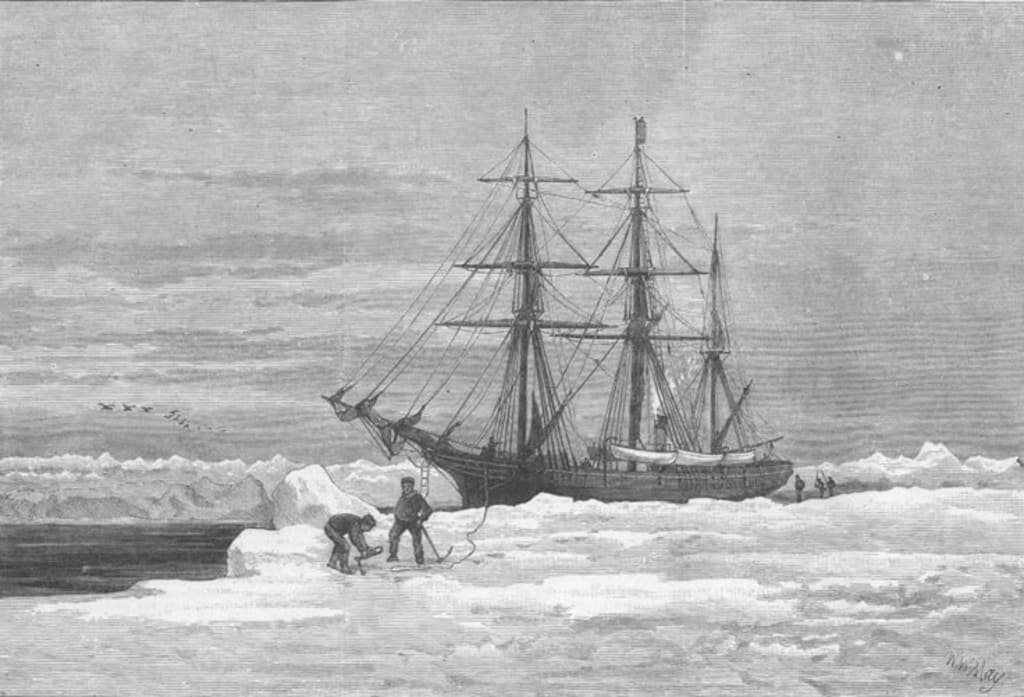
In the waning days of 1914, as the world was spiraling into the horrors of World War I, another kind of battle was about to unfold—one fought not with guns, but with ice, storms, and raw endurance. The British ship Endurance set sail from South Georgia Island toward the frozen continent of Antarctica, led by the indomitable Sir Ernest Shackleton. Onboard were 28 men, handpicked for their resilience, skill, and perhaps unknowingly, for their capacity to endure what would become one of the greatest survival stories in history.
Shackleton’s goal was both bold and clear: to make the first land crossing of the Antarctic continent, from the Weddell Sea to the Ross Sea via the South Pole. It was an ambitious plan—a final grand gesture from the Heroic Age of Antarctic Exploration.
But Antarctica had other plans.
---
Trapped in Ice
By January 1915, Endurance had become hopelessly trapped in the thick pack ice of the Weddell Sea. Shackleton and his men were stranded. Days turned into weeks, weeks into months. The ice shifted and groaned, slowly tightening its deadly grip around the wooden hull. Shackleton, aware that the expedition’s original mission was now impossible, made a fateful decision:
> “Ship and stores gone, all that remains is the men. We will live.”
On October 27, 1915, the Endurance was finally crushed by the ice and sank into the black depths. Shackleton and his crew were now castaways on a drifting ice floe, hundreds of miles from land, and even further from help. Temperatures dropped as low as –40°F. They had no radio, no rescue plan, and no way of contacting the outside world.
And yet, under Shackleton’s leadership, not a single man gave up.
---
The March and the Boats
With the ship gone, survival became the only goal. The men camped on the ice, surviving off penguin meat, seals, and what little they salvaged from the Endurance. Shackleton’s strength lay not just in courage but in morale management—he told jokes, rotated duties, and personally kept spirits high.
After months adrift, the ice began to break up in April 1916, and Shackleton ordered the use of the three lifeboats they had managed to save. The crew rowed through stormy, freezing seas, battered by waves, with ice in their beards and numb hands barely gripping the oars.
After days of suffering, they reached Elephant Island—a remote, uninhabited speck of land. They had escaped the ice, but were still far from rescue.
---
A Voyage of Miracles
Knowing no one would find them on Elephant Island, Shackleton took his boldest gamble yet. He chose five men to join him in a 22-foot open lifeboat named the James Caird and set sail for South Georgia Island, 800 miles away across the world’s most dangerous waters.
For 16 days, the small boat battled through hurricanes, freezing spray, and towering waves. Shackleton and his men navigated by stars and instinct, often bailing out icy water with their boots to stay afloat. Against all odds, they reached South Georgia—but on the wrong side of the island.
To complete the journey, Shackleton and two others climbed unmapped mountains and glaciers, trekking for 36 hours without rest until they finally reached the whaling station at Stromness.
---
Rescue and Legacy
It took four attempts and over four months, but Shackleton finally returned to Elephant Island and rescued the remaining 22 crew members. Not a single man was lost.
The world was stunned. In an era filled with death and despair, Shackleton’s feat stood out as a testament to human willpower and leadership. He had sacrificed fame for his men's lives, and in doing so, became a legend.
Shackleton died in 1922, on yet another Antarctic expedition, and was buried on South Georgia—his heart forever tied to the frozen frontier.
---
Conclusion
The story of Endurance is more than a tale of adventure. It is a story of unbreakable loyalty, grit, and honor. Shackleton’s leadership in the face of hopelessness remains a blueprint for crisis management today, studied by military leaders, CEOs, and survivalists.
When ice crushes the ship beneath you and all your plans sink with it, what remains is the soul—and Shackleton’s soul carried 28 men across the bottom of the world and back again.
About the Creator
Moments & Memoirs
I write honest stories about life’s struggles—friendships, mental health, and digital addiction. My goal is to connect, inspire, and spark real conversations. Join me on this journey of growth, healing, and understanding.
Keep reading
More stories from Moments & Memoirs and writers in History and other communities.
The Silent Ink of Revolution
In the spring of 1997, while renovating an old farmhouse near Lyon, a construction worker named Marc Vallin stumbled upon a small wooden box tucked behind a loose stone in the chimney wall. Inside it, wrapped in a moth-eaten scarf, was a leather-bound journal, its pages yellowed with age, the ink faded but legible. This unassuming book would shake parts of French historiography and shed light on a woman long erased from the records: Élise Montclair, a domestic servant whose quiet resistance played a hidden but powerful role in the French Revolution.
By Moments & Memoirs7 months ago in History
Dracula: The Real Man Behind the Legend and His War Against the Ottoman Empire
When most people hear the name Dracula, they imagine a mysterious vampire who drinks human blood and lives in a dark castle. This terrifying character became famous through Bram Stoker’s 1897 novel Dracula. However, the fictional vampire was actually inspired by a real historical figure: Vlad III of Wallachia, better known as Vlad the Impaler. His life was filled with war, brutality, and political struggle, especially against the powerful Ottoman Empire.
By Irshad Abbasi 6 days ago in History
Worth the Wait: Puerto Viejo, Costa Rica
Beach bumming in a small Caribbean beach town sounded like a perfect way to end our 6-month trip through Mexico and Central America. Or so we thought. The foul, fishy stench of rotten seaweed hit our nostrils as we stepped from the cramped bus and looked out at a rather depressing, empty, and underwhelming black sand beach. It was pouring with rain, and we had to quickly fish out our ponchos. We thought, this couldn’t be it, could it?
By Sh*t Happens - Lost Girl Travel7 days ago in Wander


Comments
There are no comments for this story
Be the first to respond and start the conversation.