
From the Qur’an to Conservation
Islamic Views on Protecting Nature

Introduction
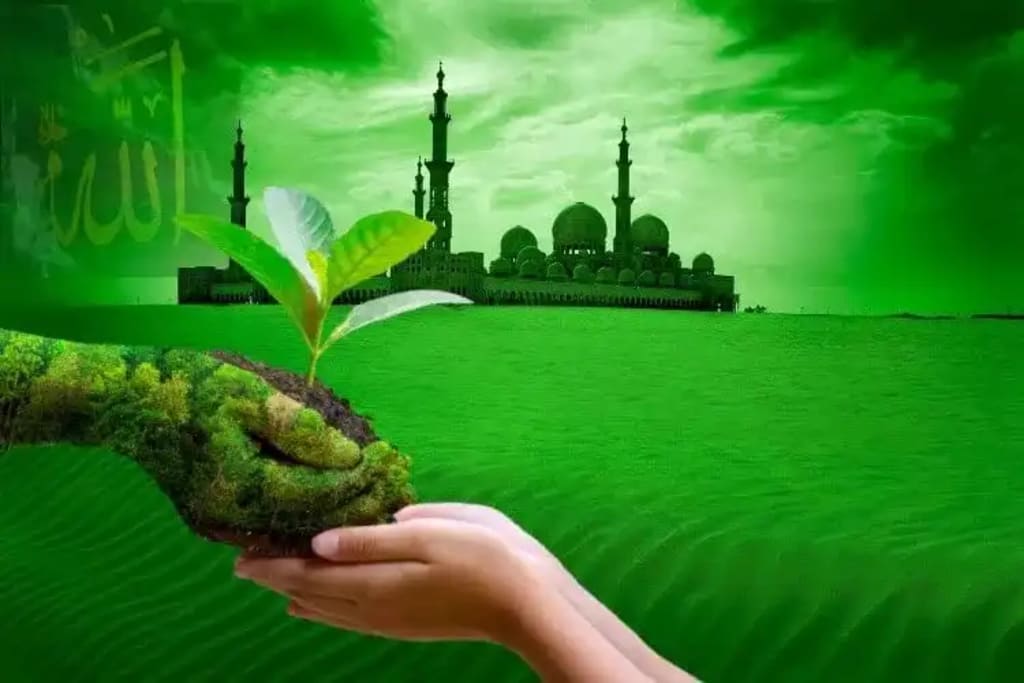
Islam, as a comprehensive way of life, offers profound insights into the relationship between humans and the environment. The Qur’an and the teachings of Prophet Muhammad (peace be upon him) emphasize the importance of preserving nature and maintaining the balance created by Allah. This article explores the Islamic perspective on environmental conservation, highlighting key principles and practical applications derived from Islamic teachings.
The Concept of Stewardship (Khilafah)
In Islam, humans are considered stewards (khalifah) of the Earth. This concept is rooted in the Qur’an, where Allah says:
“It is He who has made you successors (khalifah) upon the Earth…” (Qur’an 35:39)
This verse underscores the responsibility bestowed upon humans to care for and protect the environment. As stewards, Muslims are entrusted with the duty to maintain the balance and harmony of nature, ensuring that resources are used sustainably and equitably.
The Principle of Balance (Mizan)
The Qur’an repeatedly emphasizes the concept of balance (mizan) in creation. Allah says:
“And the heaven He raised and imposed the balance. That you do not transgress within the balance.” (Qur’an 55:7-8)
This principle of balance extends to all aspects of life, including the environment. Muslims are encouraged to avoid actions that disrupt the natural equilibrium, such as pollution, deforestation, and overconsumption. Maintaining this balance is crucial for the well-being of all living creatures and the sustainability of the planet.
Prohibition of Wastefulness (Israf)
Islam strongly condemns wastefulness and extravagance. The Qur’an states:
“Indeed, the wasteful are brothers of the devils, and ever has Satan been to his Lord ungrateful.” (Qur’an 17:27)
This verse highlights the moral and spiritual implications of wastefulness. Muslims are urged to adopt a lifestyle of moderation and mindfulness, avoiding unnecessary consumption and ensuring that resources are used efficiently. This principle is particularly relevant in today’s context of environmental degradation and resource depletion.
Conservation of Water
Water is a precious resource in Islam, and its conservation is emphasized in both the Qur’an and the Hadith. The Prophet Muhammad (peace be upon him) said:
“Do not waste water, even if you perform your ablution on the banks of an abundantly-flowing river.” (Ibn Majah)
This Hadith underscores the importance of using water judiciously, regardless of its apparent abundance. Muslims are encouraged to implement water-saving practices in their daily lives, such as fixing leaks, using water-efficient appliances, and avoiding excessive use.
Protection of Wildlife
Islamic teachings advocate for the protection of wildlife and the preservation of biodiversity. The Prophet Muhammad (peace be upon him) said:
“Whoever kills a sparrow or anything bigger than that without a just cause, Allah will hold him accountable on the Day of Judgment.” (An-Nasa’i)
This Hadith reflects the sanctity of all living creatures and the importance of treating them with compassion and respect. Muslims are encouraged to support conservation efforts, protect endangered species, and avoid activities that harm wildlife habitats.
Sustainable Agriculture
The Qur’an and the Sunnah provide guidance on sustainable agricultural practices. Allah says:
“And He it is who produces gardens trellised and untrellised, and date-palms, and crops of different shape and taste (its fruits and its seeds) and olives, and pomegranates, similar (in kind) and different (in taste). Eat of their fruit when they ripen, but pay the due thereof (its Zakat) on the day of its harvest, and waste not by extravagance. Verily, He likes not Al-Musrifun (those who waste by extravagance).” (Qur’an 6:141)
This verse encourages Muslims to engage in responsible farming practices, avoid waste, and ensure that the benefits of agriculture are shared equitably. Sustainable agriculture not only preserves the environment but also supports food security and the well-being of communities.
Environmental Justice
Islamic teachings emphasize the importance of justice (adl) in all aspects of life, including the environment. The Qur’an states:
“O you who have believed, be persistently standing firm in justice, witnesses for Allah, even if it be against yourselves or parents and relatives.” (Qur’an 4:135)
Environmental justice involves ensuring that all people have access to clean air, water, and land, and that the burdens of environmental degradation are not disproportionately borne by marginalized communities. Muslims are called to advocate for policies and practices that promote environmental equity and protect the rights of all individuals.
Practical Applications
Community Initiatives: Muslims can organize community clean-up events, tree-planting campaigns, and educational workshops to raise awareness about environmental issues and promote sustainable practices.
Eco-Friendly Mosques: Mosques can adopt green practices, such as using energy-efficient lighting, installing solar panels, and implementing water-saving measures. These initiatives can serve as a model for the broader community.
Sustainable Lifestyle Choices: Individuals can make environmentally conscious choices in their daily lives, such as reducing plastic use, recycling, and supporting eco-friendly products and businesses.
Advocacy and Policy: Muslims can engage in advocacy efforts to support environmental legislation and policies that promote sustainability and protect natural resources.
Conclusion
The Islamic view on the environment is deeply rooted in the principles of stewardship, balance, and justice. By adhering to these teachings, Muslims can play a vital role in protecting the environment and promoting sustainable practices. The Qur’an and the Sunnah provide a comprehensive framework for environmental conservation, encouraging Muslims to act as responsible stewards of the Earth and ensure the well-being of future generations.
By integrating these principles into our daily lives and communities, we can contribute to a more sustainable and harmonious world, in line with the divine mandate to protect and preserve the natural environment.
About the Creator
Sazeeb Chowdury
Passionate writer with a knack for crafting engaging content. Experienced in marketing, mental health, and tech reviews. Always curious, always learning. Let’s connect and create something amazing together!
Keep reading
More stories from Sazeeb Chowdury and writers in History and other communities.
A Royal Tragedy: Act II, Scene II
Introduction In the realm of dramatic literature, few scenes capture the essence of human emotion and political intrigue as vividly as Act II, Scene II of “A Royal Tragedy.” This pivotal scene, set within the grandiose halls of a royal palace, serves as a microcosm of the larger narrative, encapsulating themes of power, betrayal, and the human condition. As we delve into this scene, we uncover the layers of complexity that define the characters and their motivations, setting the stage for the unfolding tragedy.
By Sazeeb Chowduryabout a year ago in History
18,000-Year-Old ‘Dog’ Discovered in Siberia, Scientists Left in Awe
A remarkable archaeological discovery in Siberia has stunned the scientific community: the remains of an 18,000-year-old animal believed to be an early form of a domesticated dog. Preserved in the region’s frozen soil, this ancient find is being described as one of the most important discoveries in understanding the origins of the human–dog relationship.
By Irshad Abbasi 5 days ago in History
I was in a Toxic Relationship, with my Workplace
“You got that?” My ex yelled. His hands were balled into fists at his side. At six foot three, he towered over me. A normal person would have been afraid, but I looked up a video of George Lopez repeatedly saying, “I got this,” and showed it to him. I had grown used to this treatment, so much so that I didn’t blink when he ripped the phone from my hand and threw it across the room.
By Jade M.7 days ago in Confessions




Comments
There are no comments for this story
Be the first to respond and start the conversation.