
From Kicking Stones to World Cups
Tracing the Evolution of the Beautiful Game from Ancient Origins to Global Phenomenon

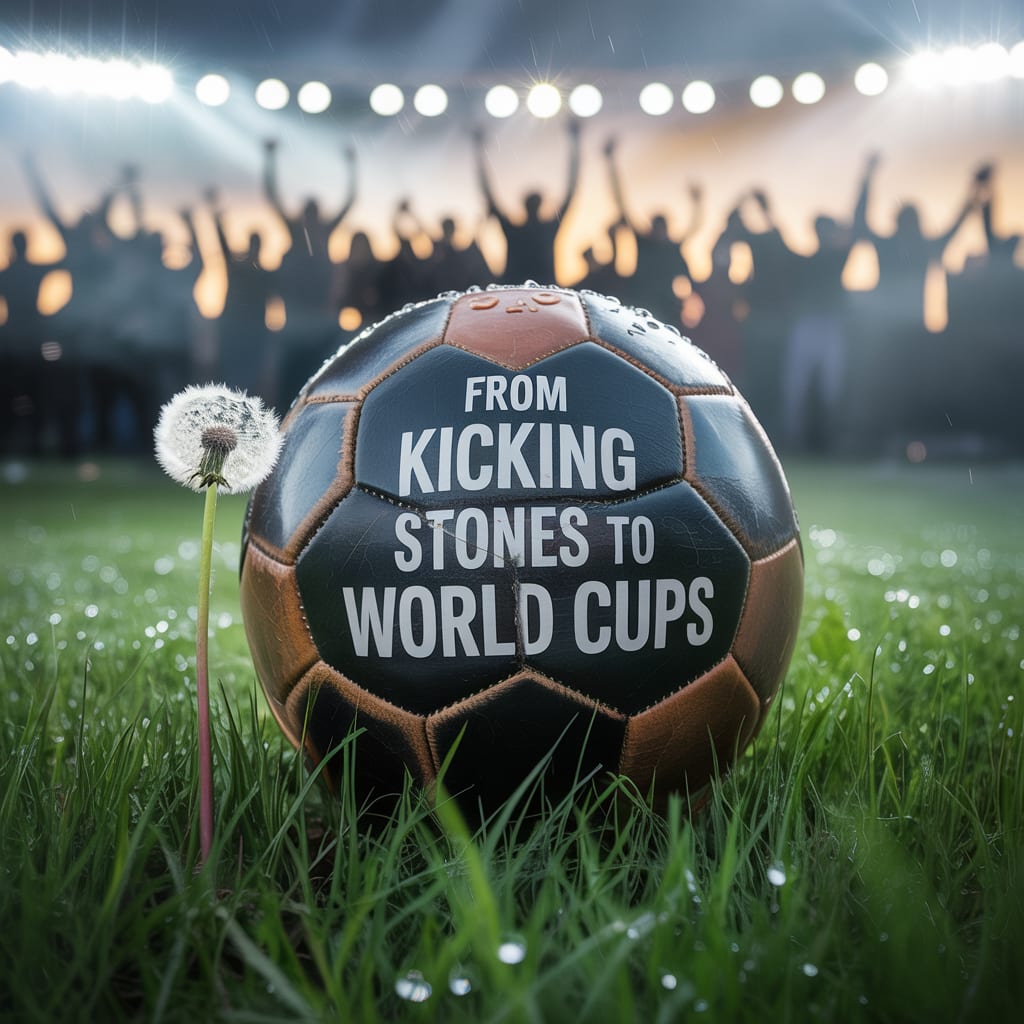
Long before floodlights beamed down on sold-out stadiums and billions tuned in for the World Cup final, football — or something like it — was already part of human history. The story of football is a tale of culture, passion, rivalry, and unity. It transcends time, language, and borders. But how did it all begin?
The earliest known version of football can be traced back over 2,000 years to ancient China, during the Han Dynasty. The game, known as cuju, involved kicking a leather ball filled with feathers through a small hole in a silk cloth stretched between two poles. It was both a military training exercise and a recreational activity. Though primitive, it had one thing in common with today’s football — the joy of controlling a ball with your feet.
Meanwhile, similar games appeared in different cultures. Ancient Greeks played episkyros, and the Romans had harpastum. Both involved balls and physical contact but were more similar to rugby than modern football. In medieval Europe, football-like games became common during festivals. Villages would compete by kicking an inflated pig’s bladder through town, with no standardized rules. These matches were chaotic, often violent, and sometimes banned by kings for causing public disorder.
It wasn't until the 19th century in England that football began to transform into a structured sport. English public schools like Eton and Harrow played different versions of the game, each with their own rules. Some allowed handling the ball, others didn’t. To create order, representatives from various clubs met in 1863 to form the Football Association (FA). This was a pivotal moment: the rules of association football, or "soccer," were written down, separating it from rugby.
The standardization of rules led to the first official football match under FA rules later that year. Soon, football clubs were popping up across England. The sport's popularity grew rapidly, especially among the working class. Factories and towns formed their own teams, creating a sense of community and identity. Football became more than just a game — it became a shared language for people across backgrounds.
As the British Empire expanded, so did football. Soldiers, sailors, and merchants introduced the game to every corner of the world. By the early 20th century, football was thriving in South America, Europe, and Africa. Countries began forming their own leagues and national teams. A truly global phenomenon was in the making.
In 1904, FIFA — the Fédération Internationale de Football Association — was formed in Paris to govern the sport internationally. Then in 1930, the first FIFA World Cup was held in Uruguay. Only 13 teams participated, but it marked the beginning of a new era. Uruguay won the inaugural tournament, sparking national pride and showing how powerful football could be on the world stage.
Over the decades, the World Cup grew into the biggest sporting event on Earth. Legendary players like Pelé, Diego Maradona, Johan Cruyff, Zinedine Zidane, and Lionel Messi elevated the game to an art form. They became heroes, their stories interwoven with history, politics, and national identity.
In 1991, the first FIFA Women’s World Cup took place, paving the way for a new generation of players and fans. Women’s football, once sidelined and even banned in some countries, began to thrive. Today, players like Marta, Megan Rapinoe, and Alexia Putellas are global icons, inspiring millions.
Football also became a force for change. It helped bridge racial divides, bring awareness to social issues, and even pause wars. In 1969, during the Nigerian Civil War, a temporary ceasefire was declared so people could attend an exhibition match featuring Pelé. Football is perhaps the only game capable of such unifying power.
The modern game, driven by television deals and sponsorships, has become a multi-billion-dollar industry. Top players are global celebrities, their every move followed by millions. Stadiums are architectural marvels, and matches are broadcast in dozens of languages. Technology, like VAR and goal-line systems, has transformed the game further.
Yet, at its core, football remains beautifully simple — a ball, a field, and the desire to score. It’s played in dusty villages, crowded city streets, beaches, and schoolyards. Whether it’s a child kicking a plastic bottle or a professional scoring in the Champions League final, the magic is the same.
As the game continues to evolve, so too does its role in the world. Football today is more than a sport — it's a global culture, a source of identity, and a mirror of our times. Its history is a living story, written every day by players and fans alike.
From kicking stones and pig bladders to lifting golden trophies in front of the world, football’s journey is one of transformation and triumph. And as long as there’s a ball to chase, the story of the beautiful game will continue to unfold.
About the Creator
Irshad Abbasi
Ali ibn Abi Talib (RA) said 📚
“Knowledge is better than wealth, because knowledge protects you, while you have to protect wealth.
Keep reading
More stories from Irshad Abbasi and writers in History and other communities.
A Workshop from the Age of Alexander Discovered in Peshawar
Archaeologists in northwestern Pakistan have uncovered what appears to be an ancient workshop dating back to the era of Alexander the Great, offering new insights into the region’s historical importance during one of the most transformative periods in ancient history. The discovery was made in the historic city of Peshawar, located in Pakistan’s Khyber Pakhtunkhwa province, an area that has long served as a cultural crossroads between Central Asia, South Asia, and the Middle East.
By Irshad Abbasi a day ago in History
India’s Biggest Bank Fraud: Vijay Mallya
An Indian man who was once called the “King of Good Times” in his era lived a life like a king. He would throw parties worth millions of rupees in a single night. While billionaires around the world owned private jets, he even had his own Boeing 727.
By Imran Ali Shahabout 17 hours ago in History
The Politics of Playing Dress-Up
Well, to start off I'd like to say a happy world book day to all who celebrate. I know I haven't really posted anything on my socials about it but I'm not a jubilant kind of person. I lay low most of the time. Let's start off with a popular anecdote from the vaults...
By Annie Kapur4 days ago in Geeks


Comments
There are no comments for this story
Be the first to respond and start the conversation.