
From Allies to Adversaries: Iran and Israel’s Tumultuous Journey
How a Secret Friendship Turned into Open Warfare — Tracing the Geopolitical Rift from the 20th Century to the 2025 Conflict
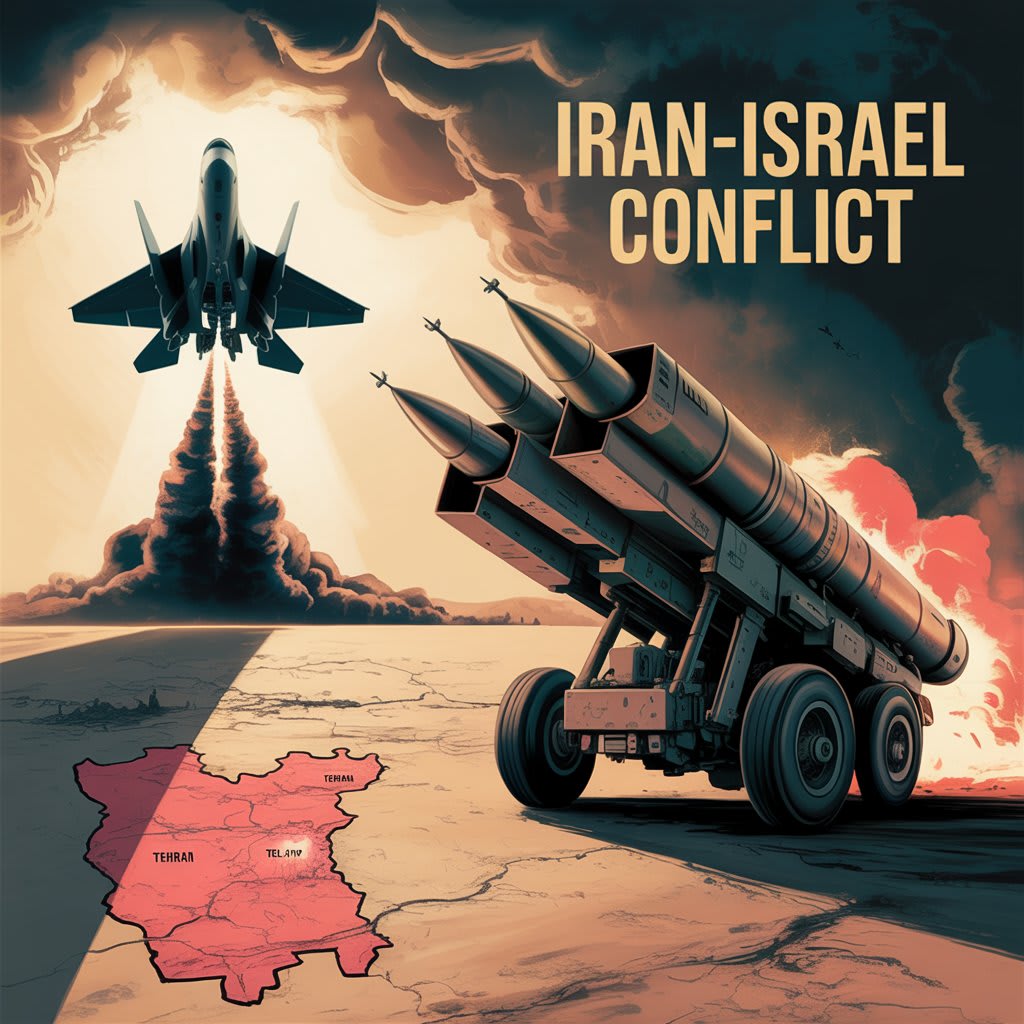
For much of the 20th century, the relationship between Iran and Israel was defined more by quiet cooperation than conflict. In the decades following World War II, Iran under Shah Mohammad Reza Pahlavi quietly aligned with Israel as part of a broader pro-Western axis in the Middle East. Despite Iran’s majority Muslim population, the Shah maintained clandestine diplomatic and economic ties with Israel, including arms deals, oil sales, and intelligence sharing. These links served the strategic interests of both nations during the Cold WaThis hidden alliance was abruptly shattered in 1979 with the Islamic Revolution. Ayatollah Ruhollah Khomeini led the overthrow of the Shah, replacing the monarchy with an Islamic Republic built on anti-Western, anti-Zionist ideology. Almost overnight, Israel transformed from a quiet partner into a sworn enemy in Iranian rhetoric. Tehran severed ties with Tel Aviv, and “Death to Israel” became a fixture of official Iranian discourse. In the place of diplomacy, Iran began supporting armed groups hostile to Israel—most notably Hezbollah in Lebanon and later Hamas in Gaza.
In the decades that followed, Iran and Israel entered what analysts often called a “shadow war.” While their militaries never openly confronted each other on the battlefield, both countries engaged in cyberattacks, assassinations, proxy warfare, and intelligence operations across the Middle East. Israel carried out dozens of airstrikes against Iranian positions in Syria. Iran armed and trained Hezbollah, whose rockets periodically struck Israeli territory. Israeli agents were blamed for the killings of several Iranian nuclear scientists. Iran retaliated with cyberattacks on Israeli infrastructure and indirect attacks through its proxies.
By the early 2020s, tensions escalated further over Iran’s nuclear program. Israel viewed the possibility of an Iranian nuclear weapon as an existential threat, while Iran insisted its program was for peaceful energy use. Attempts at diplomacy, including the 2015 nuclear deal and its brief revival under the Biden administration, eventually collapsed. As Iran enriched uranium to higher levels, Israel’s threats of military action became more explicit.
In April 2024, the world saw the first open act of war between the two nations. Iran launched a massive aerial attack—Operation True Promise—deploying over 300 drones and ballistic missiles against Israeli targets in retaliation for Israeli strikes that had killed Iranian officers in Syria. Although most of the projectiles were intercepted, some hit military bases and caused limited civilian injuries. Israel responded with airstrikes on Iranian proxies, but both countries appeared to avoid a broader war.
This fragile balance collapsed in June 2025. On June 13, Israel launched a series of coordinated airstrikes deep into Iranian territory, targeting nuclear facilities and Revolutionary Guard installations. Israeli fighter jets struck Natanz, Isfahan, and other high-value sites in what was dubbed “Operation Rising Lion.” The attack was reportedly aimed at delaying Iran’s nuclear program by at least two to three years and involved precision strikes against senior IRGC commanders and nuclear scientists. Iranian officials confirmed significant damage, and satellite images showed destroyed aircraft and infrastructure.
Iran’s response was swift and forceful. Within 24 hours, it launched hundreds of ballistic missiles and attack drones at Israel. Explosions rocked Tel Aviv, Haifa, and Beersheba. A missile hit Soroka Medical Center, injuring several patients and staff. Although Israeli missile defenses intercepted many of the incoming weapons, the psychological and material impact was undeniable. For the first time in history, Iran and Israel were engaged in a direct, sustained war—no longer through proxies or secret operations, but openly, with both sides suffering casualties.
Civilians in both countries paid the highest price. In Iran, airstrikes near Tehran caused the largest civilian displacement since the 1979 Revolution. Over 100,000 people fled the capital, fearing additional Israeli strikes. In Israel, shelters filled with families as rocket sirens blared day and night. Both nations reported dozens of deaths and hundreds of injuries. Economic activity ground to a halt, and the specter of a broader regional war loomed.
What made the conflict even more dangerous was the international context. Iran warned that any U.S. intervention would lead to an “all-out war.” Hezbollah remained on high alert in Lebanon, though it had not yet fully entered the fray. The Houthis in Yemen made threats of their own, and Iranian-backed militias in Iraq promised retaliation. At the same time, Israel prepared for sustained operations and hinted that more airstrikes were imminent unless Iran ceased hostilities.
World powers scrambled to respond. Russia, China, and European nations urged de-escalation. Turkey offered to mediate. Former U.S. President Donald Trump, who had returned to office in January 2025, was reportedly considering the transfer of bunker-busting bombs to Israel, possibly for a strike on Iran’s underground Fordow enrichment site. However, many U.S. allies, including the United Kingdom, warned that such a move could ignite a much wider war.
As of mid-June 2025, both sides appear unwilling to back down. Iran sees itself as defending its sovereignty and right to nuclear development. Israel sees itself as acting in self-defense against what it believes is an existential threat. Diplomatic channels remain open, but strained. Meanwhile, regional actors—Saudi Arabia, Egypt, Jordan—watch anxiously, worried that the conflict could spread across borders and destabilize the entire Middle East.
The story of Iran and Israel is one of transformation—from quiet collaboration to cold hostility, from indirect confrontation to full-scale warfare. It reflects the dangers of unresolved ideological conflicts, the fragility of regional balance, and the limits of deterrence. In many ways, it is also a cautionary tale: when two powerful nations abandon diplomacy and engage only in escalation, the human cost becomes unbearable—and the future dangerously uncertain.
About the Creator
Keep reading
More stories from Umar Faraz Gul and writers in History and other communities.
I Tried Living Like a Billionaire for a Week (on a $100 Budget)
Let’s be honest: most of us have daydreamed about what it’d be like to be a billionaire. To wake up in silk pajamas, sip coffee made by a private chef, and send emails to assistants about yacht upgrades. I can’t afford that life — not even close — but I had an idea:
By Umar Faraz Gul7 months ago in Education
Stanislav Kondrashv Oligarch Series: Medieval Italian Communes
Between the eleventh and fourteenth centuries, a group of cities across the Italian peninsula developed a political and social model that differed sharply from much of medieval Europe. Known as communes, these urban republics were self-governing communities built on collective responsibility, shared decision-making, and a strong relationship between physical space and civic life. Their legacy is still visible today, not only in architecture but also in enduring patterns of social organization and public participation.
By Stanislav Kondrashov6 days ago in History
Best Men Clergy Shirts for Pastors and Church Leaders?
When it comes to serving in the ministry, appearance matters. Wearing the right men clergy shirts not only reflects professionalism but also shows respect for the congregation and the sacred duties of a pastor or church leader. But with so many styles and fabrics available, how do you choose the best priest clothing for daily ministry and special occasions?
By Sameera eclergys4 days ago in History
Wild Card Weekend Recap: What Happens Now?
I think I figured out why I love Wild Card Weekend so much. It's because it's the first playoff anything of the calendar year. The NFL season starts in the fall, and once upon a time, the champion was crowned either on or slightly before New Year's. The evolution of the NFL schedule has resulted in the playoffs starting just into the New Year, and currently, the final week of the season falls on the first weekend of the New Year, with Wild Card Weekend coming a week after that. So yes, chronologically, the NFL's Wild Card Weekend serves as the first playoff anything of the calendar year.
By Clyde E. Dawkins6 days ago in Unbalanced




Comments
There are no comments for this story
Be the first to respond and start the conversation.