
"Flames of Liberty: The Story of the French Revolution"
“How a Kingdom Fell and a Nation Was Reborn”
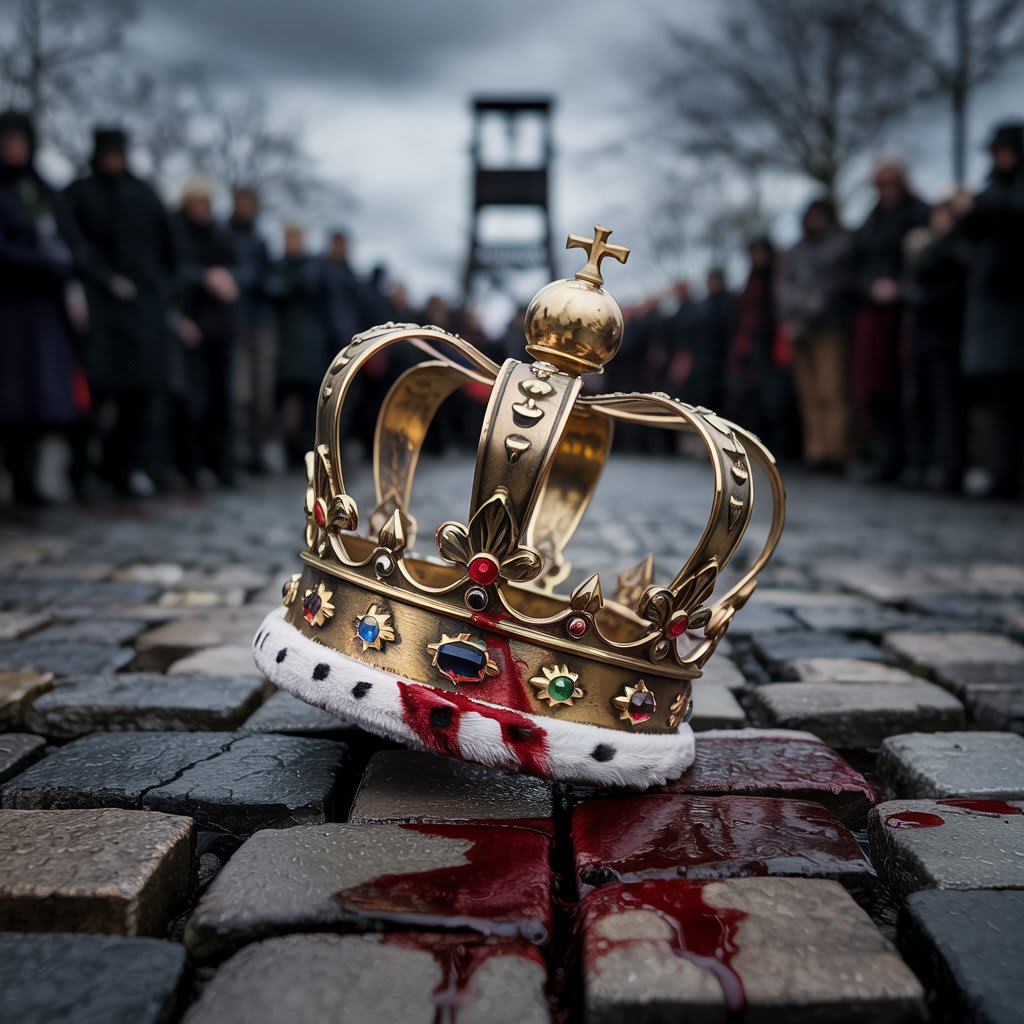
Paris, 1793.
The city no longer smelled of fresh bread and flowers from market stalls. It reeked of sweat, smoke, and fear. It was the smell of a nation reborn in fire.
For Luc Marchand, a former blacksmith’s apprentice turned revolutionary guard, every morning was the same. The dull thud of the guillotine. The cheers and jeers of the crowds. The ever-growing silence of those who dared to speak against the tide of the Revolution.
But this morning was different.
Today, a queen would die.
Luc stood at the foot of the scaffold, his rifle strapped across his back, his boots slick with morning dew. He had watched hundreds walk those wooden steps, but none as famous as Marie Antoinette.
The crowd pressed forward, eager for vengeance. They were peasants, workers, even children — some shouting with rage, others simply hungry for a spectacle.
Luc didn’t cheer. He didn’t hate the queen. In truth, he didn’t know what he felt anymore. He only knew that five years ago, his sister had died of starvation, while the nobility waltzed through Versailles in silk and powdered wigs.
Still, he couldn't help but pity her.
Marie Antoinette was thinner now, her hair shorn, her once-famous gowns replaced by a plain white dress. But she held her head high. She did not scream. She did not weep.
As she knelt before the blade, the crowd roared louder. The executioner raised his hand.
And then — silence.
The blade fell.
It was done.
Another head. Another name on the list. Another ghost added to the city’s growing collection.
Later that evening, Luc returned to his quarters — a cramped room above a tannery, its walls stained with smoke and damp. He poured himself a glass of stale wine and sat beside the window, staring out at the flickering lamplights below.
He remembered a time when he had believed in this revolution. When the storming of the Bastille had felt like a divine moment. When men like Danton, Marat, and Robespierre had inspired him with visions of liberty and justice.
But now, those visions were drowned in blood.
Luc kept a journal, hidden beneath a loose floorboard. He retrieved it and flipped to a fresh page.
“We said we wanted freedom.
We wanted bread.
We wanted our voices heard.
And so we tore down the walls.
But now we have built new prisons — with fear, not stone.
And we are no freer than before.”
A knock came at the door. Sharp. Urgent.
Luc tensed. At this hour, it could only mean one thing.
He opened it slowly.
A girl stood in the hall, cloaked and trembling.
"Claire?" he whispered.
His cousin rushed inside, shutting the door behind her. Her eyes were red from crying. She looked too thin, her hands shaking.
“They took Father,” she said. “He spoke against the Convention. Someone heard. They arrested him this morning.”
Luc felt a cold weight settle in his chest.
Claire’s father had been a moderate — a man who had once supported the Revolution, but had grown wary of its violence. Now, even silence was dangerous. Dissent was death.
Luc sat her down, poured her wine, and stared at the flickering candle between them.
“What are we doing?” he murmured. “What have we become?”
Claire didn’t answer. She didn’t need to.
The next morning, Luc walked past the Palais de Justice, where lists of the condemned were nailed to the walls like theater posters. He scanned the names. His uncle’s was there.
Beside it, three more he recognized. Friends. Neighbors.
He saw Robespierre speaking at the Convention, dressed in immaculate blue silk, quoting Rousseau and preaching purity. But Luc no longer heard words — only knives dressed in poetry.
It was then he made his choice.
That night, Luc returned home and tore a piece of parchment from his journal. He wrote in careful strokes, ink smudging slightly as his hand trembled.
“We dreamed of light.
But we built our Republic on shadows.”
He folded the note, slipped it into a small envelope, and tucked it beneath the door of a revolutionary printer — one who still dared to speak the truth.
The next day, the note appeared as an anonymous pamphlet in the streets. One of many. Quiet voices, rising again.
About the Creator
Hazrat Umar Farooq (RA
Hazrat Umar Farooq (may Allah be pleased with him) was born in Makkah Mukarramah. His kunya was Abu Hafs. He embraced Islam in the sixth year of Prophethood, at the age of 27. Even before accepting Islam, he was regarded with great respect because he was honorable, educated, brave, courageous, and wise in matters. He also had the honor of being the father-in-law of the Messenger of Allah (peace and blessings be upon him).
By Sudais Zakwan8 days ago in History


Comments (1)
This was breathtaking—equal parts brutal and poetic. You captured the tragedy and complexity of revolution so vividly through Luc’s eyes: a man torn between the ideals he once believed in and the violent reality they’ve become. The details—the “knives dressed in poetry,” the crowd’s silence before the blade, the weight of that final note—are unforgettable. This wasn’t just a retelling of history, it was a meditation on what happens when justice turns into vengeance. Absolutely powerful storytelling, with a quiet, defiant hope that lingers.