
Exploring the Rich History and Culture of Afghanistan
This paper delves into the rich history and culture of Afghanistan, highlighting key aspects such as its diverse ethnic groups, ancient traditions, and turbulent past. By examining the country's historical significance, religious influences, and artistic achievements, this study sheds light on the complexities of Afghan society. The relevance of understanding Afghanistan's cultural heritage in the context of current geopolitical challenges is emphasized. The impact of ongoing conflicts on the preservation of Afghan culture is also discussed. The structure of the paper includes sections on historical background, cultural traditions, and the contemporary challenges faced by Afghanistan.

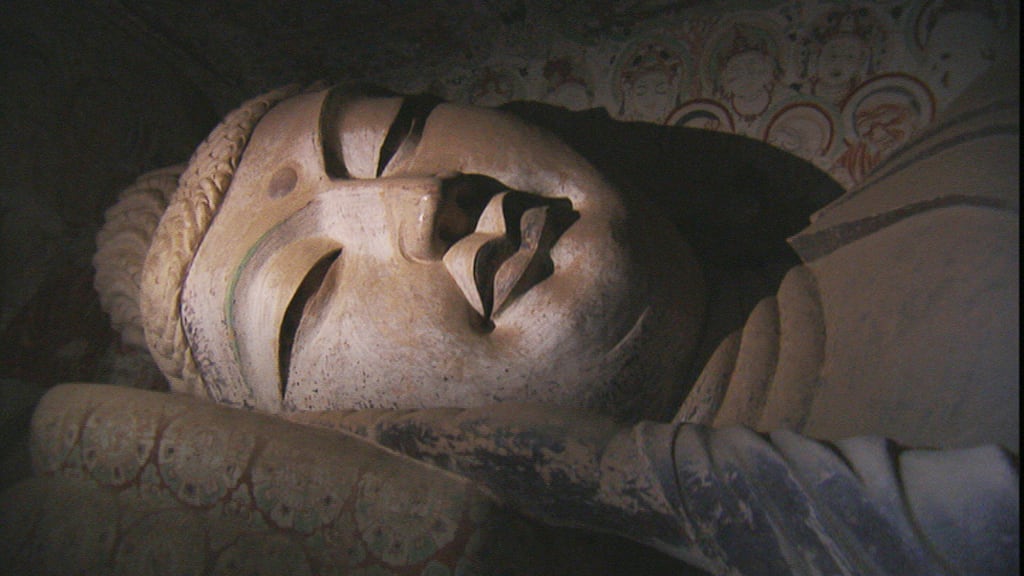
Afghanistan’s culture can be traced as far back as 4000 BC with stunning prehistoric monuments standing to witness to its rich tribal history, many of which are still evident today outside of Kabul. Male and female roles are strictly delineated and traditional religious customs are very much adhered to. While most of Afghanistan’s timeline has been dominated by war, the country is making every effort to turn itself around and progress into a brighter tomorrow.
History
War and power struggles pretty much define the history of Afghanistan. From the days of Persian- and Greek–led empires to flourishing Buddhist and Islamic civilizations, and the transfer of power from the Arabs to the Turks, to the Mongols and then back to the Indian and Persian empires, Afghanistan is constantly the center of a political tug of war between someone. Its history is reflected in its beautiful heritage sites, ranging from awe-inspiring Buddhist monuments to prehistoric caves, many of which remain hidden from combat. The Buddha statues of Bamiyan (Bamiyan province) were caught in the crossfire though and bore witness to Afghanistan’s most recent developments, now standing in ruins because of the Taliban’s blasphemous attack in the early 2000’s.
Kabul itself is a testament to Afghanistan’s struggles, being the center of violence from the early days of Islamic invasion to the British Indian Rule, and then to the days of communism and the Taliban reign. Bombings over the years left most ancient parts of the capital in ruins and is said to have destroyed about 40% of the homes and 1/3 of public buildings.
The Afghan National Museum, also known as Kabul Museum (Darulaman S of Kabul), once had the most comprehensive and important collections in Central Asia. However, the fall of the government, the civil war, and military attacks (particularly the 1994 rocket fire bombing) all contributed to the loss of over 70 percent of the museum’s holdings. Today, a modest, yet impressive display of cultural artifacts, precious Buddhist treasures, Islamic relics and art can still be seen, showing that the country is down, but never out.
Culture
Much of the Afghan culture is based on tribal and nomadic societies. Different regions of the country are ruled by their own traditions, creating a truly multicultural nation. Pashtun dominates the southern and eastern regions, where people follow Pashtunwali laws. The rest of the country is largely influenced by Turkic and Persian beliefs.
While many of the country’s historic relics have been damaged or destroyed by war, recent archeological digs have uncovered new hints into the country’s past in different regions. The Buddhas of Bamiyan are among the most iconic monuments in Afghanistan. These statues, along with many other Buddhist relics in galleries, museums, and prehistoric sites are proof that Buddhism was once the dominant religion. Historic cities like Kandahar, Herat, Mazar-i-Sharif, and others offer many hidden cultural gems, along with the Hari River valley’s Minaret of Jam.
Afghanistan is a highly conservative country. Showing of the soles of the feet is considered an insult, and women are expected to dress very conservatively and avoid any revealing garments. Long sleeves, trousers, and skirts are recommended attire. While visitors are not required to wear a head-to-toe burkha, shawls that cover the head and the chest should be part of your daily garb if you are a woman.
Homosexuality is illegal, and so is drinking alcohol. It is tradition to embrace or rub noses with people you meet, though handshaking is an accepted form of greeting too. Eye contact, especially between men and women, is to be avoided. Caution should be observed when using cameras, especially around military bases.
Afghanistan, often referred to as the "Heart of Asia," boasts a rich and diverse history that spans over 5,000 years. Its strategic location along the Silk Road made it a crossroads of civilizations, influencing its culture, traditions, and heritage. Here’s an exploration of Afghanistan’s fascinating history and vibrant culture.
### **Ancient History & Civilizations**
1. **Prehistoric & Aryan Settlements**
- Evidence of human habitation dates back to the Paleolithic era, with notable Neolithic sites like **Mundigak** and **Deh Morasi Ghundai**.
- The region was part of the **Bactria-Margiana Archaeological Complex (BMAC)** and later inhabited by Indo-Iranian tribes (Aryans).
2. **Achaemenid & Greco-Bactrian Rule (6th–2nd century BCE)**
- Afghanistan was part of the Persian **Achaemenid Empire** under Cyrus the Great.
- After Alexander the Great’s conquest (330 BCE), Hellenistic culture flourished, leading to the **Greco-Bactrian Kingdom** and cities like **Ai-Khanoum**.
3. **Kushan Empire & Buddhist Heritage (1st–4th century CE)**
- The Kushans made Afghanistan a center of **Buddhism**, leaving behind monumental stupas and monasteries, such as the **Bamiyan Buddhas** (destroyed in 2001).
- The **Silk Road** brought trade, art, and cultural exchange, blending Greek, Persian, and Indian influences.
4. **Sassanian & Hephthalite Rule (3rd–7th century CE)**
- The Sassanians and Hephthalites (White Huns) controlled the region before the arrival of Islam.
### **Islamic & Medieval Periods**
5. **Arab Conquest & Islamic Golden Age (7th–13th century)**
- Islam was introduced in the 7th century, leading to the rise of Persianate dynasties like the **Samanids** and **Ghaznavids**.
- **Ghazni** became a center of learning under **Mahmud of Ghazni**, patronizing scholars like **Al-Biruni** and **Ferdowsi** (author of the *Shahnameh*).
6. **Genghis Khan & Timurid Renaissance (13th–16th century)**
- The Mongol invasion (1220s) devastated cities like **Balkh** and **Herat**, but later, the **Timurids** (descendants of Timur) revived art and architecture.
- **Herat** flourished as a cultural hub under **Sultan Husayn Bayqara** and poet **Jami**.
### **Modern History & Empires**
7. **Mughal-Safavid Rivalry & Durrani Empire (16th–19th century)**
- Afghanistan became a battleground between the **Mughals** and **Safavids** until **Ahmad Shah Durrani** founded the **Durrani Empire** in 1747, marking the birth of modern Afghanistan.
8. **British-Afghan Wars & Independence (19th–20th century)**
- Afghanistan resisted British colonialism in three Anglo-Afghan wars, maintaining independence.
- **King Amanullah Khan** (1919) secured full sovereignty and introduced reforms.
9. **Soviet Invasion & Civil War (20th century)**
- The Soviet invasion (1979–1989) and subsequent civil war devastated the country.
- The Taliban emerged in the 1990s, imposing strict Islamic rule until the 2001 U.S. invasion.
### **Culture & Traditions**
1. **Languages & Literature**
- **Pashto** and **Dari (Persian)** are official languages, with rich poetic traditions (Rumi, Khushal Khan Khattak).
2. **Music & Dance**
- Traditional instruments like the **rubab** and **dhol** accompany folk dances (**Attan**).
3. **Cuisine**
- Staple dishes include **kabuli pulao**, **mantu** (dumplings), and **naan** bread.
4. **Handicrafts & Art**
- Famous for **Turkmen carpets**, **lapis lazuli jewelry**, and **Persian miniatures**.
5. **Religious & Ethnic Diversity**
- Sunni Islam dominates, with Shia (Hazara) and Sikh minorities.
- Major ethnic groups: **Pashtuns, Tajiks, Hazaras, Uzbeks**.
### **Conclusion**
Afghanistan’s history is a tapestry of empires, cultures, and resilience. Despite decades of conflict, its heritage—from the Buddhas of Bamiyan to the poetry of Rumi—remains a testament to its enduring legacy.
Would you like a deeper dive into any specific era or cultural aspect?
About the Creator
Mehedi Mondol
Words are my sanctuary. I write to capture the unsaid—the whispers of the soul, the chaos of the heart. If you love poetry that bleeds truth, stay awhile. Let’s feel together. #VocalPoetry
Keep reading
More stories from writers in History and other communities.
The Qin Empire: The Power That United the Chinese Nation
China Before Unification For centuries, China was divided into competing kingdoms, particularly during the Spring and Autumn Period and the Warring States Period. Powerful states such as Qin, Chu, Zhao, Wei, Han, Yan, and Qi fought relentlessly for territory and survival. Warfare was brutal, alliances were unstable, and millions suffered.
By Say the truth 6 days ago in History
Chandragupta Maurya vs the Greek Empire: The Clash That Reshaped Ancient India
Background: Alexander’s Invasion and Its Aftermath The roots of the conflict trace back to Alexander the Great’s invasion of India in 326 BCE. Although Alexander defeated King Porus at the Battle of Hydaspes, his army refused to advance further east. Upon his return westward and his death in 323 BCE, Alexander’s vast empire fractured among his generals, known as the Diadochi.
By Say the truth 7 days ago in History

Comments (1)
You've really dug into Afghanistan's history. It's crazy how much war has messed things up, like the destruction of the Buddha statues and the damage to Kabul. And that loss at the museum is a huge blow. Do you think there's any way to fully restore these cultural treasures? It'd be amazing to see them back to their former glory. Also, how do you think the country can move forward while still respecting its traditions?