
Etruscan Liver of Piacenza: Deciphering Ancient Divination and Religious Practices
History

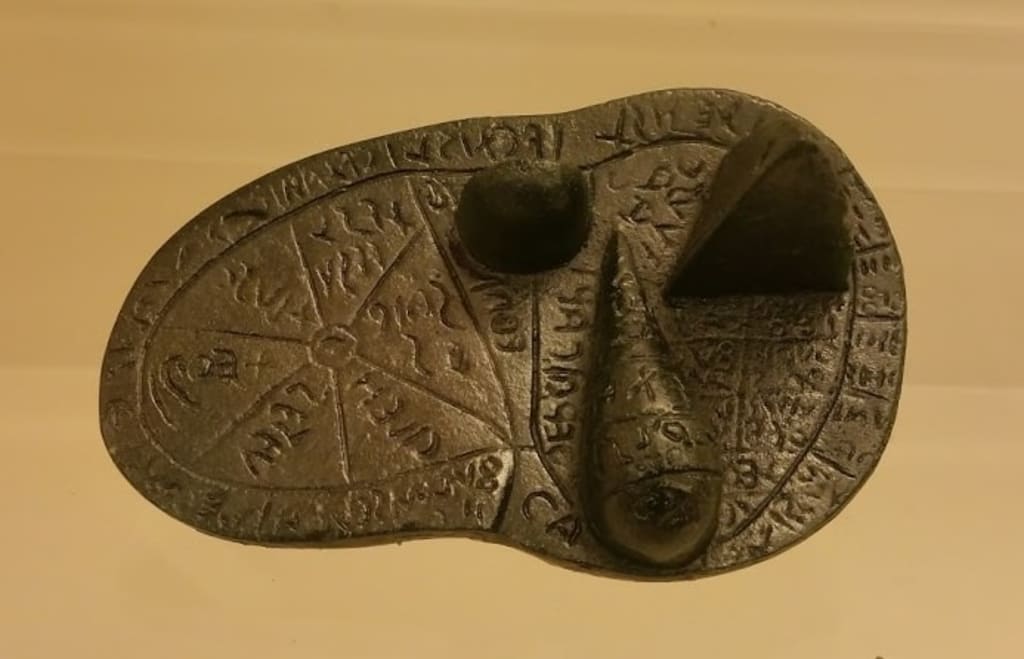
When you think of ancient civilizations and their many peculiar customs, the Etruscans probably don’t come to mind immediately. But let me introduce you to something that might pique your interest: The Etruscan Liver of Piacenza. No, it’s not a strange recipe from a prehistoric cookbook—it’s actually a bronze model of a sheep’s liver. And trust me, it’s as fascinating as it sounds. So, let’s dive into the mysterious world of the Etruscans and their peculiar obsession with sheep innards!
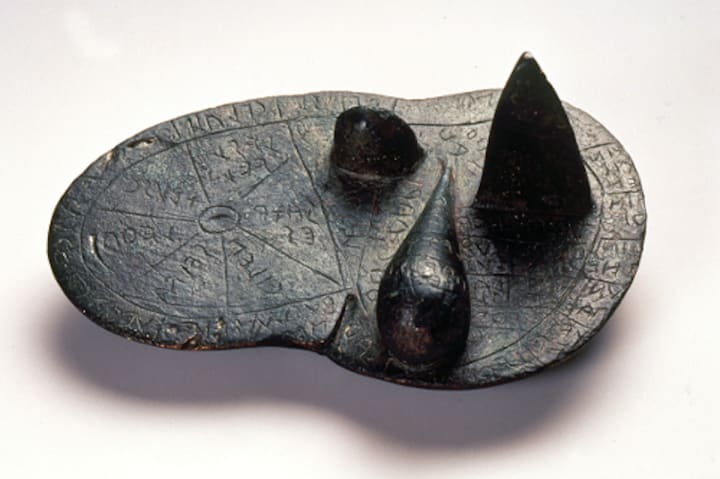
What is the Etruscan Liver of Piacenza?
The Etruscan Liver of Piacenza is a curious artifact discovered in 1877 by a farmer plowing his field in northern Italy, near the town of Piacenza. It’s a life-sized bronze model of a sheep’s liver, intricately carved with tiny inscriptions and divided into sections. You might be wondering, "Why a liver, of all things?" Well, the Etruscans weren’t just picking random body parts. For them, this liver was a tool of divine communication—a celestial cheat sheet, if you will.
This liver model was used in a practice known as haruspicy, a method of divination where Etruscan priests—known as haruspices—would examine the livers of sacrificed sheep to interpret the will of the gods. Apparently, the liver was the ancient equivalent of an inbox, filled with divine messages, and the priests were the interpreters deciphering those messages. Imagine your email app being shaped like a sheep's liver... I bet you’d never miss another notification.
The Etruscan Obsession with Livers
In modern times, we turn to horoscopes or tarot cards when we want a peek into the future. The Etruscans? They turned to sheep livers. The liver, in their eyes, wasn’t just any organ—it was believed to be the seat of life, where the gods sent their messages. The idea was simple: sacrifice a sheep, examine its liver, and find out what Jupiter and his celestial crew had in store.
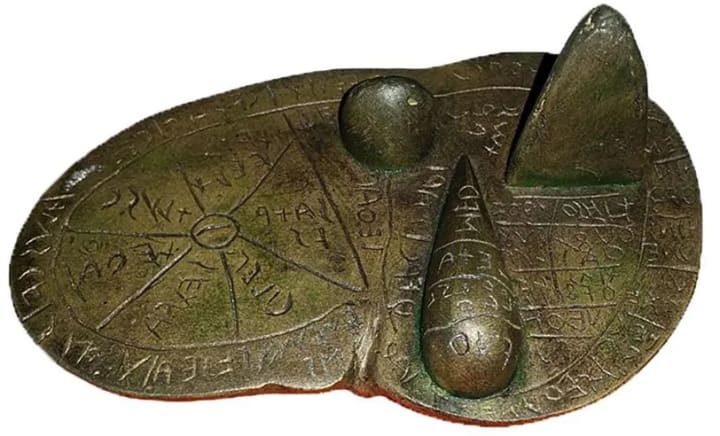
But here’s the kicker: the Etruscans took this liver-obsession to a whole new level by creating a bronze liver for training purposes! That’s right, they made a dummy liver to teach future haruspices how to read the signs from the gods without having to sacrifice a new sheep every time. It’s like having a flight simulator for an ancient priest, but instead of navigating a plane, they’re navigating the complexities of a sheep’s liver. Now, that’s what I call hands-on learning.
Decoding the Etruscan Liver of Piacenza
The Liver of Piacenza is divided into 16 different sections, each representing a different god or deity in the Etruscan pantheon. Just like a modern-day map, these sections gave the priests a guide to which god was ruling over a particular part of the liver.
- The Outer Rim: This outer ring on the liver is thought to correspond to the heavens. Each segment of the ring is linked to a specific god or group of gods. Think of it as the ancient equivalent of an astrological chart.
- The Inner Sections: The liver also has deeper segments, which were interpreted as different divine influences on the matter at hand. Need an answer about the next harvest? Or maybe you're wondering if your neighbor is plotting something shady? The liver had all the answers—at least, according to the Etruscans.
Haruspicy: The Etruscan Wi-Fi to the Gods
Now, let’s talk about haruspicy itself—the ancient art of liver reading. In a time when there were no smartphones, Google, or even Wikipedia, the Etruscans relied on the stars, the wind, and, of course, sheep livers to get a glimpse of what the future held.
The process went something like this:
- Step One: Sacrifice a sheep. (Sorry, sheep-lovers.)
- Step Two: Inspect its liver. Carefully. (Gross, I know.)
- Step Three: Compare what you see to the bronze model (like our friend, the Etruscan Liver of Piacenza).
- Step Four: Announce what the gods have in store based on your findings.
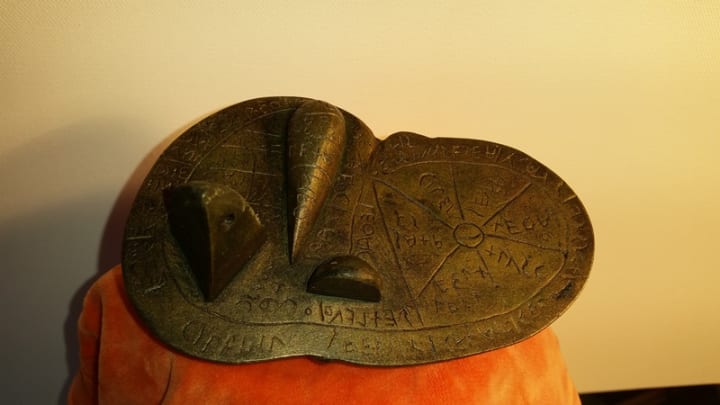
Essentially, the priests had a liver manual (the bronze liver) and a live liver (the real deal) to make their divine interpretations. What’s amazing is that this practice wasn’t just some backwoods, fringe activity—haruspices were highly respected members of society, often consulted by Etruscan leaders on matters of politics, warfare, and agriculture.
Just imagine: "Hey, priest, should we invade that neighboring city? Quick, grab the liver!"
The Etruscan Legacy and Roman Adoption
The Etruscans may have been liver-reading champions, but they didn’t keep all the fun to themselves. The Romans, ever the cultural adopters, took a liking to this practice as well. Even when the Etruscans themselves faded from prominence, their divination methods lived on in Roman society. In fact, haruspicy became an integral part of Roman statecraft, with haruspices being consulted by emperors and generals alike.
In ancient Rome, no major decision was made without first checking in with the gods via—you guessed it—some sheep’s liver action. Whether it was a decision about a military campaign or a public festival, you’d better believe a haruspex was on hand to give his liver-based blessing (or warning). It’s like checking Yelp reviews before trying a new restaurant, except the Etruscans were checking with the gods before trying to conquer Gaul.
The Etruscan Liver Today: A Quirky Relic of the Past
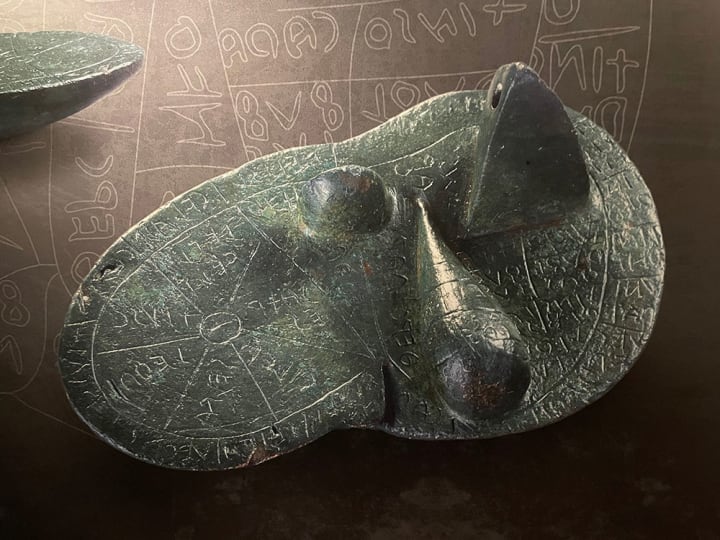
While the art of liver divination may seem a bit, well, bizarre to us today, the Etruscan Liver of Piacenza remains an important window into the culture and religion of this ancient people. It’s a reminder that, for all our modern gadgets and tech, humans have always been curious about the future and eager to interpret the mysterious forces that shape our lives—even if it meant staring at the insides of a sheep.
Today, the Etruscan Liver of Piacenza resides in the Municipal Museum of Piacenza, where visitors can admire its intricate design and ponder the rich cultural heritage it represents. While we may not rely on sheep livers to make decisions anymore (thankfully), the Etruscans’ passion for deciphering the will of the gods through such a unique method is both amusing and awe-inspiring.
Conclusion: Lessons from the Etruscan Liver
So, what can we learn from the Etruscan Liver of Piacenza? First, the Etruscans were masters of divination, using every tool at their disposal—bronze models, sheep livers, and a good dose of creativity—to understand the universe around them. Second, humans have always been fascinated by the unknown and have developed all sorts of quirky methods to try to make sense of it. And finally, we should all be thankful that our modern-day decision-making process no longer involves animal organs (unless you count making a tough dinner choice).
In the end, the Etruscan Liver of Piacenza stands as a testament to human ingenuity, spirituality, and a little bit of oddball charm. So the next time you’re about to make a big decision, remember—things could be weirder. You could be consulting a sheep liver!
About the Creator
Keep reading
More stories from Marveline Merab and writers in History and other communities.
El Caracol: The Mayan Marvel of Astronomy and Architecture
El Caracol, an ancient Mayan observatory located in Chichen Itza, stands as a testament to the advanced astronomical and architectural skills of the Mayan civilization. Known for its unique circular design, El Caracol, meaning "the snail" in Spanish, is an intriguing structure that has captured the imagination of archaeologists and tourists alike. This remarkable edifice offers profound insights into the Mayans' sophisticated understanding of astronomy and their ability to integrate this knowledge into their architectural endeavors.
By Marveline Merab2 years ago in History


Comments
There are no comments for this story
Be the first to respond and start the conversation.