
Eternal Echoes
Titanic Story that send shivers down your spine
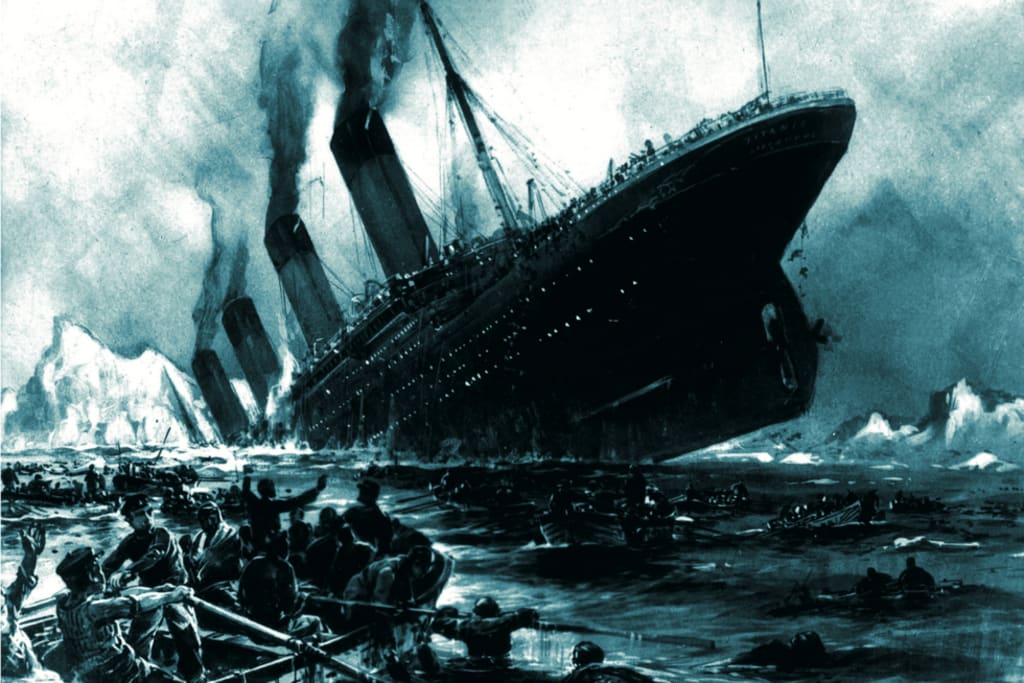
The Titanic set sail from England on April 10, 1912, but this wasn't its launch. The ship was the largest ever built at the time and measured 882 feet long--almost the size of three soccer fields. It was also 175 feet tall, the size of a 17-story building. 3,000 workers nearly three years to build it. In just four days into its first voyage, the ship collided with an iceberg and it sank beneath the waves of the Atlantic Ocean.
It took the liner only two hours and 40 minutes to sink, leaving more than 2 200 passengers and crew members on board. Out of all of them, only 706 survived. The ship would remain lost for another 73 years if it wasn't for a man whose whole life had been devoted to exploring the sea.
Filled with adventure, mysterious creatures, and a powerful underwater vehicle known as the Nautilus, the film had everything to ignite the imagination of a young person like Robert Ballard. The idea of exploring any place in the world through the depths of the ocean captivated him, leading him to set his sights away from life on dry land. At the age of 23, he was assigned to the Deep Submergence Group, where he played a crucial role in developing techniques for ocean floor exploration. Among his many achievements, his most significant contribution was the creation of the Alvin deep-sea submersible.
Alvin, the small and highly maneuverable submarine, was designed to accommodate three crew members while featuring an external mechanical arm for gathering underwater samples. It quickly proved its utility, aiding in tasks like tracking down a crashed aircraft at sea. However, the vessel faced setbacks, including an encounter with a swordfish that forced an abrupt resurfacing, making the swordfish an unexpected dinner guest.
In another unfortunate incident in October 1968, as the submarine was being lowered into the water, the cables holding it snapped, leading to a rapid descent into the ocean with three crew members on board. Due to its open design, Alvin filled with water and began to sink. Thankfully, the crew managed to escape safely, but unfortunately, Alvin was lost.
Multiple attempts to recover The Vessel were hindered by bad weather, but finally, in the following year, it was successfully brought back to the surface. Over time, Alvin underwent improvements, with its hull reinforced by titanium to achieve a higher depth rating, enhancing its suitability for ocean exploration.
This specialized submarine proved invaluable during many of Ballard's 100+ expeditions. He was among the pioneers in exploring the underwater mountain chain known as the Mid-Atlantic Ridge in the Atlantic Ocean. Additionally, in the late 1970s, while exploring the Galapagos Rift, he made a remarkable discovery of thermal vents and played a vital role in documenting the process of chemosynthesis – a complex chemical synthesis of food energy by bacteria.
However, his most significant discovery was yet to unfold. Despite claiming not to be a Titanic fanatic, Robert Ballard became obsessed with locating the ship after witnessing other explorers' unsuccessful attempts. Titanic, to him, represented the "Mount Everest" of its time, with numerous failed attempts by others that puzzled him.
As early as 1973, Ballard began contemplating finding the ship. In 1977, he made his first attempt using the deep-sea salvage vessel C probe, which had cameras and sonar capabilities. Unfortunately, the drilling pipe broke, and he had to abandon the effort, realizing it wasn't the right time.
In the early 1980s, a Texas oilman named Jack Grimm made three separate attempts to find the wreck. On one occasion, he was directly above the Titanic, but his equipment failed to detect it, encountering what can only be described as extreme bad luck.
Ballard patiently awaited the right moment, aware that he needed a well-thought-out plan and assistance to explore the depths of the Atlantic. While Alvin, with its titanium hull, could withstand ocean pressure, he required an unpiloted remote-controlled submarine for exploring without his physical presence.
Seeking funding, he approached authorities, hoping they would support his project. Although they showed no interest in the Titanic, they offered help under one condition – Ballard had to focus on locating two submarines, the thresher, and the Scorpion, which had sunk in the Atlantic in the 1960s. The authorities aimed to study the cause of their sinking and determine if they could be recovered or left on the ocean floor.
Without alternative funding options, Ballard accepted the offer and got to work. He created two new devices – Argo, an unpiloted deep-toed undersea video camera sled capable of capturing photos and videos at depths of up to twenty thousand feet, and Jason Jr, a small remotely-controlled robotic vehicle for closer inspection and photography of underwater objects. Argo would be tethered to a boat, moving along just above the ocean floor while transmitting images to the surface.
Ballard was well-prepared to embark on the search for the submarines and fulfilled his obligations with 12 days to spare. With ample time left, he focused on exploring the ocean floor near Newfoundland, Canada, using Argo to collect images. After a few days, they discovered riveted hull plates and eventually revealed a ship's large bow on September 1st, 1985. They had finally found the Titanic, a moment of mixed emotions for Ballard as he was thrilled to be the first to locate it but also overwhelmed by grief for those who had perished.
Over the following days, they explored the wreck, finding the Crow's Nest and evidence of how the ship had split before sinking. Furniture, dinnerware, and poignant reminders like scattered leather shoes of the victims were scattered about the ocean floor. Ballard became an instant celebrity worldwide, but he didn't stop there. In 2019, he attempted to solve the mystery of Amelia Earhart's disappearance, but the expedition yielded no results.
Despite his numerous shipwreck discoveries, Ballard recognizes that there are still millions more hidden beneath the ocean's depths. Now in his late 70s, he hopes to inspire young people to continue exploring the ocean and its mysteries through the Jason learning project, which encourages students to pursue STEM fields. He has his research vessel, the EV Nautilus, named after the submarine in Jules Verne's novel—a fitting tribute to the story that inspired his career.
Regarding the Titanic, the stern is completely ruined, while the bow retains some preserved interiors. Rusticles, formed by iron-eating bacteria, have been slowly consuming the ship, and it's estimated that the wreck may be gone by 2030. Although preserving the wreck might seem tempting, it's too fragile to be salvaged after over a century underwater.
As for whether any of the survivors heard the Titanic hitting the ocean floor, it's unlikely due to the poor sound transmission from water to air, and human bodies aren't designed to hear well in water.
The Titanic sank to the ocean floor at a distance of 12,500 feet. Despite fears of vibrations and sounds upon impact, they likely dispersed over a large area due to underwater landslides and earthquakes, making them difficult to detect. Survivors heard terrifying noises as the ship broke apart, but nothing was mentioned after it disappeared below the surface. The chaos during the lifeboat evacuation highlighted the lack of proper preparation, as the scheduled drill had been canceled.
Interestingly, the novel "The Wreck of the Titan," published in 1898, eerily predicted the Titanic's fate 14 years before its construction. Both the fictional ship and the Titanic shared many similarities and sank in April.
Dorothy Gibson, an actress and Titanic survivor, quickly filmed "Saved from the Titanic" after the disaster, wearing the same clothes she had during the sinking. Unfortunately, the film was destroyed in a fire, existing now only in memories.
The nearby SS Californian's crew saw mysterious lights in the sky but dismissed them as fireworks, failing to realize they were distress flares from the Titanic.
While most of the food onboard the Titanic spoiled, some cheeses might still be preserved due to the fermentation process.
Among the things recovered from the wreck were a handwritten letter, gloves, sheet music, a violin, the ship's bell, and a pocket watch showing the time when the ship sank.
David Blair's last-minute change prevented him from handing over the binoculars' keys, potentially affecting the crew's ability to spot the iceberg in time.
The iceberg that struck the Titanic likely originated from snowfall in Southwest Greenland. Scientists used computer models to calculate its possible path.
Violet Constance Jessup, known as "Miss Unsinkable," was a stewardess onboard the Titanic who quickly responded to the emergency when the ship struck the iceberg.
Violet proved to be an extraordinary survivor as she not only helped passengers into lifeboats on the Titanic but also faced another sinking four years later on the Britannic, the Titanic's sister ship. Both times, she assisted others in escaping the vessel before it disappeared beneath the waves.
Before her experiences on the Titanic and the Britannic, Violet had encountered multiple accidents at sea. While working on the RMS Asturias, she was involved in a minor collision during its maiden voyage in 1907. Later, in 1917, the Asturias, then serving as a hospital ship, struck a foreign object and had to be abandoned. She also experienced a collision between the RMS Olympic, another ship she worked on, and the Hawk, which caused significant damage to the Olympic.
Moving on to her time on the Titanic, Violet was employed as a stoker, part of the working class responsible for keeping the furnaces lit. Despite the ship's size and reputation as unsinkable, disaster struck when it collided with an iceberg on April 14, 1912. Violet's survival was a testament to her courage and determination amidst the chaos.
Following the Titanic, Violet worked on the HMS Alcantara, which also sank in 1916. Once again, she emerged as one of the few survivors. Eventually, she found herself on the Britannic, a ship designed with new safety features. However, on November 21, 1916, it too suffered an explosion in the Aegean Sea. Although the Britannic was equipped with watertight bulkheads, open portholes caused flooding, rendering these safety measures ineffective.
Throughout her remarkable life, Violet proved that luck could be both fortunate and unfortunate, surviving multiple disasters at sea and helping others escape perilous situations.
The ship sank at an astonishing speed, much faster than the Titanic. Fortunately, 35 lifeboats were successfully launched, rescuing most of the 1066 passengers and crew. Among the survivors, Arthur John Priest, with his seemingly unbreakable luck, emerged unharmed once again. Despite his numerous experiences with shipwrecks, Priest chose to continue his life at sea and accepted a position as a stoker on the Donegal, a smaller passenger ferry converted into a hospital boat.
In April 1917, while fleeing an unsafe situation, the Donegal was struck by a foreign object. Despite suffering a head injury, Priest remarkably survived once more. Having encountered two collisions and four sinkings throughout his career, Priest finally decided to retire. It's been said that he gave up the seafaring life because no one wanted to sail with him, which is entirely understandable.
After his adventurous life at sea, Arthur John Priest settled down in Southampton, England, with his wife Annie and their three sons. His indomitable spirit and the numerous times he escaped peril earned him the nickname "The Unsinkable Stoker," and his legacy as a survivor would always be remembered.
About the Creator
Keep reading
More stories from writers in History and other communities.
A Story of the World
The history of the world is the longest story ever told—a vast journey that began long before written words, long before cities, and even before humans themselves. It is a story shaped by nature, driven by curiosity, and transformed by ideas, power, faith, and struggle. The Dawn of Life and Early Humanity Billions of years ago, the Earth was a violent and restless place. Volcanoes erupted, oceans formed, and the first simple life appeared in the seas. Over immense stretches of time, life evolved from single-celled organisms into complex plants and animals. Eventually, a branch of primates learned to walk upright, use tools, and think beyond survival. These were the early humans. For tens of thousands of years, humans lived as hunters and gatherers. They followed animals, gathered plants, and learned to cooperate in small groups. Fire changed everything—it provided warmth, protection, and a way to cook food. Language allowed ideas to pass from one generation to the next. Slowly, humans spread across continents, adapting to deserts, forests, mountains, and ice. The Agricultural Revolution and the First Civilizations Around 10,000 years ago, a turning point arrived: agriculture. Humans learned to grow crops and domesticate animals. This allowed them to settle in one place, build villages, and increase their population. Farming began independently in regions such as Mesopotamia, the Indus Valley, China, Egypt, and Mesoamerica. With settled life came civilization. Cities rose near rivers that provided water and fertile soil. Governments formed to organize labor and protect land. Writing was invented to record trade, laws, and stories. The first legal codes appeared, such as the Code of Hammurabi, which tried to define justice. Religion became organized, explaining the mysteries of life and death and giving meaning to human existence. Empires, Power, and Belief As civilizations grew, so did conflict. Powerful kingdoms expanded into empires through conquest and control. The Egyptian, Persian, Greek, Roman, Mauryan, and Han empires shaped large parts of the ancient world. Roads, armies, taxes, and laws connected millions of people under a single rule. Ideas traveled along with armies and traders. Greek thinkers explored philosophy, science, and democracy. In India and China, deep philosophies like Hinduism, Buddhism, Confucianism, and Taoism offered guidance on morality and harmony. In the Middle East, monotheistic faiths emerged, teaching belief in one God and emphasizing justice and compassion. The Roman Empire became a bridge between ancient and modern worlds. It spread law, engineering, and language across Europe and the Mediterranean. Yet no empire lasts forever. Over time, internal weakness, economic strain, and outside pressures caused great empires to fall. The Middle Ages and the Flow of Knowledge After the fall of Rome in the West, Europe entered a period often called the Middle Ages. Power was divided among kings, nobles, and the Church. Life was difficult for many, but this era was not without progress. Universities formed, architecture flourished, and faith shaped daily life. Meanwhile, the Islamic world experienced a golden age. Scholars preserved and expanded knowledge in mathematics, medicine, astronomy, and philosophy. Cities like Baghdad and Cordoba became centers of learning, where ideas from Greece, India, and Persia were studied and improved. Trade routes connected Asia, Africa, and Europe, allowing goods and cultures to mix. In Asia, powerful dynasties ruled China, advancing technology such as paper, printing, gunpowder, and the compass. These inventions would later transform the world. The Renaissance and the Age of Exploration Around the 14th century, a rebirth of learning began in Europe: the Renaissance. Artists, scientists, and thinkers looked back to classical knowledge while pushing forward with new ideas. Figures like Leonardo da Vinci and Galileo challenged old beliefs and celebrated human potential. At the same time, explorers set sail across unknown oceans. The Age of Exploration connected the world as never before. Europeans reached the Americas, Africa, and Asia, creating global trade networks. This brought wealth and knowledge—but also suffering. Indigenous civilizations were destroyed, millions were enslaved, and colonial empires rose through exploitation. Revolutions and the Modern World The 18th and 19th centuries were ages of revolution. Political revolutions in America and France challenged absolute monarchy and promoted ideas of liberty, equality, and rights. The Industrial Revolution transformed economies, as machines replaced manual labor and cities grew rapidly. Life improved for some, but workers often faced harsh conditions. New ideologies emerged—capitalism, socialism, nationalism—each offering different visions of society. Nations formed and competed, leading to global conflicts. The 20th century witnessed two devastating world wars that reshaped borders and shattered illusions of progress. Yet from the ruins came international cooperation, technological leaps, and movements for independence and civil rights. The World Today and Beyond In recent decades, technology has accelerated history. Computers, the internet, and artificial intelligence have changed how humans communicate, learn, and work. Globalization has connected economies and cultures, while also creating new challenges. Climate change, inequality, and conflict remind humanity that progress is fragile. The history of the world is not just a record of kings and wars—it is the story of ordinary people: farmers, thinkers, builders, dreamers. It is a story of mistakes and lessons, destruction and hope. Each generation inherits this long journey and adds its own chapter. The future remains unwritten. Like those who came before, humanity stands at a crossroads—guided by the past, tested in the present, and responsible for what comes next.
By The best writer about 14 hours ago in History
Martin Luther King Jr.: The Voice of Peace and Justice
Martin Luther King Jr. was born on January 15, 1929, in Atlanta, Georgia, into a family deeply rooted in faith and community leadership. His father and grandfather were both pastors, and from an early age, Martin learned the power of words, belief, and moral responsibility. Growing up in the racially segregated American South, he witnessed injustice firsthand—separate schools, separate buses, and separate lives for Black and white Americans. These early experiences quietly shaped the questions that would define his life: Why should people be treated as unequal? And how could such injustice be peacefully undone?
By The best writer 6 days ago in History
The Devil's Cut
“Comrade, finally you’re awake.” The voice was smooth, sensual. A flickering incandescent bar was all that lit the white, sterile room. All Vladimir remembered was everything going black. He tried to move his arms and found them strapped to the gurney.
By Matthew J. Fromm6 days ago in Fiction



Comments
There are no comments for this story
Be the first to respond and start the conversation.