
Egypt: The Timeless Tale of a Nation That Shaped Civilization
From Pharaohs to the Present: Tracing the Epic Journey of a Civilization That Defined History
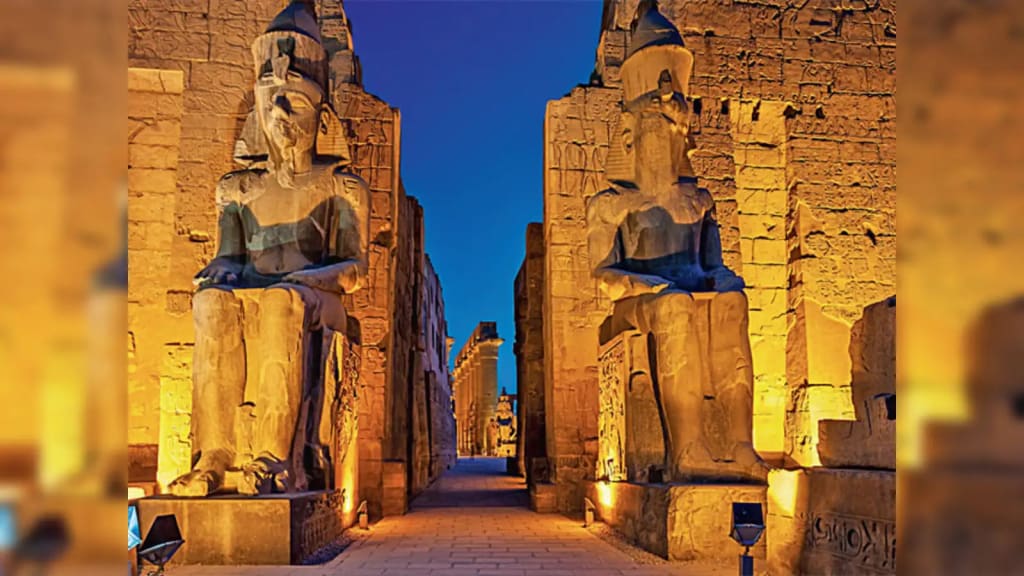
When we talk about the world's most ancient and influential civilizations, Egypt inevitably tops the list. With a history that stretches back more than 5,000 years, Egypt is more than just pyramids and pharaohs it’s a story of innovation, resilience, transformation, and identity. From the banks of the Nile to modern-day Cairo, Egypt’s journey is one of the most captivating in human history.
The Birthplace of Civilization
The roots of Egyptian civilization began around 3100 BCE when Upper and Lower Egypt were unified under the first pharaoh, Narmer (also known as Menes). This marked the beginning of the Early Dynastic Period, a time when hieroglyphics developed, and the foundation for Egypt’s centralized government and religion was laid.
The heartbeat of ancient Egypt was the River Nile. It wasn’t just a source of water; it was the very reason civilization could thrive in the desert. The annual flooding of the Nile brought fertile soil, allowing agriculture to flourish. In return, the people built a sophisticated society based on this agricultural wealth.
Age of the Pyramids
During the Old Kingdom (2686–2181 BCE), Egypt witnessed the construction of its most iconic structures—the Pyramids of Giza. The Great Pyramid of Khufu remains one of the Seven Wonders of the Ancient World. These monumental tombs were more than burial sites; they reflected the power and divine status of the pharaohs.
Religion played a central role. Egyptians believed in an afterlife, and they practiced elaborate burial rituals to ensure the soul’s safe journey. Gods like Ra, Osiris, and Isis dominated daily life, and temples served as both religious and administrative centres.
Times of Change and Expansion
Egypt's history is not just one of glory it also includes periods of instability and rebirth. The Middle Kingdom (2055–1650 BCE) was a time of reconsolidation after the chaos of the First Intermediate Period. Then came the New Kingdom (1550–1070 BCE), often called the Golden Age. This era produced legendary pharaohs like Hatshepsut, one of the few female rulers, Akhenaten, who attempted monotheism, and Tutankhamun, whose tomb remains one of the greatest archaeological discoveries.
It was also during this time that Egypt became an imperial power, extending its reach into Nubia and the Levant.
Foreign Rule and Influence
Despite its strength, Egypt eventually faced foreign invasions. Over centuries, it came under the control of the Libyans, Nubians, Assyrians, Persians, and later the Greeks under Alexander the Great. With Alexander’s death, Egypt fell into the hands of the Ptolemaic dynasty, a Greek royal family that ruled Egypt for nearly 300 years.
The last ruler of this line was the iconic Cleopatra VII, whose political and romantic alliances with Julius Caesar and Mark Antony have become legend. Her defeat by Rome in 30 BCE marked the end of pharaonic Egypt and the beginning of Roman rule.
The Islamic Era and Beyond
Following the fall of the Roman Empire, Egypt became part of the Byzantine Empire, before being conquered by Arab Muslims in the 7th century CE. This ushered in a new chapter of Egypt’s history. Islam became the dominant religion, Arabic the primary language, and Cairo the city founded in 969 CE soon rose to prominence as a centre of learning and culture.
Over the next centuries, Egypt was ruled by various Islamic dynasties, including the Fatimids, Ayyubids (led by Saladin), and Mamluks, before falling under the Ottoman Empire in the 16th century.
Modern Egypt
In the 19th and 20th centuries, Egypt struggled under colonial control, first by the French (Napoleon) and then the British, who formally occupied Egypt in 1882. This era saw modernization projects like the Suez Canal, but also nationalistic movements for independence.
In 1952, a military revolution led by Gamal Abdel Nasser ended the monarchy and established the modern Republic of Egypt. Nasser, and later leaders like Anwar Sadat and Hosni Mubarak, navigated Egypt through wars with Israel, shifting alliances, and internal challenges.
Today, Egypt continues to play a pivotal role in the Arab world and global politics, balancing its rich past with modern aspirations. With a population of over 100 million, it’s a country of contrasts where ancient tombs lie beside bustling cities, and tradition blends with modernity.
A Legacy That Lives On
Egypt's story is not frozen in the sands of time. It’s alive in its art, its people, and its enduring spirit. Whether you're walking through the ruins of Luxor, sailing down the Nile, or sipping tea in a Cairo café, you’re part of a story that’s been unfolding for millennia.
About the Creator
Keep reading
More stories from Medhat Salem and writers in History and other communities.
Julius Caesar: Strategy and Charisma
History has produced many brilliant commanders and countless ambitious politicians, but few individuals have fused strategy and charisma as completely as Julius Caesar. Others ruled through fear, tradition, or divine claims. Caesar ruled through belief. Men followed him not merely because he commanded armies, but because he convinced them—emotionally, psychologically, and symbolically—that his success was their destiny.
By Fred Bradford3 days ago in History




Comments
There are no comments for this story
Be the first to respond and start the conversation.