
"Echoes of the Dragon: A Journey Through Ancient Chinese History"
English

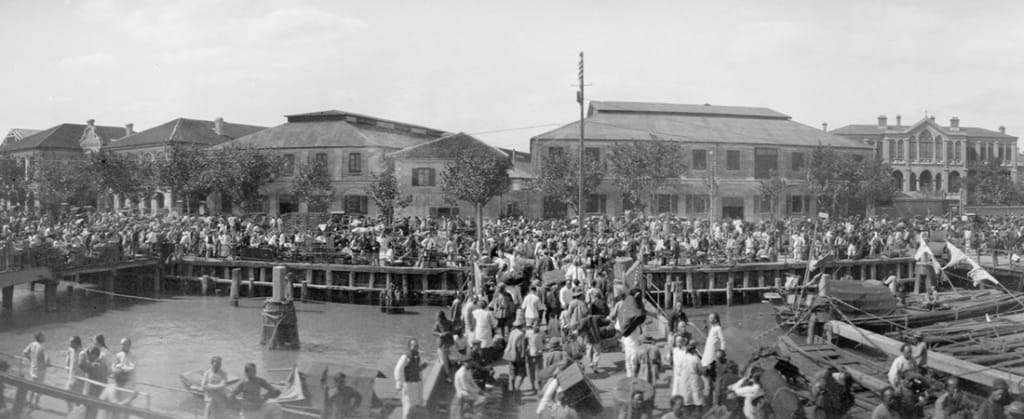
A Glimpse into Ancient Chinese History
China boasts one of the world’s oldest continuous civilizations, with a history that stretches back thousands of years. From the lush valleys of the Yellow River to the majestic Great Wall, ancient China laid the groundwork for numerous technological, philosophical, and cultural innovations that still have an impact on the world today. A brief synopsis of some significant dynasties and periods that shaped early Chinese civilization is provided in this article. The Shang Empire (c. 1600–1046 BCE)
The earliest known dynasty in Chinese history is the Shang Dynasty, as evidenced by both ancient records and archaeological excavations. It developed along the Yellow River, where fertile land allowed agriculture to flourish. The Shang are especially known for their advanced bronze casting, early writing system (notably on oracle bones), and complex religious rituals. These divination-useful oracle bones shed light on the political and spiritual life of the time. The Zhou Dynasty (1046–256 BCE)
The Zhou Dynasty came to power after the Shang fell, and it lasted longer than any other dynasty in Chinese history. It introduced the idea of the "Mandate of Heaven," which stated that divine approval conferred legitimacy on a ruler. It was believed that heaven would withdraw its mandate if a ruler became unjust, allowing for rebellion. The Zhou era is also marked by the fragmentation of central power and the rise of regional states, especially during the later Spring and Autumn Period and the Warring States Period.
Confucianism, Daoism (Taoism), and Legalism were among the most influential philosophies in China during this time period. For millennia, thinkers like Confucius (Kong Fuzi) emphasized moral values, good governance, and social harmony. From 221 to 206 BCE, the Qin Dynasty The Qin Dynasty is often considered the first imperial dynasty of a unified China. Qin Shi Huang emerged victorious from centuries of conflict between rival states and declared himself to be the First Emperor. He centralized the government, standardized currency, weights, and measures, and even changed the way letters were written. In addition, he started building the Great Wall to protect against northern invasions. The Qin Dynasty had a short life, but its legacy was long-lasting. However, widespread unrest was sparked by its harsh legalist policies and high taxes. After Qin Shi Huang's death, the dynasty quickly collapsed.
The Han Dynasty (206 BCE–220 CE)
The Han Dynasty, which came after the Qin, is frequently regarded as China's golden age. Under Han rule, China expanded its territory, developed a sophisticated bureaucracy, and saw great progress in science, technology, and culture. The Silk Road trade routes opened during this time, connecting China with Central Asia and beyond, allowing for the exchange of goods, ideas, and religions.
Under the Han, Confucianism became the state philosophy, and the civil service system was established, which allowed officials to be chosen based on merit rather than birth. Cultural and technological achievements Ancient China contributed many important inventions to human civilization, including paper, silk, the compass, gunpowder, and printing. Chinese medicine, astronomy, and mathematics were also highly advanced. Poetry, calligraphy, and classical texts played a significant role in the development of Chinese literature and art. Conclusion
The rich history of ancient China demonstrates a civilization that was remarkably advanced for its time. From early dynasties like the Shang and Zhou to the mighty Han Empire, China laid enduring foundations in governance, philosophy, science, and culture. These early developments not only shaped China's future, but they also had a significant impact on the rest of the world. Understanding the history of ancient China is essential for comprehending how past civilizations continue to influence contemporary societies.Tnx
About the Creator
md emon
"A visionary wordsmith blending intellect and emotion, this genius writer crafts stories that challenge minds and stir souls. With a unique voice and timeless insight, their work redefines literature for a new generation."
Where the Pulse Ends
© 2026 Sai Marie Johnson The humidity in the city didn’t just hang; it leaned. It was a thick, stagnant soup of diesel exhaust, ozone, and the metallic tang of blood that drifted from the "Compliance Zones." Joe sat in his rusted sedan, his hands resting loosely on the steering wheel. He wasn't gripping it. He wasn't angry. Anger was a chemical spike, a biological inefficiency. Joe was simply... focused.
By Sai Marie Johnsona day ago in History
Wild Card Weekend Recap: What Happens Now?
I think I figured out why I love Wild Card Weekend so much. It's because it's the first playoff anything of the calendar year. The NFL season starts in the fall, and once upon a time, the champion was crowned either on or slightly before New Year's. The evolution of the NFL schedule has resulted in the playoffs starting just into the New Year, and currently, the final week of the season falls on the first weekend of the New Year, with Wild Card Weekend coming a week after that. So yes, chronologically, the NFL's Wild Card Weekend serves as the first playoff anything of the calendar year.
By Clyde E. Dawkins5 days ago in Unbalanced




Comments
There are no comments for this story
Be the first to respond and start the conversation.