
Echoes of Olympus.
From Mythology to Democracy, Art to Philosophy, and Beyond: How the Ancient Greeks Shaped the World We Know

The ancient Greeks, a civilization that flourished thousands of years ago, left an indelible mark on the world with their remarkable achievements and enduring cultural legacy. From their contributions in art, philosophy, literature, and governance to their captivating mythology, the ancient Greeks have shaped the course of human history and continue to influence our lives today. In this article, we delve into the captivating world of the ancient Greeks, exploring their remarkable accomplishments and examining their enduring influence on modern society.
The ancient Greeks are renowned for their advancements in various fields, including art and architecture. Their masterpieces continue to inspire awe and admiration, showcasing their keen eye for aesthetics and their commitment to the pursuit of beauty. From the iconic Parthenon in Athens, with its majestic columns and intricate sculptures, to the timeless sculptures of gods and goddesses, such as the Venus de Milo and the Discus Thrower, the Greeks demonstrated a deep appreciation for the human form and an unparalleled skill in capturing its essence.
The Greeks were not only prolific in the arts but also made significant contributions to the world of philosophy and intellectual thought. Thinkers such as Socrates, Plato, and Aristotle laid the groundwork for Western philosophy, exploring fundamental questions about knowledge, ethics, and the nature of reality. Their ideas continue to shape contemporary philosophical discourse, challenging us to critically examine our beliefs and offering insights into the complexities of human existence.
Literature was another domain in which the ancient Greeks excelled. The epics of Homer, such as the Iliad and the Odyssey, have captivated readers for centuries, weaving tales of heroism, adventure, and the human condition. These timeless stories not only entertained but also offered valuable insights into moral dilemmas, human nature, and the consequences of our actions. Greek playwrights, such as Sophocles, Euripides, and Aristophanes, produced works that explored the depths of human emotions, showcasing the power of storytelling as a means of self-reflection and understanding.
The ancient Greeks also established the foundations of democratic governance, a system that continues to shape modern societies around the world. In ancient Athens, citizens actively participated in decision-making processes, expressing their opinions, and shaping public policy. This concept of democracy, rooted in the belief in individual rights and civic engagement, has had a profound impact on the development of political systems throughout history.
Furthermore, Greek mythology and the pantheon of gods and goddesses have left an enduring mark on our cultural consciousness. The tales of Zeus, Hera, Athena, and other mythical figures not only entertained but also served as a way to explain natural phenomena, human behavior, and the mysteries of the world. These captivating stories continue to be retold and reimagined in literature, art, and popular culture, demonstrating the timeless allure of the Greek mythological tradition.
Today, the legacy of the ancient Greeks lives on in various forms. The principles of democracy, critical thinking, and artistic expression that they championed continue to shape our societies and institutions. The influence of Greek philosophy can be seen in fields such as ethics, logic, and metaphysics, where their ideas continue to inspire philosophical inquiry and debate. In literature and the arts, Greek mythology and storytelling techniques provide a rich source of inspiration for contemporary writers, filmmakers, and artists.
Moreover, the ancient Greeks' impact on modern language is undeniable. Many words in English and other languages have their roots in Greek, reflecting the enduring influence of this ancient civilization. From scientific terminology to medical terms and philosophical concepts, the Greek language continues to be an integral part of our linguistic heritage.
In conclusion, the ancient Greeks left a lasting legacy that continues to shape our world in profound ways. Their contributions in art, philosophy, literature, and governance have transcended time, inspiring subsequent generations and influencing our understanding of human existence. From their remarkable achievements in architecture and sculpture to their profound insights into the human condition, the ancient Greeks remain a beacon of inspiration and intellectual pursuit. By studying their culture, we gain a deeper appreciation for the complexities of the human experience and the boundless potential of human creativity.
About the Creator
Keep reading
More stories from Ahmed Ismail and writers in History and other communities.
The Civilization of The Dawn of Time.
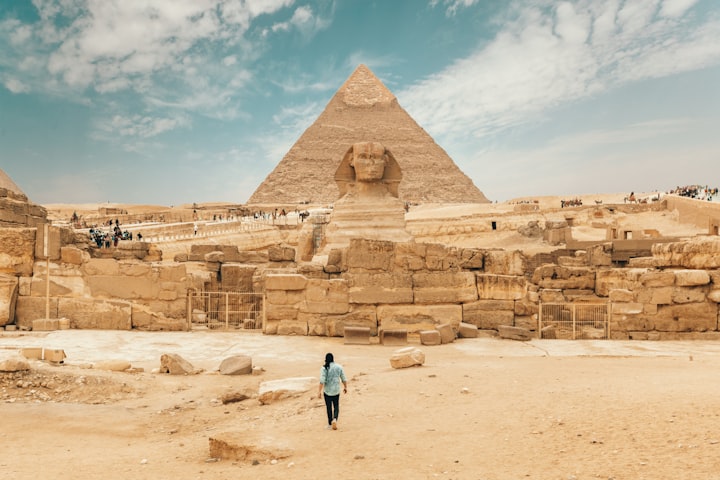
The ancient Egyptians, with their rich and storied history, continue to captivate our imagination and leave us in awe of their incredible achievements. Among their many remarkable feats, the construction of the pyramids stands as a testament to their ingenuity, architectural prowess, and unwavering dedication. In this article, we delve into the mysteries of the ancient Egyptians, exploring the secrets behind the building of the pyramids and shedding light on the fascinating world of ancient Egyptian civilizations.
By Ahmed Ismail3 years ago in History


Comments
There are no comments for this story
Be the first to respond and start the conversation.