
Donald Trump Warns of Escalation: A Powerful Statement on Global War
We Must Avoid World War”: Donald Trump Speaks on Rising Global Tensions

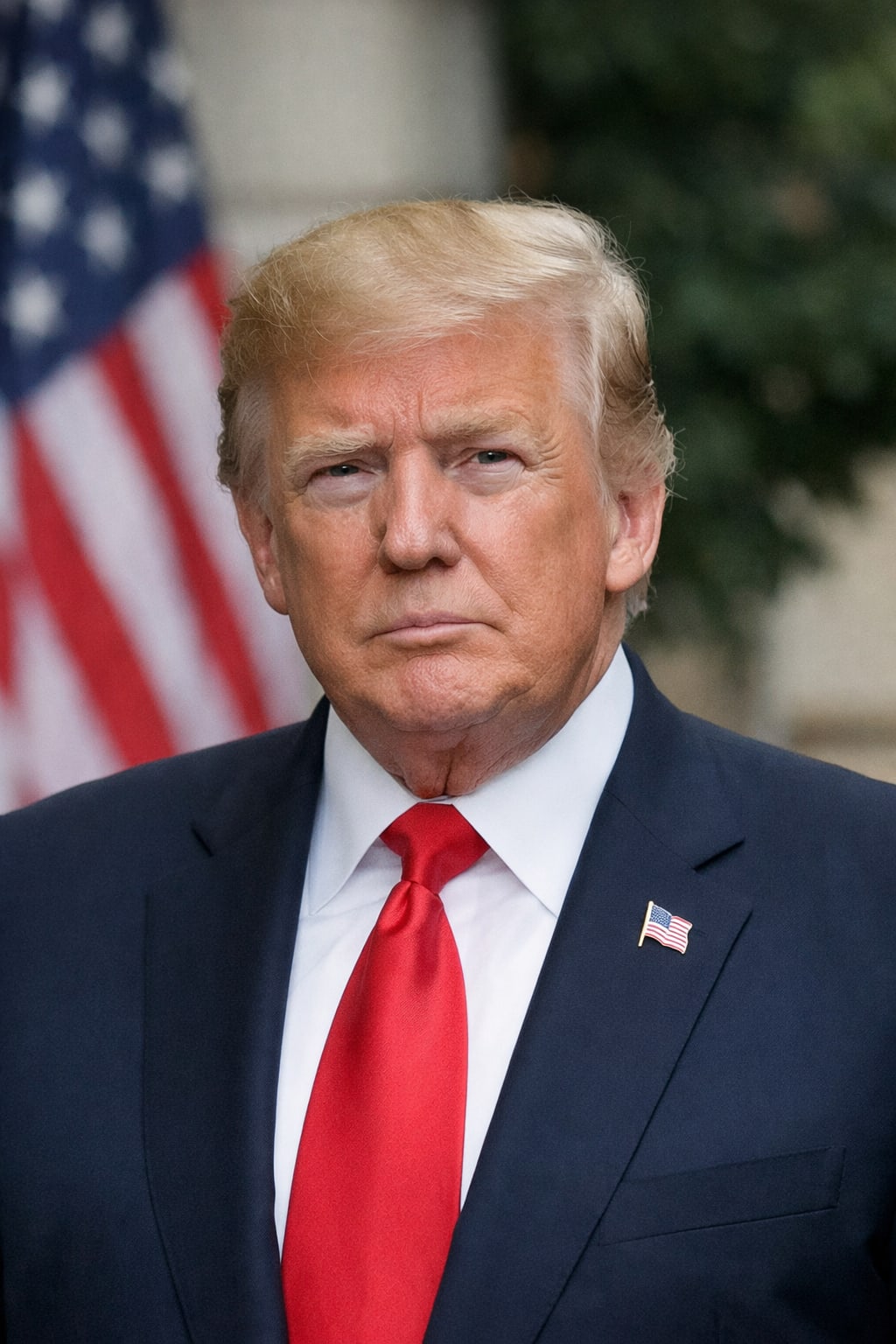
In times of rising global uncertainty, discussions about war and peace often dominate headlines. Among the voices shaping these
conversations is Donald Trump, the 45th President of the United States. Known for his direct communication style and “America First”
foreign policy approach, Trump has repeatedly shared his views on international conflicts, military strategy, and America’s role on the
world stage.
Trump’s stance on war has consistently centered on strength as a deterrent. During his presidency, he emphasized rebuilding the U.S.
military, increasing defense spending, and projecting power as a way to prevent large-scale conflicts. According to his perspective, peace is
best preserved not through weakness or hesitation, but through undeniable strength. He has often argued that when the United States demonstrates military and economic power, adversaries are less
likely to provoke confrontation.
At the same time, Trump has presented himself as a leader who prefers negotiation over prolonged warfare. He frequently pointed to
his administration’s diplomatic engagements as examples of conflict avoidance. One notable instance was his engagement with North
Korea’s leader, which marked an unprecedented step in U.S.–North Korea relations. Though controversial, Trump framed these meetings as efforts to reduce nuclear tensions and open channels of
communication rather than escalate hostilities.
Trump has also been vocal about the financial and human costs of war. He has criticized long-term military engagements in the Middle
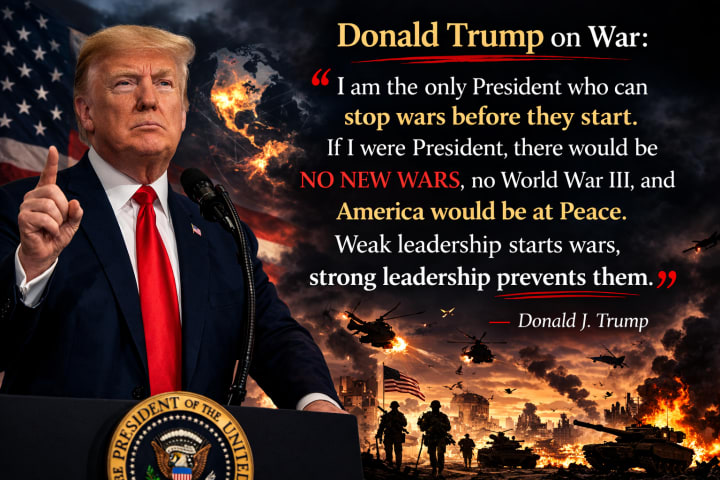
East, arguing that such conflicts drained American resources and led to unnecessary loss of life. His position often reflects skepticism
toward foreign interventions that lack clear objectives or direct benefits to U.S. national interests. In speeches and interviews, he has emphasized that American troops should not be involved in conflicts
without a defined mission and a realistic path to victory.
When discussing rising tensions between major global powers, Trump has typically stressed the importance of strategic leverage.
Whether addressing trade disputes, regional conflicts, or military buildups, he has maintained that firm negotiation tactics can prevent
escalation. His approach blends economic pressure, sanctions, and assertive rhetoric with the possibility of dialogue. Supporters view
this as a pragmatic method to avoid war, while critics argue that strong rhetoric can sometimes intensify tensions rather than calm them.
Another significant element of Trump’s stand on international crisis is his belief in national sovereignty. He has repeatedly stated that
each country should prioritize its own citizens and borders. In the context of global alliances, he questioned long-standing arrangements
that, in his view, placed disproportionate burdens on the United States. This position sparked debate over America’s leadership role in
global security and its commitments to allies.
Trump’s supporters often credit his administration with avoiding the outbreak of new large-scale wars during his time in office. They
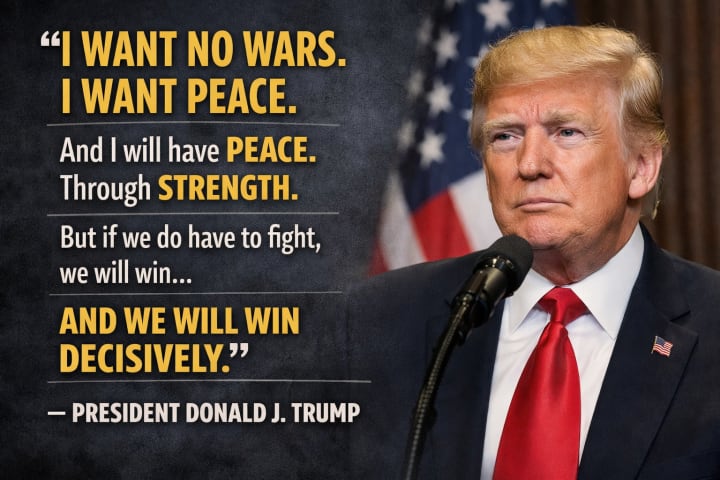
argue that his unpredictable negotiation style and emphasis on strength created a deterrent effect. Critics, however, counter that
global tensions persisted and that diplomacy sometimes relied too heavily on personal relationships rather than structured
international agreements.
In addressing the broader question of “Peace or Conflict?” Trump’s statements suggest that he sees peace as achievable through leverage
and assertiveness rather than compromise alone. He frames conflict as something that can be avoided if adversaries understand that
aggression will be met with decisive response. At the same time, he often highlights his willingness to engage in talks, portraying himself
as both firm and flexible.
The international landscape continues to evolve, with new conflicts and alliances reshaping global politics. Trump’s views remain
influential in political discourse, especially as debates about defense spending, foreign aid, and military alliances continue. Whether one
agrees with his approach or not, his perspective contributes to the ongoing discussion about how world leaders should handle crisis situations.
Ultimately, the balance between peace and conflict depends on complex factors—diplomacy, economic stability, military readiness,
and international cooperation. Trump’s stand reflects a belief that strength, national interest, and negotiation can coexist as tools to
prevent war. In a world where uncertainty often dominates, such perspectives continue to spark conversation about the best path
forward for global stability.
As global challenges persist, the question remains central: should nations lean more heavily on diplomacy and collective action, or on
strength and assertive independence? Trump’s answer has
consistently leaned toward strength as the foundation of peace, underscoring his enduring impact on the debate over war and
international crisis.
About the Creator
Niaz Muhammad
Insha Allah, I will write in such a good way that people with weak eyesight or the elderly can easily read it.
Keep reading
More stories from Niaz Muhammad and writers in History and other communities.
The Discovery of the USS Indianapolis
The story of the USS Indianapolis (CA-35) is a harrowing blend of high-stakes espionage, unimaginable physical endurance, and a decades-long maritime mystery. While the provided text captures the essence of this tragedy, expanding on the historical context, the psychological toll on the survivors, and the technical marvel of its discovery allows us to truly honor the "Ghost of the Pacific."
By Irshad Abbasi a day ago in History
A Knight of the Seven Kingdoms Series Review (Season 1)
As one of the biggest properties in fantasy, A Song of Ice and Fire remains immensely popular with audiences. After reaching far into the past with House of the Dragon, a second spin-off was on the cards. A Knight of the Seven Kingdoms serves up a bite-sized slice of action and drama, but it still claims a spot among the best small-screen titles.
By Robert Caina day ago in Geeks


Comments
There are no comments for this story
Be the first to respond and start the conversation.