
Dive into the Uncommon Prophecy
A School of the Uncommon Prophecy
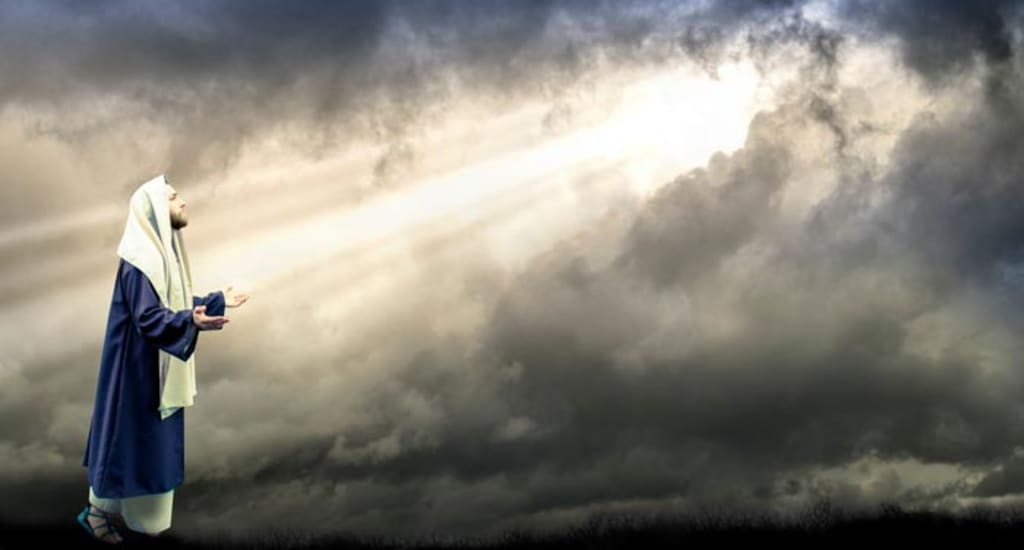
Prophecy typically refers to the communication of divine or supernatural knowledge to humans, often through a chosen individual known as a prophet. Prophets are believed to serve as intermediaries between the divine and humanity, conveying messages, warnings, or guidance from a higher power.
The Importance of Understanding Prophecy in Religion
Understanding prophecy in religion is crucial for several reasons:
Divine Communication: Prophecy is seen as a direct channel through which the divine communicates with humanity. By studying it, we gain insight into how different religions perceive God's will and intentions.
Historical Impact: Prophecies have shaped the course of history, influencing major events, movements, and decisions. Understanding them helps us grasp the religious and cultural developments that have shaped societies.
Moral and Ethical Guidance: Prophets often deliver messages that guide moral and ethical behavior. These teachings form the foundation of religious laws and practices, influencing how believers live their lives.
Spiritual Insight: Prophecy provides believers with spiritual insight, offering hope, reassurance, and a sense of purpose. It connects the human experience with the divine, fostering a deeper understanding of faith.
Interfaith Understanding: By exploring the concept of prophecy across different religions, we can better appreciate the similarities and differences in how various faiths perceive divine communication, leading to greater interfaith dialogue and respect.
Defining Uncommon Prophecy in Religious Contexts
Uncommon prophecy in religious contexts refers to prophetic phenomena or experiences that deviate from the traditional or widely recognized forms of prophecy. These may include:
Non-Canonical Prophecy: Prophecies that occur outside the accepted religious texts or traditions. These might be visions or revelations received by individuals who are not officially recognized prophets within their faith, leading to mixed acceptance or rejection by the religious community.
Ecstatic or Mystical Prophecy: Prophecies that arise from intense spiritual experiences, such as trances, dreams, or mystical encounters, where the prophet receives a message in a highly altered state of consciousness. These are often more personal and symbolic, differing from the more direct, verbal communication typical of mainstream prophecy.
Cross-Religious Prophecy: Prophecies that are shared across different religious traditions or that emerge in one religion but are later recognized or interpreted by another. This can include prophetic figures who are revered in multiple faiths or prophecies that seem to transcend specific religious boundaries.
Minority or Marginalized Prophecy: Prophecies that come from minority or marginalized groups within a larger religious context. These might challenge the status quo or offer alternative spiritual insights, often leading to tension with established religious authorities.
Apocalyptic or Esoteric Prophecy: Prophecies focused on hidden knowledge, end-times scenarios, or esoteric truths that are not part of the mainstream religious narrative. These prophecies might involve complex symbolism and are often interpreted by specialized groups or sects within a religion.
Uncommon prophecy often challenges traditional religious interpretations and can lead to new spiritual movements, reformations, or shifts in religious thought.
Historical Examples of Uncommon Prophecy
Here are some historical examples of uncommon prophecy:
Joan of Arc (1412–1431): A French peasant girl who claimed to receive visions from saints instructing her to support Charles VII and lead French troops during the Hundred Years' War. Her unorthodox role as a female military leader, guided by mystic visions, led to her eventual martyrdom and later sainthood.
Nostradamus (1503–1566): A French astrologer known for his cryptic quatrains predicting future events. His prophecies are not part of any religious canon but have influenced popular culture and esoteric traditions, often being linked to major historical events.
Black Elk (1863–1950): A Lakota holy man who experienced visions about the future of his people. His prophecies, rooted in indigenous spirituality, combined personal mysticism with a response to the colonization of Native American lands.
Hong Xiuquan (1814–1864): The leader of the Taiping Rebellion in China, who claimed to be the younger brother of Jesus Christ after experiencing visions. His prophetic mission led to a massive and deadly uprising, blending Christian and Chinese beliefs in a revolutionary context.
These examples highlight how uncommon prophecy can emerge in various cultural and religious settings, often leading to significant historical impacts.
Uncommon Prophecies in Lesser-Known Texts
Uncommon prophecies in lesser-known religious texts often contain unique and obscure predictions that differ from mainstream prophetic literature. Here are a few examples:
1. The Book of Enoch (Ethiopian Orthodox Christianity)
Context: The Book of Enoch is an ancient Jewish text that is not included in the canonical Bible but is considered scripture in the Ethiopian Orthodox Church. It contains prophecies attributed to Enoch, the great-grandfather of Noah.
Uncommon Prophecy: Enoch's visions include detailed descriptions of the heavenly realms, the fate of fallen angels, and apocalyptic events that differ significantly from the prophecies found in more mainstream biblical texts. These prophecies emphasize cosmic battles and the eventual restoration of righteousness.
2. The Sibylline Oracles (Greco-Roman Religion)
Context: The Sibylline Oracles are a collection of prophetic writings attributed to various sibyls (prophetesses) of the ancient Greco-Roman world. These texts were later adopted and adapted by early Christians.
Uncommon Prophecy: The Oracles contain a mix of pagan, Jewish, and Christian elements, predicting events like the fall of empires, natural disasters, and the coming of a messianic figure. Their syncretic nature makes them distinct from more orthodox religious prophecies.
3. The Prophecies of Merlin (Medieval British Literature)
Context: The Prophecies of Merlin are found in Geoffrey of Monmouth’s "Historia Regum Britanniae", a medieval text that blends history with legend. Merlin, the wizard of Arthurian legend, is depicted as a prophet.
Uncommon Prophecy: Merlin’s prophecies in this text are highly symbolic and often political, predicting the rise and fall of British kings and kingdoms. These prophecies are steeped in myth and legend, making them more literary than religious.
4. The Kolbrin Bible (Ancient Celtic Texts)
Context: The Kolbrin Bible is a collection of ancient texts said to be of Celtic and Egyptian origin. It is not widely recognized in any mainstream religious tradition.
Uncommon Prophecy: This text contains prophecies that predict global cataclysms, including the return of a celestial body referred to as the "Destroyer." These apocalyptic visions are distinct from those found in more established religious texts and focus on catastrophic events affecting the entire world
5. The Prophecies of the Popes (Catholic Prophecy)
Context: Attributed to Saint Malachy, an Irish bishop, this 12th-century text contains a series of 112 cryptic phrases said to predict each Pope from his time to the end of the world.
Uncommon Prophecy: The prophecies are not recognized by the Catholic Church as official doctrine, yet they have intrigued many due to their mysterious and symbolic nature. The final prophecy allegedly predicts the last Pope and the destruction of Rome.
These examples illustrate how uncommon prophecies in lesser-known texts often reflect unique cultural contexts, blending religious, mythological, and apocalyptic elements that differ from mainstream prophetic traditions.
The Role of Interpretation in Understanding Prophecies
The role of interpretation in understanding prophecies involves:
Clarifying Symbols: Prophecies often use symbolic language, so interpretation helps decode these symbols and metaphors.
Contextual Understanding: Placing prophecies within their historical and cultural context aids in understanding their original meaning.
Diverse Perspectives: Different religious and scholarly interpretations can offer varied insights, influencing beliefs and practices.
Applying to Modern Events: Interpreters may relate ancient prophecies to contemporary events, suggesting relevance and fulfillment.
Shaping Doctrine: Interpretations can affect religious teachings and doctrines, guiding followers' understanding and practices.
Personal Meaning: Individuals may seek personal significance from prophecies, leading to individualized interpretations.
Interpretation is essential in understanding prophecies because:
Deciphering Symbols: Prophecies often use symbolic language, requiring interpretation to uncover their meanings.
Contextualizing: Understanding the historical and cultural context helps clarify the prophecy's original intent.
Diverse Views: Different groups may interpret the same prophecy in various ways, influencing beliefs and practices.
Applying to Today: Prophecies are often reinterpreted in light of current events to find relevance.
Influencing Doctrine: Interpretations can shape religious teachings and practices.
Personal Reflection: Individuals may interpret prophecies to find personal or spiritual significance.
Understanding the Concept of Prophecy in Religion
Prophecy in religion involves the communication of divine messages through chosen individuals known as prophets. In Judaism, prophets convey God's warnings and guidance to Israel. Christianity views Jesus as the ultimate prophet and includes the gift of prophecy for believers. Islam honors prophets like Muhammad as messengers of Allah. Hinduism recognizes divine inspiration through sages. Prophecy serves to guide, warn, encourage, and reveal divine truths across various religious traditions.
The Historical Background of Uncommon Prophecies
The historical background of uncommon prophecies often involves:
Ancient Context: Many emerged from ancient cultures with unique religious or mythological views.
Political and Social Influence: They often reflect the concerns of their times, such as instability or conflict.
Religious Syncretism: Some blend different traditions or beliefs, like the Sibylline Oracles.
Marginalized Movements: They may come from fringe or alternative religious groups, presenting unconventional ideas.
Mysticism: Prophecies from mystical or esoteric traditions often feature complex symbolism.
Understanding these aspects helps explain their origins and influence.
Modern Relevance and Applications
Uncommon prophecies continue to be relevant today in several ways. They influence modern literature, art, and popular culture by inspiring works that delve into themes of destiny and foresight. Individuals often turn to these prophecies for personal spiritual guidance or to find meaning in current issues. In some cases, they are interpreted to offer commentary on contemporary political or social situations, drawing parallels between ancient predictions and modern events. Additionally, these prophecies play a role in alternative or new religious movements, shaping beliefs and practices within these groups. Lastly, they contribute to historical studies, providing valuable insights into how past societies understood and valued prophecy.
Resources for Further Study on Uncommon Prophecies
We have a course for that, so visit https://go.hotmart.com/E95242435W
About the Creator
Keep reading
More stories from writers in History and other communities.
Otto von Bismarck: The Real-World Strategic Genius
History remembers many great thinkers of power, but few figures mastered it as completely in practice as Otto von Bismarck. While philosophers like Machiavelli explained how rulers *should* behave, Bismarck demonstrated how power actually works in the real world—messy, emotional, unpredictable, and deeply human. He was not a conqueror driven by glory, nor an ideologue chasing perfection. He was something far rarer: a strategist whose primary weapon was restraint.
By Fred Bradford6 days ago in History




Comments
There are no comments for this story
Be the first to respond and start the conversation.